


Suzanne Lazaroo
25 November 2026: A new book from the University of Canberra's Centre for Applied Water Science (CAWS) shares the stories, knowledge and enduring connection to Country of Aboriginal people along the Lachlan River in NSW – and provides deep insight into how First Nations peoples’ cultural and ecological knowledge can inform culturally appropriate approaches to land and water management.
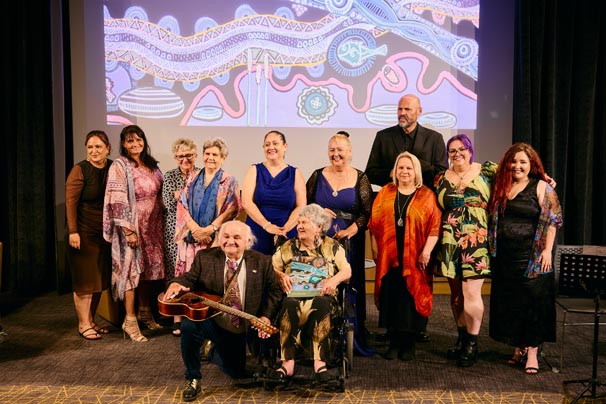
A First Nations-led project, Lachlan Kalari Bila – Sweet Water to the Sea was launched last week at the National Library of Australia (NLA).
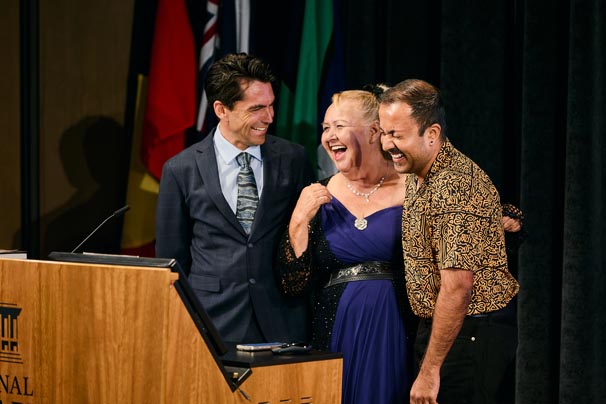
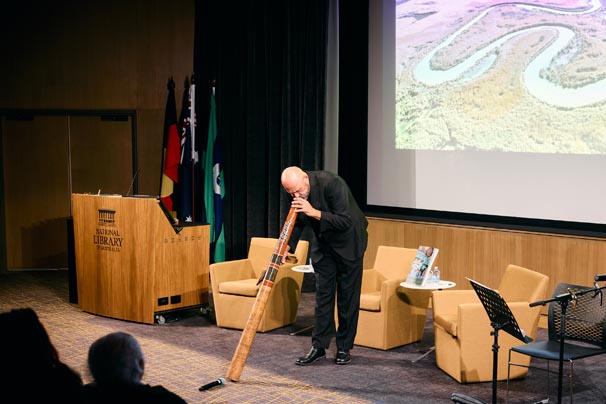
Over 240 people gathered in the NLA Theatre, the front row filled with the book’s own storytellers, who had made the trip to the nation’s capital especially to attend the emotional and deeply meaningful event.
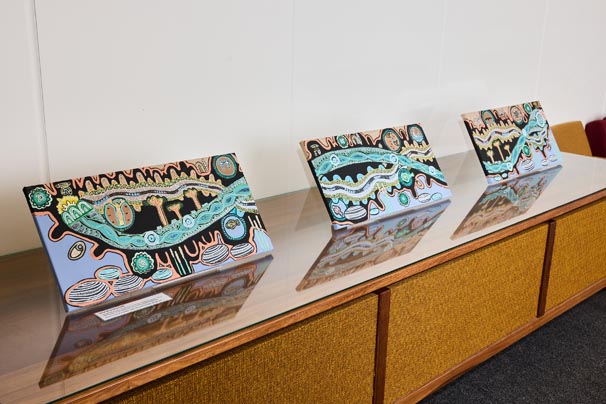
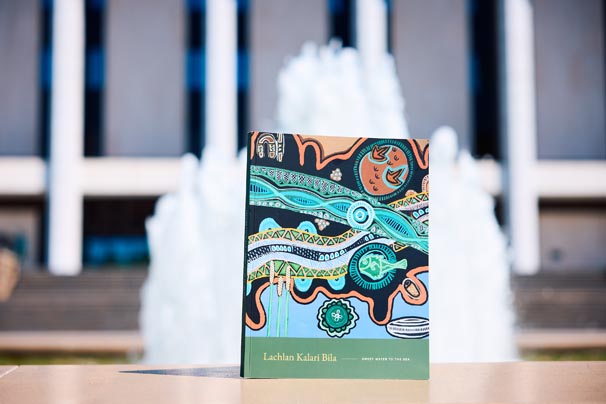
Lachlan Kalari Bila – Sweet Water to the Sea was produced in partnership with lead author and proud Wiradjuri woman Isabel Goolagong and the Australian River Restoration Centre (ARRC). It features three specially-commissioned paintings – one on the cover – by artist Sissy Pettit, a proud Yuradjuri, Yitha Yitha and Nari Nari descendant and river woman. Inside, photos taken by Melbourne-based Wiradjuri photographer Jacinta Keefe are interspersed with archival photographs and historical records that bring the stories to vivid life.
Ms Goolagong is a Cultural Advisor to the Flow-Monitoring, Evaluation and Research (Flow-MER) Program from the Commonwealth environmental Water Holder, which is led in the Lachlan River by CAWS Co-Director and Senior Research Fellow Dr Will Higgisson.
The program evaluates how environmental water affects waterbirds, fish, vegetation and other parts of the ecosystem across the Murray-Darling Basin, informing better water management.
To build the book’s narrative, Ms Goolagong travelled the length of the Lachlan River, sitting with families, communities and Traditional Owners as they generously shared stories passed through generations, as well as their deep connection to Country.
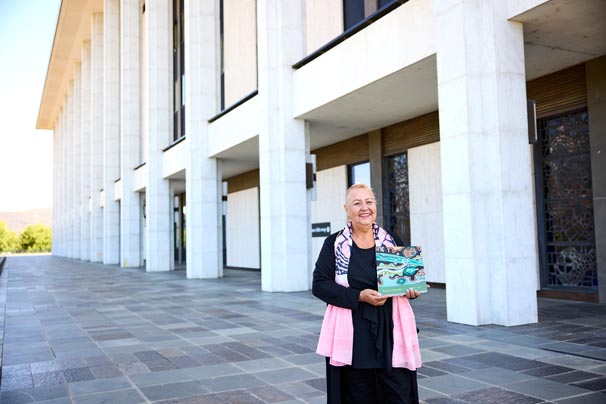
There were many conversations about the meaning of ‘Kalari’.
“Cousin Rocky said he was told that it meant ‘sweet water’ … and it definitely was sweet water in the day,” Ms Goolagong said. “I don't think it's so much sweet water anymore and this is why we're so concerned and why it's important to have this book – to give you a history, a view of what that really used to be and how beautiful it was.
“And Aunty Bonnie said it meant ‘by the ocean’ – centuries ago, it used to be ocean through there, and in a flood, it would look like an inland sea. Hence this book being called Sweet Water to the Sea.”
Ms Goolagong is a Committee Member of the Lachlan Kalari Bila Aboriginal Water Committee, an Advisory Committee Member for the Aboriginal Water Entitlements Program (AWEP), a Lachlan River consultant for the Murray Lower Darling Rivers Indigenous Nations (MLDRIN), and a traditional consultant for legislative consultations on the Water Resource Plans (WRP).
“… I see myself as an advocate for my Kalari people and as a resource to build bridges and rapport between local mob and the wider non-indigenous communities working to preserve our beautiful waterways on and around the Kalari. As the original scientists and inhabitants of the Kalari for centuries, our advice and skills can only complement Western science for a better outcome of our waterways,” she said.
The book grew from a vision she shared with her late cousin and Wiradjuri Elder Narelle Reynolds, whom Ms Goolagong paid tribute to at the launch.
“This was Cousin Narelle’s dream, and I was there to carry out that dream for her by writing everybody's stories,” she said.
“This is the way she wanted it told – who we are, where we come from, our connections and our love of our country, our bloodlines, our water, our songlines, our dreaming tracks that take us to many other nations within Australia itself.
“It’s a book of our own stories, told in our own words.”
A genuine community-driven vision
While Dr Higgisson writes that his “…connection to the Lachlan Kalari comes through science, not culture”, he has spent over a decade working on the river, a dedication recognised at the launch when Ms Goolagong gave him a Wiradjuri name – William Kalari Bila Higgisson.
“I’ve surveyed and reported outcomes from the same sites twice a year for at least twelve years, which has given me a deep understanding of how the floodplains and wetlands of the Lachlan Kalari change and respond through time,” he writes.
For Dr Higgisson, the book is a reminder that the Lachlan Kalari is a living cultural landscape, carrying history, identity and belonging.
“In early 2025, I was invited to speak at a meeting of the Lachlan Kalari Aboriginal Water Committee with Isabel and others in Condobolin [NSW], as part of my role with Flow-MER,” he said.
“It was a difficult period for the community – several respected Elders and community members had recently passed away and there was a strong sense of loss. During our discussions, I asked: what do you want to prioritise this year, if resources were available? The response was strong and consistent: the group wanted to record the stories, knowledge and history of their old people. There was a genuine concern that with the loss of Elders, important cultural memories, family history and knowledge could be lost.”
Dr Higgisson said that it’s both important and very possible to align the priorities of First Nations people with the objectives of our funding agencies, and what began as “…an idea and a rough budget scribbled on the back of an envelope” soon grew bigger, with the Southern New South Wales Innovation Hub and the Commonwealth Environmental Water Holder each providing equal funding.
“That shared investment is one of the strengths of this project, with two organisations backing a community-driven vision. I believe genuine First Nations leadership is founded on trust and ownership, and the funders trusted the process, the people and the project,” he said.
To produce the book, Dr Higgisson and Ms Goolagong worked with Dr Siwan Lovett, Founder and CEO, and Creative Director Pat Gudhka at the ARRC.
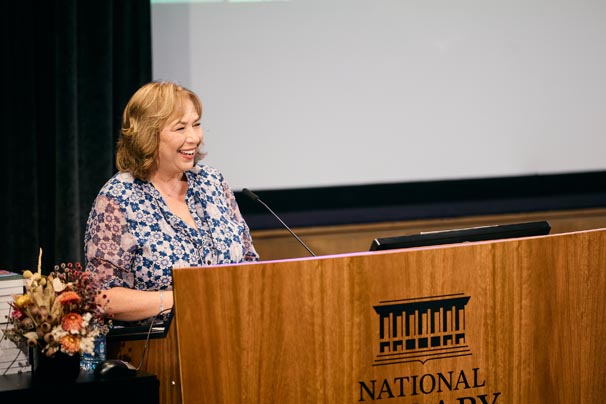
Dr Lovett immediately recognised the significance of telling the stories of the river through the stories of its people.
“Stories are how we pass on what we know and how we remember. They're how we tell each other what's happened in our lives – stories are what make us human,” she said.
For Mr Gudhka, it was important that the stories in the book remained true to themselves, and the people telling them.
“Truth-telling is really important to us at the ARRC and this book felt necessary as a way to help make sure that cultural knowledge could be passed down to future generations in the right way,” he said.
“We made sure the stories remained as they came to us and weren't reshaped to fit a Western way of storytelling.”
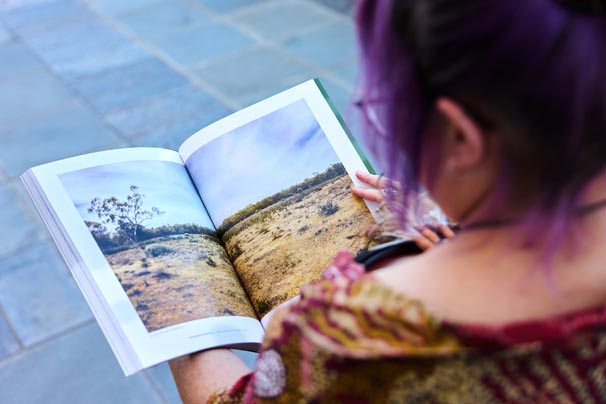
Lachlan Kalari Bila – Sweet Water to the Sea is, above all, a gift for families, communities, future generations – and the research community.
“It preserves stories, photographs, memories, cultural knowledge and family histories that may otherwise have been lost … and provides an important resource for land and water managers, environmental organisations and governments,” Dr Higgisson said.
“Through these stories emerge broader cultural themes, the importance of family and kinship, cultural responsibilities, significant places, significant species, cultural practices and the enduring relationship between people and Country.
“The book helps us understand how we can engage respectfully with people and place. It is a cultural legacy for families and communities, and a guide for those seeking to work respectfully alongside them.”


