<iframe src="https://www.googletagmanager.com/ns.html?id=GTM-PRQLQP" height="0" width="0" style="display:none;visibility:hidden">
Accommodation Guarantee Other housing options Resolving disputes
About UC
Library facilities
Research equipment
UC account
Skip navigation
University of Canberra logo University of Canberra home page
Future students
Future students
Find a course
  • Find a course
  • Study at UC
  • Browse study areas
  • Online courses
  • UC College
  • International
  • Parents and carers guide
  • Life and living at UC
  • Student support
  • Entry requirements and pathways
  • Scholarships
  • Australian Indigenous students
  • Apply
  • Start at UC
  • Talk to us
  • Careers advisors and agents
Research
Research
Discover more
  • About UC research
  • Research Plan 2024 - 2028
  • Research impact
  • Life of a CBRn
  • Research centres and institutes
  • Contribute to research
  • Graduate Research School
  • Research news
  • Contact us
Give
Give
Discover more
  • Student Support Appeal 2026
  • Funds you can support
  • How to give
  • Impact of giving
  • Contact us
On campus
On campus
Discover more
  • Campus tours
  • UC Collections
  • Facilities
  • Campus Master Plan
  • Venue hire
  • Campus cafes and shops
  • Childcare
  • Health and support
  • Transport
  • Parking
  • Adobe Creative Campus
  • Sport at UC
  • Security
  • Lost and found property
  • Safe community
  • Report an incident
About UC
About UC
Discover more
  • University strategy
  • Senior management
  • Faculties
  • Campus locations
  • Educational partners
  • Graduation
  • Office of Indigenous Leadership
  • Academic integrity
  • Sustainability
  • Media and communication
  • Governance
  • Policy and legislation
  • Learning at UC
  • Learning and Teaching
  • UC Brand toolkit
  • Student Equity and Participation
  • Equity and diversity
  • Work at UC
  • Key dates
  • Contact University of Canberra
  • Safe community
  • Report an incident
  • Students
  • Staff
  • Alumni
  • Library
  • Maps
  • Safety & Support
Safety and Support
  • Students
  • Staff
  • Alumni
  • Library
  • Maps
  • Safety & Support
UC Open Day Fest - For future students, families, and the whole community. Saturday 12 September, 10am to 3pm
UC Open Day Fest - Saturday 12 September, 10am to 3pm

UC Open Day Fest

Sat 12 Sept, 10am–3pm

REGISTER NOW

About our courses

Discover where your interests can take you

Home
/
Future students
/
Study at UC
/
About our courses

Study levels

Whether you're starting your first degree, changing careers or looking to continue your university studies, there are plenty of ways to study at UC. Explore undergraduate courses, postgraduate degrees and PhDs, and find information about eligibility, entry requirements and how long your course may take.


  • Undergraduate study
  • Postgraduate study
  • Graduate research
  • Other types of study

Undergraduate study

If you've recently finished Year 12, are returning to study after a break or you'd like to build on qualifications from TAFE or another training institution, then undergraduate study is a good place to start. Whether you're applying as a school leaver or an adult learner, you'll find a range of study options to suit your goals and experience.

Bachelor’s degree

Bachelor’s degrees are the most common qualification studied by undergraduate students, generally studied over three to four years full-time. These often have higher entry requirements than other undergraduate options, such as diplomas.

Honours

If you're looking to deepen your knowledge in a particular area, an honours degree is usually completed in one additional year after you've finished your undergraduate degree. In some courses, honours is built into the fourth year of a four-year undergraduate degree.

Entry requirements vary depending on the course, and honours study typically focuses on one main area of interest. To find out if you're eligible, check the entry requirements on your chosen course page.

Undergraduate Certificates and Diplomas 

Undergraduate certificates and diplomas can be a good option if you don't currently meet the entry requirements for a bachelor's degree or if you'd like to explore a study area before committing to a longer course. They can also provide a pathway into a bachelor's degree.

Postgraduate study

Postgraduate study can help you build specialist knowledge, change direction in your career or deepen your expertise in an area that interests you. You may be eligible if you've completed a bachelor's degree, or through relevant professional experience and prior learning. Entry requirements vary by course, with master's degrees typically requiring more experience or qualifications than graduate certificates and graduate diplomas.

Many of our postgraduate degrees are structured to include flexible starting and finishing points, allowing you to complete your qualification in stages and fit study around work, family and other commitments.

Graduate certificate

Duration: Six months, full-time.
 
A graduate certificate is the first stage of postgraduate study and takes around six months to complete full-time (or part-time equivalent). It's a practical way to ease into postgraduate study, building new skills and knowledge in a particular area while exploring whether further study is right for you.

Graduate diploma

Duration: One year full-time.

A graduate diploma is the second stage of postgraduate study. You can complete it in one year full-time (or part-time equivalent), or in six months if you've already completed a graduate certificate in the same area. It's a practical way to deepen your knowledge, build on your existing skills and develop a stronger understanding of your chosen study area.

Master’s degree by coursework

Duration: One-and-a-half to two years full-time.

A full master’s degree takes around one-and-a-half to two years of full-time study (or the part-time equivalent), or less if you’ve completed a graduate certificate or graduate diploma. A master's degree allows you to gain specialised and advanced knowledge in a particular topic, giving you a competitive edge in the employment marketplace.

Graduate research

If you're ready to explore a topic in depth and contribute new knowledge to your chosen field, graduate research could be your next step.

Graduate research qualifications, including a Doctor of Philosophy (PhD), professional doctorate or master's by research, are the highest levels of university study. You'll focus on a specialised area of interest, work closely with expert supervisors and complete a significant research project or thesis that contributes original findings.

Master's degree by research

A master's degree by research lets you build advanced research skills while investigating a topic you're passionate about.

To apply, you'll typically need a bachelor's degree. You may also need to demonstrate previous research experience and the ability to work independently. Entry requirements are generally less extensive than those for a PhD or professional doctorate.

Most master's by research degrees take around 1.5 to 2 years of full-time study to complete.

Doctorate

A PhD (Doctor of Philosophy) or professional doctorate is the highest academic qualification you can earn. You'll undertake substantial independent research in a specialised field and make an original contribution to knowledge or professional practice. These programs are designed for people who want to pursue advanced research, academic careers or leadership in their profession.

A PhD or professional doctorate typically takes four to six years to complete.

Other types of study

Not everyone’s study journey looks the same. If you’re not ready to commit to a full degree, or you’d like to build your skills in a specific area, there are flexible study options to help you get started.

Whether you're looking for a pathway into university, professional development opportunities or a chance to study for personal interest, we’ll help you find an option that works for you.

Pathway programs

If you don't meet the entry requirements for direct admission, a pathway program can help you take the next step.

UC College offers pathway programs that provide a supported route into a University of Canberra degree, helping you build the skills and confidence to continue your studies.

Non-award study

Non-award study allows you to enrol in individual units without committing to a full qualification.

It’s a flexible option if you want to explore a subject, update your skills for work or study simply because you're interested in learning something new.

Support services

Wherever you're starting from, you'll have access to a range of support services that are designed to help you succeed.

From academic support to wellbeing services, our team is here to help you make the most of your studies and achieve your goals.

Pathway programs

Non-award study

Support services

Study levels

There are a lot of different ways you can begin your study journey at UC. From short qualifications to full-time degrees, learn more about our  courses, eligibility and entry requirements and the typical durations for each level of study. 

Undergraduate study

If you've recently finished Year 12, are returning to study after a break or you'd like to build on qualifications from TAFE or another training institution, then undergraduate study is a good place to start. Whether you're applying as a school leaver or an adult learner, you'll find a range of study options to suit your goals and experience.

Bachelor’s degree

Bachelor’s degrees are the most common qualification studied by undergraduate students, generally studied over three to four years full-time. These often have higher entry requirements than other undergraduate options, such as diplomas.

Honours

If you're looking to deepen your knowledge in a particular area, an honours degree is usually completed in one additional year after you've finished your undergraduate degree. In some courses, honours is built into the fourth year of a four-year undergraduate degree.

Entry requirements vary depending on the course, and honours study typically focuses on one main area of interest. To find out if you're eligible, check the entry requirements on your chosen course page.

Undergraduate Certificates and Diplomas 

Undergraduate certificates and diplomas can be a good option if you don't currently meet the entry requirements for a bachelor's degree or if you'd like to explore a study area before committing to a longer course. They can also provide a pathway into a bachelor's degree.

Postgraduate study

Postgraduate study can help you build specialist knowledge, change direction in your career or deepen your expertise in an area that interests you. You may be eligible if you've completed a bachelor's degree, or through relevant professional experience and prior learning. Entry requirements vary by course, with master's degrees typically requiring more experience or qualifications than graduate certificates and graduate diplomas.

Many of our postgraduate degrees are structured to include flexible starting and finishing points, allowing you to complete your qualification in stages and fit study around work, family and other commitments.

Graduate certificate

Duration: Six months, full-time.
 
A graduate certificate is the first stage of postgraduate study and takes around six months to complete full-time (or part-time equivalent). It's a practical way to ease into postgraduate study, building new skills and knowledge in a particular area while exploring whether further study is right for you.

Graduate diploma

Duration: One year full-time.

A graduate diploma is the second stage of postgraduate study. You can complete it in one year full-time (or part-time equivalent), or in six months if you've already completed a graduate certificate in the same area. It's a practical way to deepen your knowledge, build on your existing skills and develop a stronger understanding of your chosen study area.

Master’s degree by coursework

Duration: One-and-a-half to two years full-time.

A full master’s degree takes around one-and-a-half to two years of full-time study (or the part-time equivalent), or less if you’ve completed a graduate certificate or graduate diploma. A master's degree allows you to gain specialised and advanced knowledge in a particular topic, giving you a competitive edge in the employment marketplace.

Graduate research

If you're ready to explore a topic in depth and contribute new knowledge to your chosen field, graduate research could be your next step.

Graduate research qualifications, including a Doctor of Philosophy (PhD), professional doctorate or master's by research, are the highest levels of university study. You'll focus on a specialised area of interest, work closely with expert supervisors and complete a significant research project or thesis that contributes original findings.

Master's degree by research

A master's degree by research lets you build advanced research skills while investigating a topic you're passionate about.

To apply, you'll typically need a bachelor's degree. You may also need to demonstrate previous research experience and the ability to work independently. Entry requirements are generally less extensive than those for a PhD or professional doctorate.

Most master's by research degrees take around 1.5 to 2 years of full-time study to complete.

Doctorate

A PhD (Doctor of Philosophy) or professional doctorate is the highest academic qualification you can earn. You'll undertake substantial independent research in a specialised field and make an original contribution to knowledge or professional practice. These programs are designed for people who want to pursue advanced research, academic careers or leadership in their profession.

A PhD or professional doctorate typically takes four to six years to complete.

Other types of study

Not everyone’s study journey looks the same. If you’re not ready to commit to a full degree, or you’d like to build your skills in a specific area, there are flexible study options to help you get started.

Whether you're looking for a pathway into university, professional development opportunities or a chance to study for personal interest, we’ll help you find an option that works for you.


Pathway programs

If you don't meet the entry requirements for direct admission, a pathway program can help you take the next step.

UC College offers pathway programs that provide a supported route into a University of Canberra degree, helping you build the skills and confidence to continue your studies.

Explore pathway programs

Non-award study

Non-award study allows you to enrol in individual units without committing to a full qualification.

It’s a flexible option if you want to explore a subject, update your skills for work or study simply because you're interested in learning something new.

Find out more

Support services

Wherever you're starting from, you'll have access to a range of support services that are designed to help you succeed.

From academic support to wellbeing services, our team is here to help you make the most of your studies and achieve your goals.

View support services

Study your way

Your studies should fit around the things that matter to you. That's why many UC courses offer flexible study options, so you can find an approach that works with your work, family and personal commitments.

To explore your options, visit our Find a course page and check the 'typical study pattern' via the drop down menu. Here you'll find details about how your course is delivered, helping you plan your studies in a way that works best for you.

Depending on your course, you may be able to:

  •   Study full-time or part-time
  •   Study your course or select units online
  •   Combine online and on campus learning
  •   Complete your course in stages
  •   Tailor your study plan to your interests and goals
  •   Fast-track your course through intensive study

Explore our online courses

Career outcomes

Choosing the right course can help you go further than you imagined. Whether you're starting out, returning to study or looking to take the next step in your career, the right qualification can help you build the skills and experience to keep you moving forward.

At UC, you'll have opportunities to apply your learning in real-world settings through work-integrated learning, industry partnerships and practical projects. You'll also have access to Careers UC, with support for career planning, professional development, mentoring, resumes and tackling interviews.

If you have a particular career in mind, it's worth checking whether there are any qualification requirements before you apply. Some professions, including teaching, accounting, engineering and physiotherapy, require specific qualifications so you can graduate ready to take the next step.

Learn about careers support

We recognise experience

Whether you're 18, 28, 38, 48 or 78, if you have work experience, life skills or qualifications outside of uni, UC offers a range of entry and credit options to help you study with us. Your experience could make you eligible to gain entry to university, receive credit for your chosen qualification and reduce your study time. 

Learn more

Find out more about…

Fees and costs

Understanding the costs of study can help you plan ahead. Your fees will depend on your course, student type and study mode. Find out about the costs you may need to consider.

Pathway programs

From improving your language skills and building your digital literacy to preparing for a bachelor's degree, our pathway programs can help you reach your study goals.

Applying to UC

We've brought together the information you'll need to understand the application and entry process. Learn more about admissions requirements and what you'll need to complete an application.

Scholarships

Whether you need financial support or have achieved strong academic results, you may be eligible for a scholarship. We award hundreds of scholarships each year to both domestic and international students.



Commonly used terms

Term Definition

Admission year

Admission year is the year when you start your university course.

Courses

'Courses' is the broad term for all study options, including degrees, diplomas and certificates. Your course is made up of a combination of units you need to complete to graduate with your chosen qualification. The structure and length of your course will depend on the type of course or level you're studying.

Delivery mode

How your course or individual units will be available to you: in person, blended, online or intensive.

Disciplines

A university discipline refers to a specific field of study or academic area that you can choose to focus on during your time at UC.

Faculty

UC has 5 faculties, specialising in a range of disciplines with teaching and professional staff who focus on a particular study area.

Location

UC’s main campus is in Bruce, Canberra. We also have a network of study options through interstate providers, as well as overseas study opportunities through our education partners.

Majors

‘Majors’ are a group of units that form a focus area within a degree. They make up the main subjects of your study. This can be included as a specialisation on your academic record when you graduate. Some courses have majors that are set and can’t be changed, while others give you the option to choose from a range of majors.

Student type (Admission availability)

Student type refers to the different types of students at UC, including domestic, international or onshore international students.

Teaching periods

Your academic year is made up of teaching and non-teaching periods. Teaching periods are when you'll attend classes and complete your coursework, while non-teaching periods are where you get a break between from study.

Units

‘Units’ are the individual subjects that make up your course. Some units are core units, which are mandatory to complete as part of your qualification, while others are electives that allow you to tailor your studies to your interests. Units are typically taught over a semester and each unit is worth a certain number of credit points. You'll need to complete the required number of credit points for your course to graduate.

Some units have enrolment requirements, such as completing a prerequisite unit or earning a minimum number of credit points before you can enrol.


Explore our courses


Arts and Creative Industries

Built Environment

Business

Communication and Media

Design

Education

Health

Law

Politics and International Relations

Science

Sport

Technology

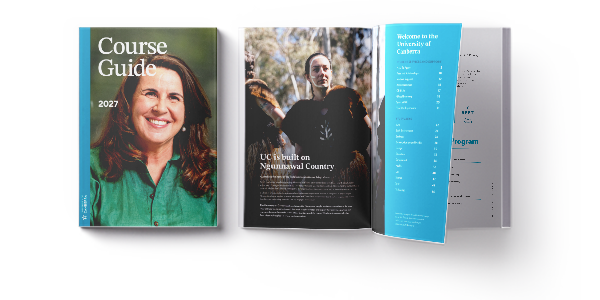
Get your course guide

It seems something went wrong with your submission. Please email study@canberra.edu.au to receive your 2024 course guide.
landingpage
https://www.canberra.edu.au/future-students/study-at-uc/about-our-courses/thank-you

Find the right course for you

Whether you're comparing courses, exploring pathways or are ready to apply, we're here to help you take the next step. 

Find a course Enquire now
University of Canberra logo
Facebook icon Youtube icon Instagram icon Tiktok icon Linkedin icon

Other quick links

Contact us

  • Future students
  • Current students
  • Alumni contact us
  • Donors
  • General enquiries

Faculties

  • Arts and Design
  • Business, Government and Law
  • Education
  • Health
  • Science and Technology

News and events

  • UnCover
  • Newsroom
  • Find an expert
  • Events
  • Blog

Services

  • Security
  • Library
  • Medical and Counselling
  • IT Service updates
  • Gym
  • Accommodation

Administration

  • Maps
  • Job opportunities
  • Staff directory
  • Researcher profiles
  • Freedom of information
  • Policies and procedures

Acknowledgment of Country

UC acknowledges the Ngunnawal people, traditional custodians of the lands where Bruce campus is situated. We wish to acknowledge and respect their continuing culture and the contribution they make to the life of Canberra and the region. We also acknowledge all other First Nations Peoples on whose lands we gather.

University of Canberra, Bruce ACT 2617 Australia

+61 2 6201 5111

ABN 81 633 873 422

CRICOS 00212K

TEQSA Provider ID: PRV12003 (Australian University)

Contact UC
Copyright
Disclaimer
Privacy
Accessibility
Collection notice