


Georgie Burgess
16 October 2026: Some legacies are harder to erase than others.
For Captains Flat, a small village along the Molonglo River an hour away from the University of Canberra – the Lake George Mine has left a generational impact of lead contamination. Now, architecture students from the University will have their solutions to remediate the damage on display at a new exhibition.
More than 60 years after the mine ceased operations, heavy metals including lead remain embedded in the town's soil.
During Semester One 2026, students from the University's School of Design and the Built Environment developed speculative design proposals exploring the challenges and opportunities facing Captains Flat today.
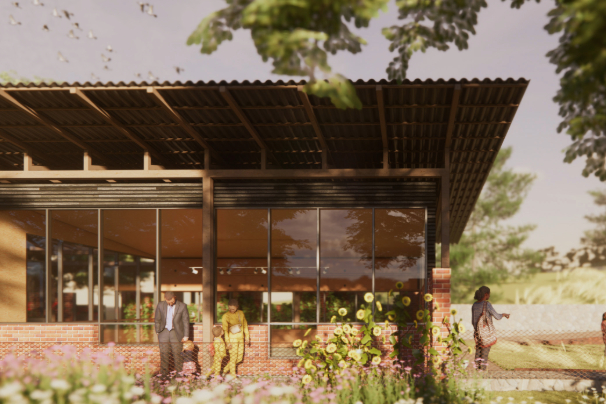
The projects were completed as part of Studio [re]pair, led by Mike Louw in the Master of Architecture program, and Repair, Reconnect, Reconfigure, a vertical studio led by Gay Williamson, a Senior Lecturer in Landscape Architecture.
The students swapped their bush campus for the New South Wales town to talk with members of the Captains Flat Community Association on Market Day to find out more about the impact being felt today but also the lives of those who came before them.
“They shared stories about their grandparents who had lived in the town and their relatives who had worked in the mine. These were stories you can’t really find online, so visiting the town and having those conversations was really valuable,” Master of Architecture student Julia McGrath said.
Ms McGrath partnered with fellow Master of Architecture student Jacob White on their project, Anchoring the Social Spine.
“We wanted to create an updated Captains Flat, a precinct that allows for greater community connection and also gives them back the ability to live off the land, which they haven’t been able to do because of the lead contamination,” Mr White said.
Students were supported throughout the project by guest lecturers from across Australia and overseas, who shared expertise on environmental remediation and community-led design.
“Gaining those new perspectives and learning about different ways to remediate the contamination was really valuable. It was something I knew very little about before,” Ms Mcgrath said.
Professor Sue Anne Ware, Landscape Architect, Head of School, Design and Built Environment Curtin University, helped to inspire Mr White for a large part of the project.
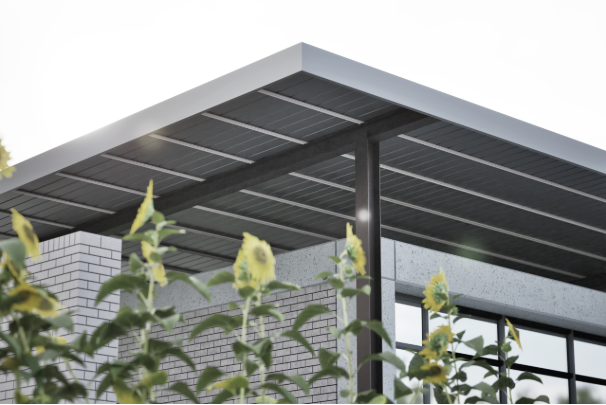
“She was talking about the remediation of poisoned soil using plants, and she listed sunflowers as a very strong remediator of lead.
“So, when you plant a sunflower, it takes in the toxins from the ground surrounding it and stores them in the sunflower itself, cleaning the soil around it,” he said.
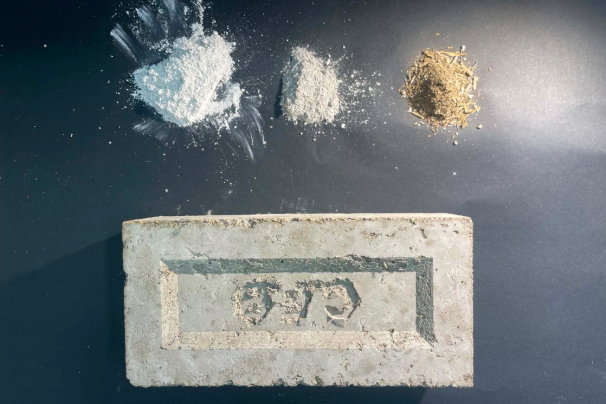
And while fields upon fields of sunflowers sounds beautiful, a more practical solution was found to utilise the crop – turning it into bricks by combining dried sunflower biomass with hydrated lime.
“The project design aspect I’m most happy with was proposing something that would benefit the community and give the locals an opportunity and a framework to take their poisoned soil and turn it into building materials that could slowly but surely take the lead out of the ground and into something to build a new future,” Mr White said.
A prototype sunflower brick will be among the works on display at the Captains Flat Community Hall.
For Ms McGrath, studying to become an architect was a natural progression to combine her love of art with being the daughter of a builder, and the Captains Flat project has helped shape her career aspirations.
“I’ve worked in industry throughout my master’s, primarily on apartment buildings and houses. The opportunity to work on a project with such a strong community focus has been really engaging, and it’s an approach I’d love to keep exploring in my work,” she said.
The encouragement to think outside the box has helped Mr White create outcomes like the sunflower bricks and to think of architecture as more than just buildings.
“You can think of it as a framework and opportunity to do better…To work better with Country and work better with the environment and I think the studio that Mike has led and what we’re able to do with Captains Flat is allowing more than just built outcomes in the architecture course,” he said.
The NSW State Government has invested in ‘capping’ the immediate mine site, and is establishing a community fund to assist property owners with voluntary soil remediation. It also has plans to remediate the old rail corridor from Captains Flat to Bungendore.
President of the Captains Flat Community Association, Ellanor Pavlovich, welcomed the timely exhibition.
"I am thrilled by the students’ work. By asking how the landscape and town of Captains Flat can ‘repair’ and ‘reconnect’ to its environment and history, they have shown us [the community] new possibilities to thrive and enjoy our town,” Ms Pavlovich said.
“I am very grateful to the Alastair Swayn Foundation and Gallery for providing the funding to make the public exhibition possible.”
The exhibition opens Saturday 17 October at the Captains Flat Community Hall from 10am to 2pm.


