


Mike Verzosa
19 Nov 2026: As the ACT prepares for another summer of heightened bushfire and severe weather risks, leading researchers and policymakers gathered at the University of Canberra last week, to discuss how the Territory can work together to build stronger disaster resilience.
The University’s Centre for Environmental Governance (CEG) and News and Media Research Centre (N&MRC), in partnership with the ACT Government's Justice and Community Safety Directorate, hosted the second ACT Disaster Resilience Policy and Research Forum last Monday, bringing together researchers, emergency management practitioners, policymakers and community organisations to explore what makes the region’s disaster resilience systems work, and the role that governance, decision-making and social connectedness play in helping communities prepare for and recover from disasters.
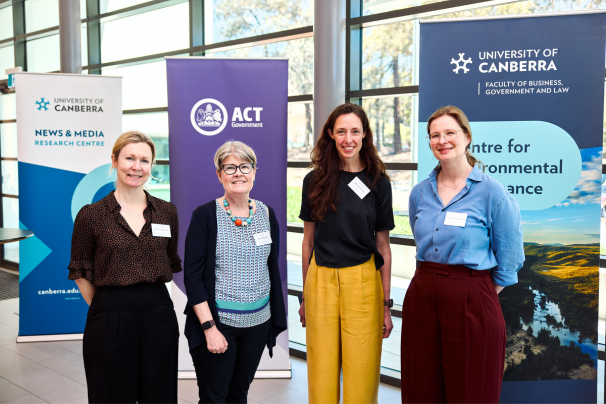
Dr Sue Atkinson, Adjunct Associate Professor at the CEG said that this year’s Forum brought together representatives from various groups – from government and emergency services personnel to community groups and researchers – to focus on some of the systemic challenges that shape disaster resilience, using themes identified last year, including social connectedness and governance.
“Disaster resilience is a topic that goes across everything, so to be able to have a diverse group in the room, sharing their perspectives, allows us to look at some of the systemic challenges that everyone faces and figure out how we can all work together,” Dr Atkinson said.
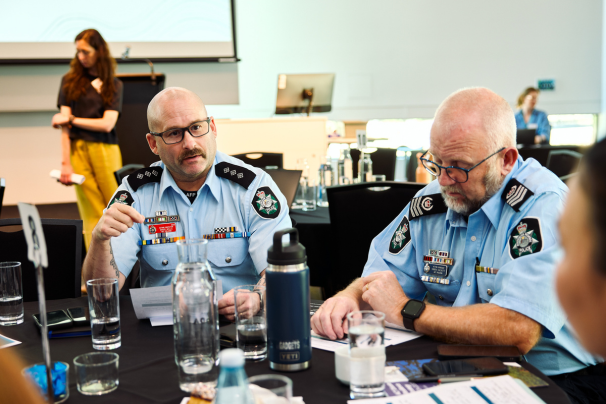
The Forum brought together representatives from emergency services, community organisations, research institutions and government to tackle the shared challenge of strengthening disaster resilience in the ACT. Strong participation and rich discussion demonstrated the benefits of cross-sector collaboration, helping to build relationships, break down silos and identify opportunities for collective action.
A highlight of the day was the Forum’s flagship workshop ‘Building a more resilient ACT: Where do systems need change?’, which enabled participantsto develop a shared language for understanding the systems, relationships and approaches that shape disaster resilience in the ACT, and to identify opportunities for change.
Images by Chris Walsh.


