


Fleta Page
15 September 2026: The University of Canberra hosted the first ever Digital Mental Health Nursing Symposium last Friday, recognising the possibilities, challenges and limitations of the convergence of three important healthcare fields.
The symposium was the brainchild of the Faculty of Health’s Associate Professor Oliver Higgins, who chairs the digital mental health special interest group within the Australian College of Mental Health Nurses (ACMHN).
“The topic of digital mental health nursing has been a bit niche, so the aim of the symposium was to help clarify what it can encompass and explore how we can incorporate digital health technologies into mental health nursing practice and education in a safe, person-centred way,” he said.
“But the highlight for me was when somebody came to me afterwards and said, ‘thank you, we have been waiting for somebody to bring us all together’ ... it really felt like we're creating a community – we all realised there are people out there doing relevant work and the subject matter experts exist.”
In a signal to attendees of the value of their work, Health Minister Mark Butler addressed the symposium via video message, noting the field was both exciting and challenging, and emerging from several healthcare trends coming together at the same time.
“We're seeing rapidly growing demand for mental healthcare and support right across the nation,” he said.
“At the same time, we're experiencing workforce pressure with a shortage of clinicians, particularly in rural and regional areas. Nurses, however, are more widely distributed and often provide the most accessible point of care.”
Minister Butler noted digital technologies are becoming a routine part of healthcare delivery, and that “digital health has an important role to play in creating a more accessible and more targeted mental health and suicide prevention system”.
The symposium was attended by over 50 people from around the country, and attendees heard from 11 presenters and three keynote speakers.
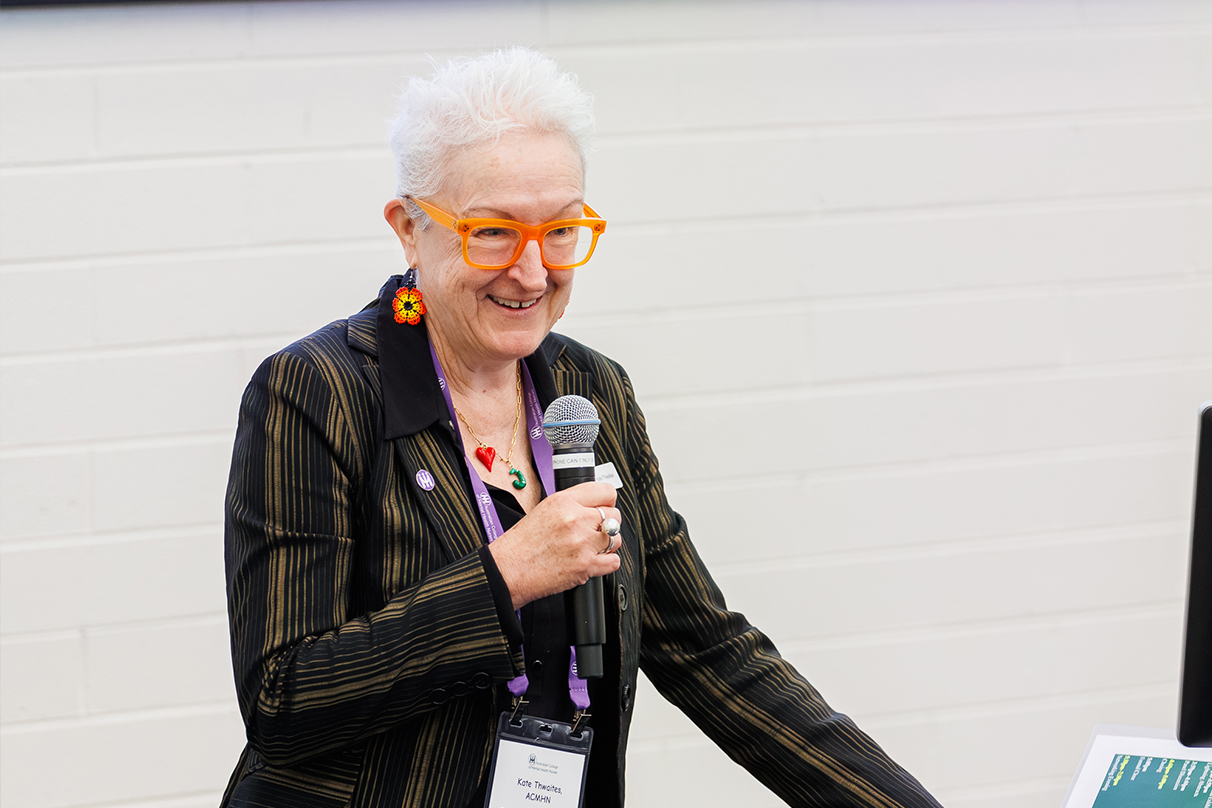
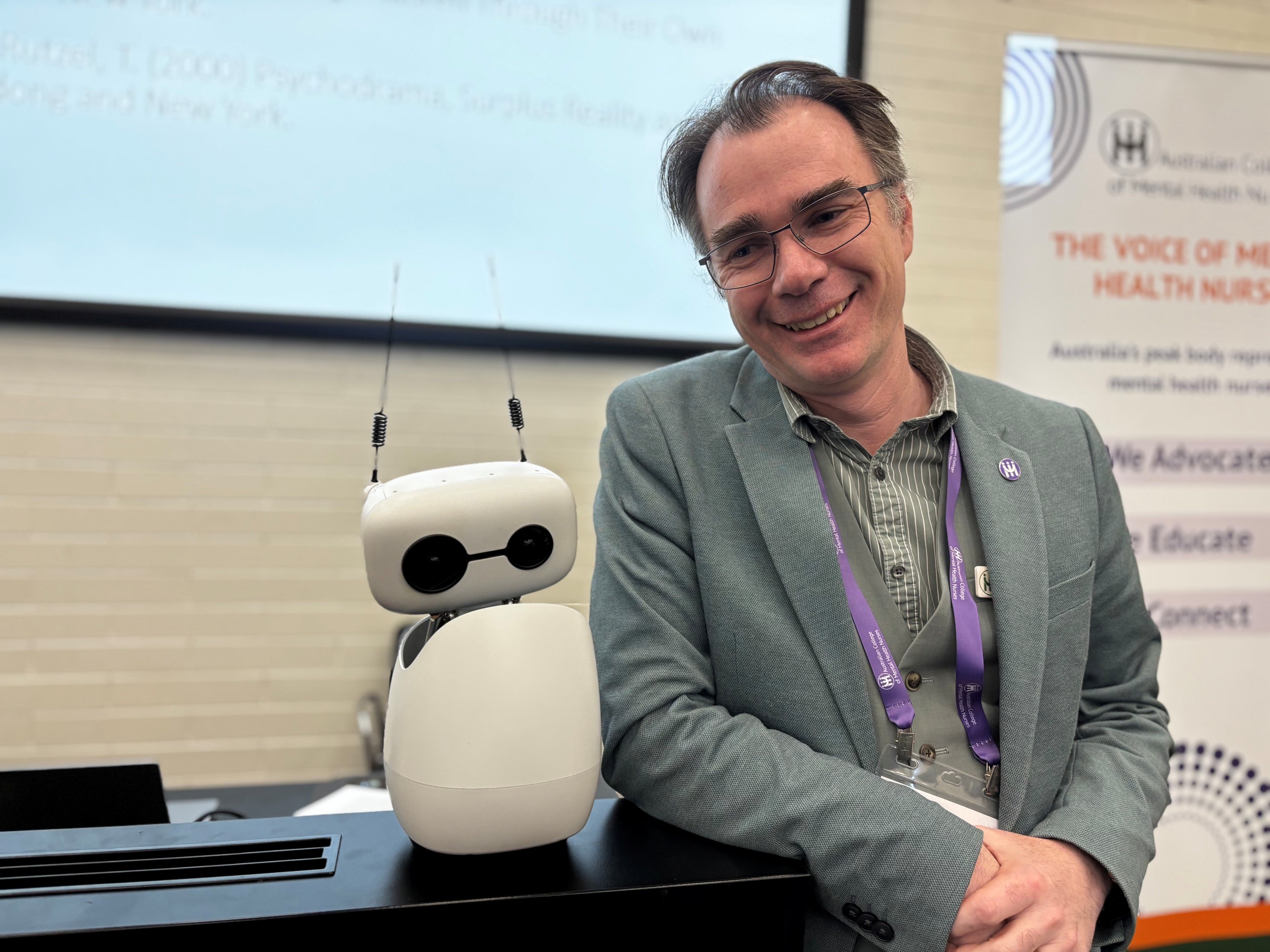
Speakers covered topics ranging from the responsible use of Artificial Intelligence (AI), to digital data management, learning and teaching, through to the study of embodied AI, which Associate Professor Higgins presented on with the assistance of an AI robot, ‘Reachy’.
While he and attendees identified multiple ways the robot could be used, Associate Professor Higgins was clear it would never be a tool for everyone, and was not intended to be used as a mental health intervention, nor to replace mental health nurses.
While he was firm that embodied AI would need strong parameters and frameworks, and that premature clinical adoption must be resisted, he said there was a need to study potential uses and benefits.
“Data shows embodiment changes how people read a system or believe the technology, versus when information is delivered by text or other means,” he said.
“And sometimes people want to have a conversation knowing there isn’t a human on the other side. It gives them a sense of safety.”
The University’s Vice-Chancellor, Professor The Honourable Bill Shorten, spoke early in the day, also touching on the role of AI in healthcare and the need to be proactive.
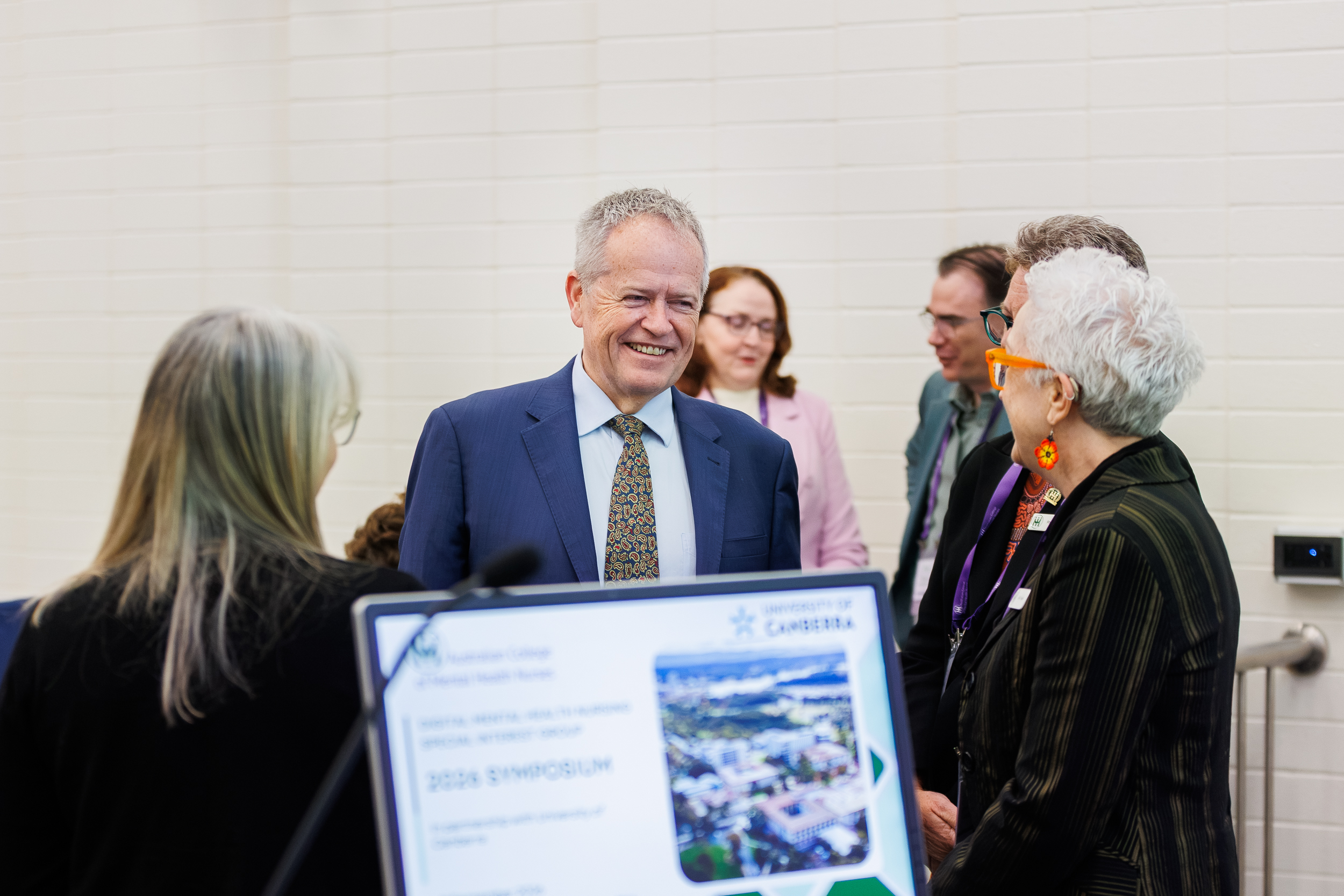
“Those of you who have been nursing for some time will not recognise the mental healthcare system you entered. All this talk of Artificial Intelligence, digital health services and robots can be daunting for the clinician and consumer alike,” he said.
“But as I have said to UC students and staff, AI is here and we have the chance – right now – to shape it, rather than have it shape us.”
Associate Professor Higgins said there was appetite to make the symposium an annual event at the University, and planning for the second iteration was already in train.
Photos by Fleta Page, Chris Walsh


