


30 October 2026: A new internship scholarship program is helping doctoral students work more closely with industry during their research journey, providing invaluable networking, learning and job opportunities to broaden their horizons. The scholarship is valued at $10,000.
A PhD student with the Faculty of Education, Aerlie Vade hadn’t considered an industry internship. The busy mum-of-three was already balancing family life with working part-time as a kindergarten teacher and working on her PhD. That was until her supervisor, Associate Professor Kate Highfield, provided some helpful perspective.
“Her advice was to not think of it as a diversion from what you're doing. Instead, find something with alignment, where you can learn from them and vice versa,” Ms Vade says.
With her supervisor’s support, the education researcher landed an internship with Play Australia, an organisation whose purpose aligned with her PhD research on the role of play in primary school settings.
She completes her internship remotely one day a week, with ad-hoc work in between as needed. In conjunction with Play Australia, she is conducting a media discourse analysis that forms one component of her PhD research, extending the impact of the mutually beneficial study. The internship is also helping Ms Vade to build valuable industry connections.
“The networking that has already come from it has been really amazing. I’ve had the opportunity to talk to experts in the field across the world who I would never meet otherwise. It’s also opened amazing opportunities to write with other academics,” Aerlie says.
One of the inaugural recipients of the University’s new HDR Internship Scholarship, Ms Vade received funds to support her study and facilitate some of the learning experiences coming her way, like travel to a conference.
“The program provides a safety net, which is so nice,” Ms Vade says.
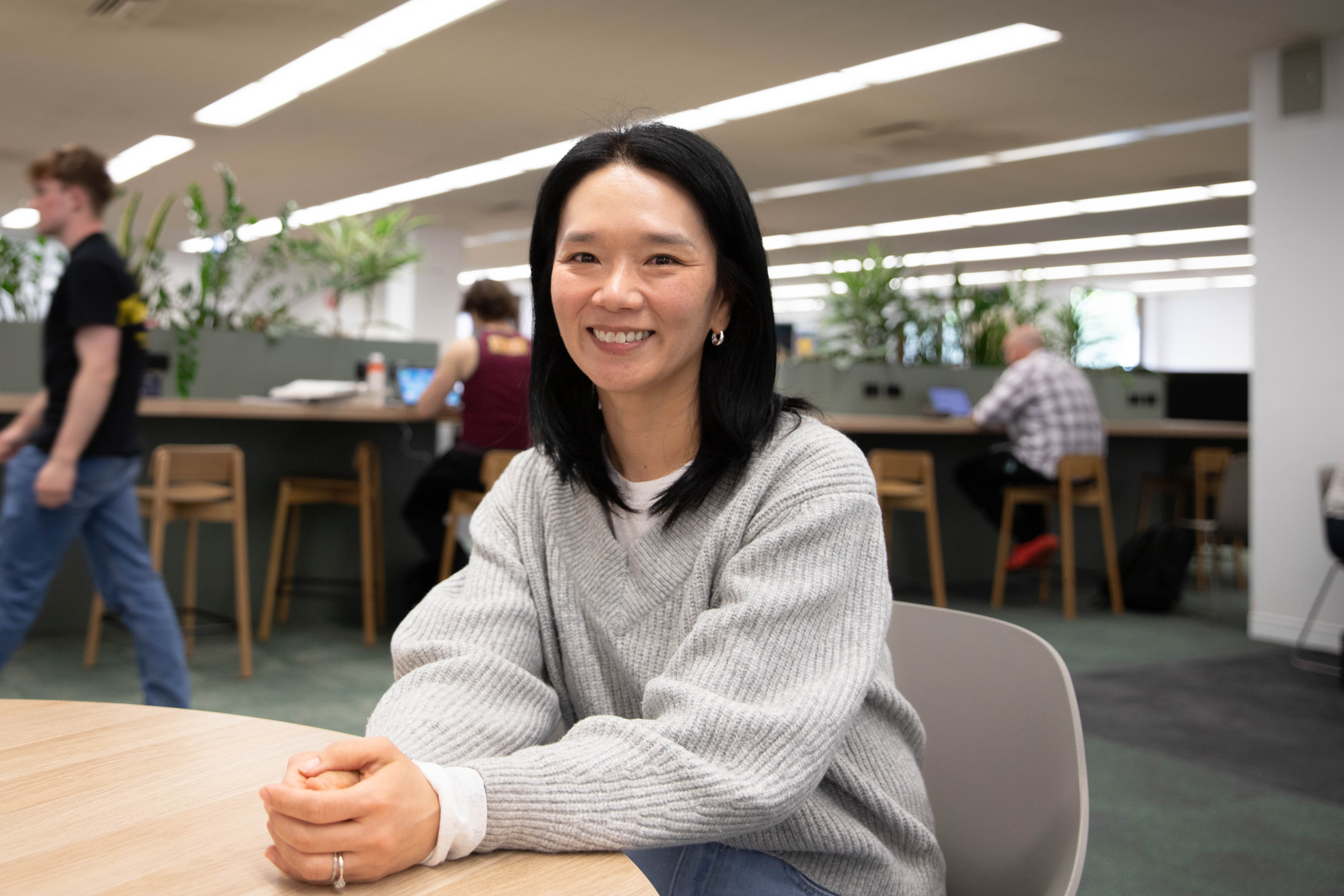
Another inaugural recipient, Chloe Kim, is undertaking a PhD in a field different from her academic background in Asian-Pacific studies.
A Lecturer in Korean Language at the Australian National University, Ms Kim has always known her passion lies in teaching and, eager to continue building a career in academia, she decided a PhD was the next step in achieving her career goals.
Noting how K-Pop, K-Dramas and K-BBQ have exploded in popularity in Australia over recent years, Ms Kim was interested to explore how this popular media was impacting Koreans living abroad.
She approached academics at the University of Canberra’s News and Media Research Centre, a leading institution in the study of news-media in Australia and its impact on society, securing Professor Sora Park as her primary supervisor.
Ms Kim wanted more hands-on experience in the media industry to complement her PhD research, so she began reaching out to organisations whose purpose aligned with her goals, asking whether they would consider taking on an intern.
Before long, she had secured an internship working with the Korean government owned Korean Creative Content Agency, a Sydney-based office that publishes reports on Australia’s creative content industry, covering a broad range of topics, including media policy and business advice to help Korean media enterprises expand into the Australian market. She spends one to two days each week working remotely with the team to edit draft reports.
Through the internship, she’s gaining insight into the business operations and building valuable connections both in the local media industry and the Korean government.
As for her PhD research, so far her investigations have revealed a fascinating trend – that popular Korean media isn’t necessarily making Korean expats feel more connected, but it does seem to be ushering in a new wave of interest in Korean culture from non-Koreans.
“My research includes those who were born in Korea but raised in Australia with Korean parents and the second generation who were born in Australia. They're the generation that hasn't actually experienced living in Korea the same way. When they visit Korea, they don't feel fully Korean, but they don't feel like they fully belong in Australia either,” Ms Kim says.
“They’re seeing a change in the people around them. When they were in primary school, the people around them barely knew about Korean culture. Now, people will approach them and ask for food or movie recommendations!”
Applications are now open for the second round of the University’s HDR Internship Scholarship with more rounds to follow next year. For more information and to apply: HDR Internship Scholarship - University of Canberra


