


Mike Verzosa
26 November 2026: A new report published by the University of Canberra’s News and Media Research Centre (N&MRC) has found that Australians are increasingly incorporating generative Artificial Intelligence (AI) into their daily lives but remain skeptical about the AI platforms they use.
The Generative AI and News: Australia 2026 report finds that generative AI has gone mainstream in Australia while public trust has not kept pace. The report is part of a nine-country study coordinated by the Reuters Institute for the Study of Journalism at the University of Oxford. It surveyed 2,000 Australians online between August and September 2026.
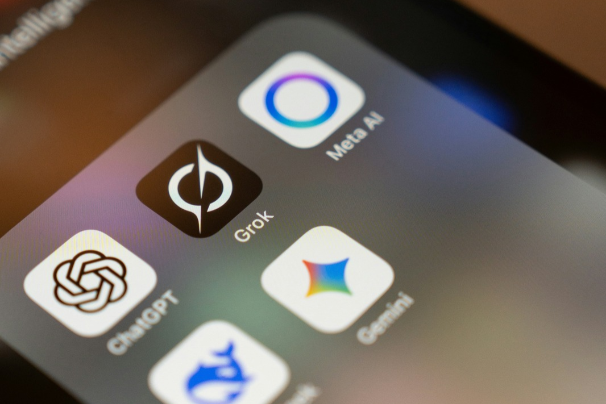
Over half of Australians (51%) now use AI tools at least weekly, and more than a quarter (28%) daily. While almost everyone (96%) is aware of at least one generative AI platform, trust is low. No major AI brand is trusted by more than 35% of respondents, with ChatGPT ranking highest at 34%.
Professor Sora Park, Director of the N&MRC, said the gap between awareness, use and trust was striking.
“People are increasingly relying on AI for information but have a deep distrust in the content that is generated by these tools. This is increasing already high levels of concern about misinformation, and adds to people feeling they don’t know what is real or fake online,” she said.
People also trust some institutions more than others when it comes to their use of AI. Scientists and healthcare professionals are seen as the most trustworthy users of AI, while 52% think politicians’ use of AI will make society worse. Half think the same of social media companies (50%) and news media (49%).
“It appears that public acceptance of AI largely depends on the existing trust in the institutions that are deploying it, rather than the technology itself,” Professor Park said.
The report also finds that respondents in Australia are slightly more likely than people in the other countries surveyed to have been caught out by AI content. Around 76% of respondents said they believed something was real before discovering it was AI-generated content, which is higher than the nine-country average of 72%.
This does not necessarily mean Australians are more exposed or susceptible to AI-generated content. Instead, they might be better at recognising when they have been misled. In fact, AI literacy is slightly higher in Australia than in the other countries surveyed.
However, when trying to work out what is real, only 27% look for AI labels, and even fewer (16%) consult trusted news sources to check. Instead, the majority of people rely on their instincts to judge the content by looking at it closely (62%).
Levels of AI literacy is also uneven among the respondents, with less than a third (31%) demonstrating high AI literacy, which was heavily concentrated among the highly educated, those in high-skilled jobs, and 18–24-year-olds.
Co-author and Adjunct Professor Caroline Fisher suggests that media and AI literacy are no longer optional.
“If we want all Australians to participate in an increasingly AI-powered world, we need to ensure that everyone can do so critically and confidently.”
The report also finds that the rise of AI technologies has shifted how Australians look for information.
While over 61% said they mainly encounter AI generated content via search engines – through AI-generated answers, summaries or assistants, more than a third (35%) are searching less since adopting AI tools.
Most users instead prefer to use an AI platform for its processing speed, ability to pull information from multiple sources, and summarise information clearly in a single response.
On the topic of news and journalism, the report finds only 9% are using AI platforms to get news, and many Australians are still grappling with the idea of AI being used in the production of journalism. While there is a general acceptance of journalists using some AI assistance (50%), the numbers sharply drop the more AI is involved in the news production process. Almost three-quarters say they are uncomfortable with news entirely generated by AI.
However, younger Australians are more open to the idea, with 19% of 18–24-year-olds comfortable with fully AI-generated news, compared to only 6% of those aged 55 and over.
Professor Park said the findings were a challenge for newsrooms.
“The challenge of AI comes at a time when the news sector is still grappling with the big wave of digital disruption, the collapse of traditional business models, widespread distrust in news, increasing news avoidance and fragile relationships with digital platforms.”
As AI use becomes more prominent in our daily lives, a vast majority of Australians believe that strong guardrails must be put in place. The need to ensure the accuracy and reliability of AI responses is seen as the top priority (93%), followed by preventing harmful content (88%) and reducing bias (87%). Support for all these priorities among Australian respondents was above the nine-country average.
The full Generative AI and News: Australia 2026 report is available here.
Image by Salvador Rios on Unsplash


