


Mike Verzosa
3 November 2026: When One Nation's David Farley won the by-election for the Division of Farrer in May this year, he led the first preference count with 39.5 per cent of the vote. After preferences, his winning share rose to 57.6 per cent. That gap raises a question – what role does the voting system – rather than the voters – play in deciding who wins?
Researchers from the University of Canberra's School of Government have been testing that question, modelling what the 2025 federal election might have looked like under two very different voting systems.
Led by Senior Lecturer Dr John Hawkins, alongside final-year Bachelor of Politics and International Relations student John Coleman, who joined the project as part of the University’s summer research program, the study re-ran the 2025 federal election using Australian Electoral Commission data under two polar opposite alternatives to the current preferential system.
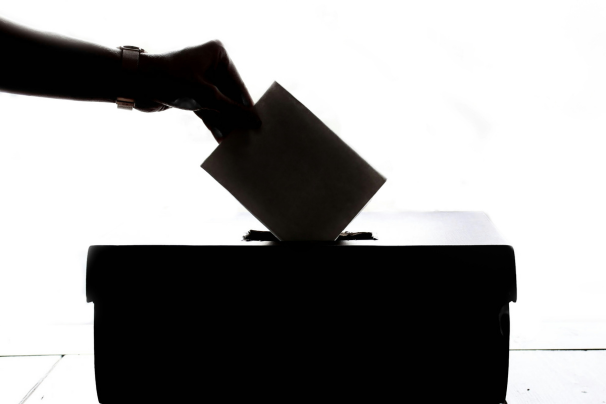
One, first-past-the-post, sees the candidate with the most first-preference votes winning the seat. The second was pure proportional representation, where each party's share of the 150 House of Representatives seats matches its share of the national vote.
“Democracies are shaped not only by the people in them, but often by the structures in them. Different electoral systems create different characters of democracies,” Mr Coleman said.
Under first-past-the-post, the simulation produced some striking results. The Greens still won one seat, but it was Melbourne rather than Ryan. The Liberal National Party kept Dickson. That meant both then-Liberal leader Peter Dutton and Greens leader Adam Bandt would have kept their seats, rather than losing them as they did in the real election.
The proportional model gave a glimpse of a very different House. Using a quota formula, the team allocated 132 of the 150 seats cleanly, then made rough assumptions about the remainder using how-to-vote cards and preference data. In that scenario, neither major party would be likely to hold a majority, and governing would depend on coalitions and negotiation.
“These simulations were not about being perfect,” Mr Coleman said.
“They were about being close enough to be interesting and give an indication of how things would go with different systems.”
Both researchers stress that the models have a significant limitation. They assume voters would behave exactly as they did in 2025, when in reality, people adapt to the system in front of them.
“What you don't know is, if there was a different voting system, how that would change how people voted,” Dr Hawkins said.
Under first-past-the-post, he said, many people who backed minor candidates would probably decide not to ‘waste’ their vote, and shift to a candidate with a real chance.
Mr Coleman said that meant the true outcome of such a change would probably sit somewhere between what actually happened and what the simulation produced.
The same uncertainty applies to preferences, which sit at the heart of Australia's election system. In the Farrer by-election, a study published by Dr Hawkins and Professorial Fellow Michelle Grattan found One Nation leading comfortably on first preferences and eventually winning the seat after preferences were distributed, 58 to 42 per cent.
Among Liberal voters, 59 per cent preferred One Nation to independent candidate Michelle Milthorpe, and among Nationals voters it was 69 per cent. The Coalition's how-to-vote cards recommended preferencing One Nation ahead of Milthorpe.
How much those cards matter remains a question. While there has been research done by political analysts to measure its effectiveness, Dr Hawkins said the answer is still unclear.
“One of the things we need to know more about is how preferences flow, and therefore how much difference how-to-vote cards make,” he said.
Mr Coleman said another common misunderstanding is that a party's polling figure translates directly into seats.
“People might make assumptions that the polling percentage of One Nation would translate to equal seats in the House – but we have distinct electorates,” he said.
Mr Coleman pointed to the last federal election, in which one party won roughly two-thirds of House seats from about a third of the vote. He suggests that if a party surged in the polls then won fewer seats than expected, some voters might blame the system itself.
“I think there's probably a disconnect between knowing that we have preferential voting and knowing what its product is,” he said.
With the Victorian election due to occur in November and the New South Wales election in 2027, Dr Hawkins hopes to use some of this data to guidesome relatedresearch.“It’ll be interesting to see Victoria. Based on the Coalition’s recent moves, it might be an early test to see if One Nation’s Farrer win was a one-off, or part of a lasting shift to the right ,” he said.
Image via Unspalsh.


