


Georgie Burgess
5 August 2026: Closing the gap between the classroom and the policy makers, the National Education Forum: Exploring the Purpose of Education brought together students, teachers, leaders, government bodies and researchers to discuss the needs of current and future students.
The Forum explored the shared role that schools, universities and public institutions play in advancing the aims of education within a resilient and forward-looking Australia.
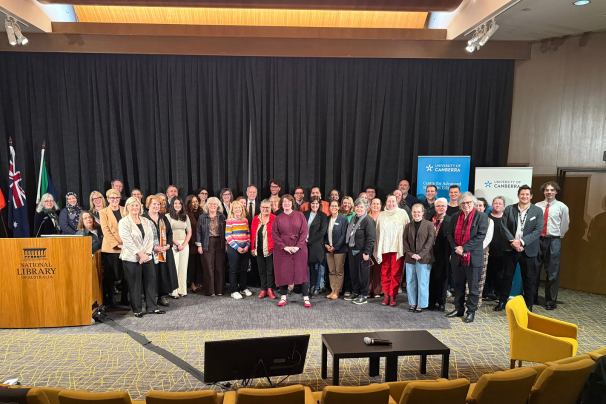
Forum convenor Dr Kate Halcrow, from the University of Canberra conceived of the event after wanting to draw back to an essential question that was being overlooked.
“Education is not a neutral project,” Dr Halcrow said. “If educators and students are left out of important conversations, the agenda is set for them. Naming a purpose is one way to give agency back to those at the heart of education.”
To explore the question through diverse perspectives, the day featured four plenaries, three Q&A’s and a spotlight on Literacy Education in Diverse Contexts.
“We weren’t looking for one answer but to help people become aware of the issues,” Dr Halcrow said. “The competition and busyness that shape schools and universities mean we’re often working in survival mode and in silos. But I think education is a shared and collective work.”
Together with Associate Professor Will Brehm, Dr Halcrow facilitated “polite but robust” debates across the day. She said one thing that could be agreed upon was that the social-emotional elements of education are critical.
“Equity, interdisciplinarity, and AI were threads that ran throughout the day and they were explored in really interesting ways,” Dr Halcrow said.
“We pointed not only to the concerns but also to the hope surrounding these issues. What educators can do and are already doing.”
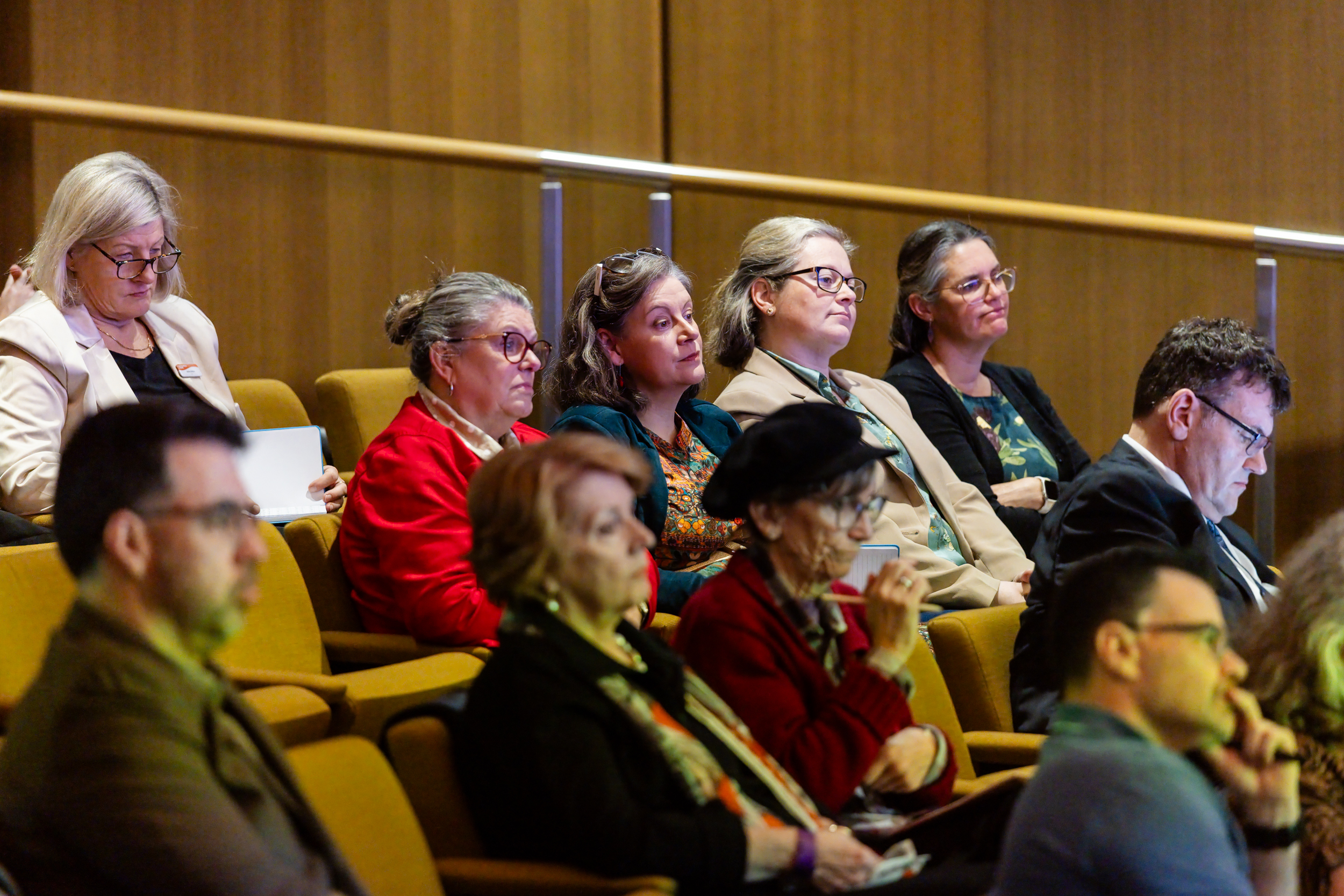
One of the most important parts of the Forum was to listen to those at the “coal face” of our classrooms and to break down the systemic structures that usually separate teachers from policymakers.
“I think some teachers feel really disempowered when their ideas and experiences in the classroom aren’t making it to the level of legislators – the forum was about trying to lessen that gap,” Dr Halcrow said.
“And I think we did achieve that, providing a space where teachers can speak directly to people making decisions in the education space.”
One of the Forum’s co-hosts and funders, Director of the University of Canberra’s Vice-Chancellor’s Centre of Public Ideas (CoPI) Professor Frank Bongiorno AM urged policymakers to look beyond just the economic benefits that education can provide but rather its ability to support democracy.
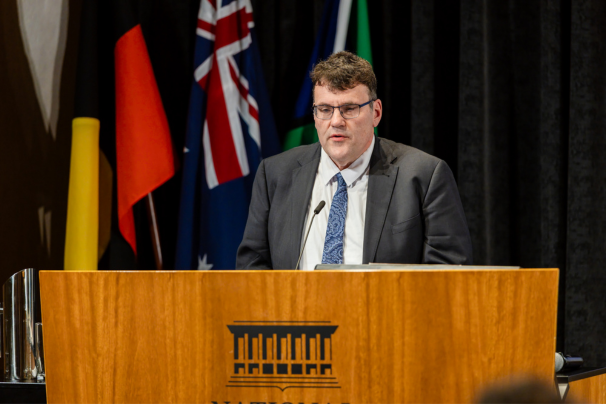
“The purpose of education is to prepare and continue to sustain people in their lives as citizens and also workers – for me its fundamental goal is actually about participation in our democracy,” Professor Bongiorno said.
“That’s become even more important in a world where people are angry a lot of the time. One of the things that education can do is prepare us to engage in a civil and meaningful way with other people.”
The closing plenary was delivered by the University’s Vice-Chancellor and President, Professor the Honourable Bill Shorten who reflected strongly on the role that education plays for achieving the nation’s social cohesion.
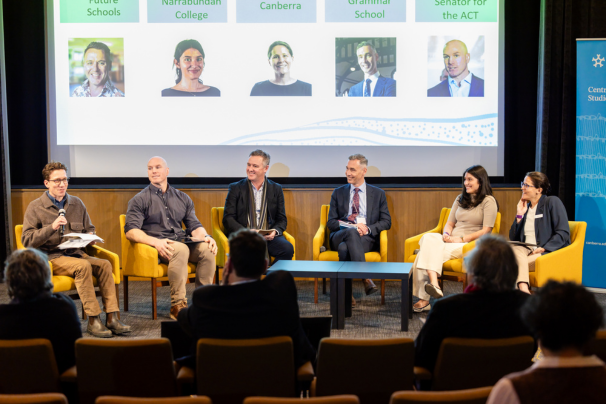
His address followed on from discussions in a preceding panel between Independent Senator David Pocock, Year 12 Narrabundah College student Kimiya Almasi, Canberra Grammar principal Dr Justin Garrick, and other industry leaders.
“I see one of the purposes of education and universities is to be, amongst other things, communitarian,” Professor Shorten said.
“By that I mean we serve our community’s education needs first and foremost. It is not to be an elite institution but rather it is about the standard of our scholarship, the quality of our research and our ability to help individuals have agency in their lives.”
The Forum focused strongly on amplifying students’ voices in addition to those teaching them. Professor Shorten remarked on the struggles being faced by the next generation of Australians.
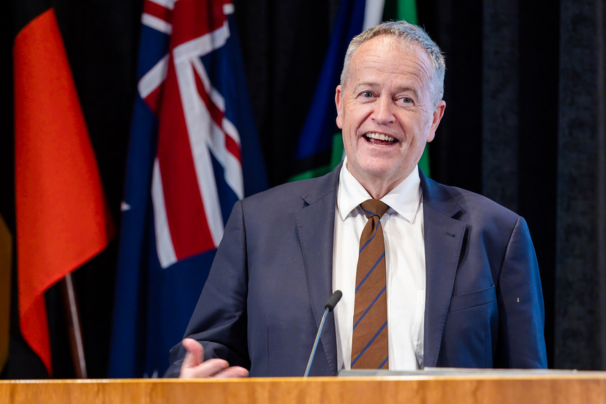
“We want our young people to have the education that they want, not just the education they think they can afford,” Professor Shorten said.
“And there is a quiet rage, I think, amongst many of the Gen Zs that I talk to. They feel disempowered by the economic status quo and they're not sure that education's going to fix that for them, they feel that there's more debt and they're not sure if there'll be a job at the end of their degree.
“Education is about building a life. It's about building people's hopes and dreams. It's about building one's identity. That should be a priority for us all.”
The Forum was co-hosted and co-funded by the UC Centre for Advanced Studies in Education (CASE), Australian Association for Research in Education (AARE) - Language/ Literacy and Arts in Education Practice Research Special Interest Groups, the UC Vice Chancellor’s Centre of Public Ideas (CoPI) and the National Library of Australia.
Photos by Davey Barber.


