


10 September 2026: What can a small Himalayan Kingdom teach us about happiness, sustainability and the way we define success? For four weeks, 14 University of Canberra students explored just that, swapping lecture halls for the government offices, businesses, cultural institutions and mountain trails of Bhutan, famous for its philosophy of Gross National Happiness.
The immersive study tour, supported by the Australian Government’s New Colombo Plan (NCP), brought together undergraduate students from law, politics and international relations, commerce, event and tourism management, design, health, nutrition, human movement and psychology.
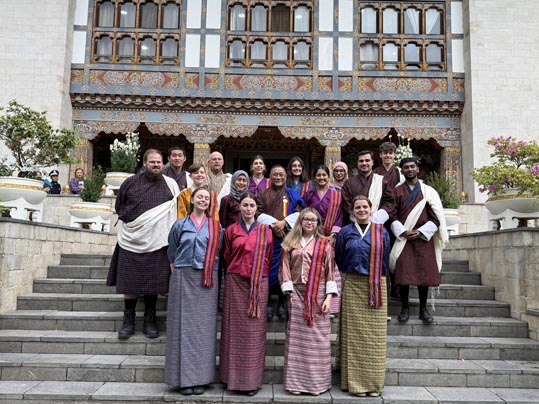
Designed to deepen their understanding of the Indo-Pacific through cross-cultural learning and collaboration, the tour put particular focus on climate change. business and entrepreneurship and Bhutan’s internationally recognised approach to sustainable development.
Central to the experience was Bhutan’s philosophy of Gross National Happiness (GNH), which considers development through four pillars – sustainable and equitable socio-economic development, preservation and promotion of culture, environmental conservation and good governance.
Professor Riyana Miranti, who co-led the tour with Adjunct Professor Simon Hoy, said Bhutan offered students an important alternative perspective on development, particularly when compared with Western approaches.
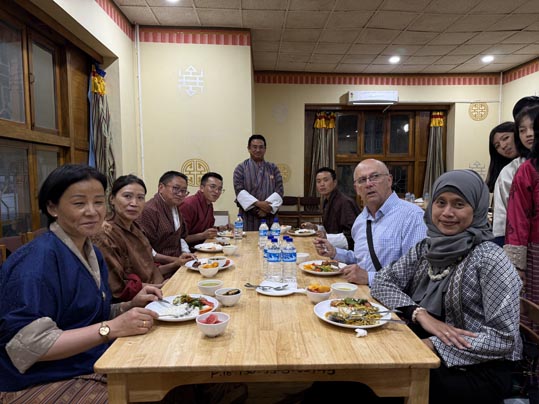
“Students experience a society that places a strong emphasis on peace, humility, simplicity, cultural identity, community connectedness and environmental stewardship,” Professor Miranti said.
“This offers a meaningful contrast to the more productivity-driven and fast-paced lifestyle commonly experienced in Australia.
“It encourages students to think more broadly about what constitutes a good society and how development can be understood and measured beyond economic indicators alone.”
Bachelor of Laws student Simeon Cork said experiencing these principles first-hand had challenged him to reconsider how success could be defined in both his personal life and future career.
“One of the biggest lessons I’ll take with me is Bhutan’s concept of Gross National Happiness and its emphasis on wellbeing, community and work-life balance,” Mr Cork said.
“Experiencing these principles firsthand challenged me to think differently about what success means and the importance of maintaining wellbeing alongside academic and professional goals.
“In turn, this helped me consider how these values can shape both my personal life and my future career in law.”
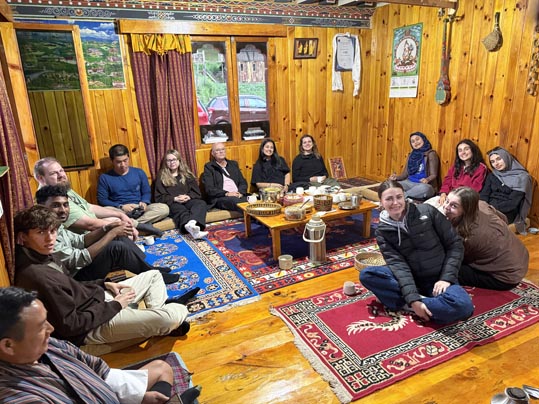
Students participated in seminars exploring topics ranging from the Gross National Happiness index, to hydropower, entrepreneurship and climate change, alongside visits to government, business and community organisations.
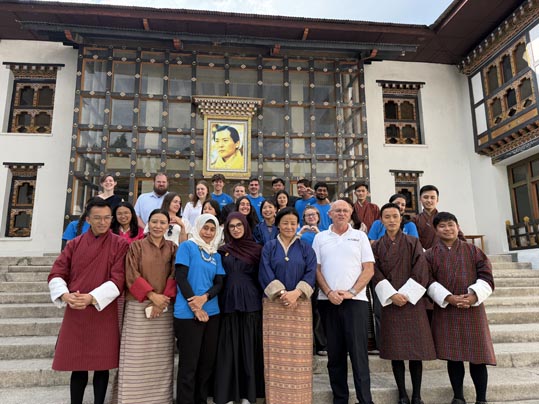
The program was co-delivered with the Royal Institute of Management (RIM), building on its longstanding relationship with the University, which includes a Transnational Education Agreement and a joint MBA partnership spanning 15 years.
Students were paired with RIM student ‘buddies’ and given opportunities to build connections with Bhutanese students, professionals and community members.
A week of workplace learning saw students placed with organisations including the Prime Minister’s Office, Ministry of Energy and Natural Resources, Bhutan Alternative Dispute Resolution Centre, Jigme Dorji Wangchuck National Referral Hospital, Institute of Happiness and the luxury Yarkay hotel by SeleQtions.
Bachelor of Event and Tourism Management student Anna Thompson completed her workplace project at the hotel and said the experience gave her knowledge she could not have gained in the classroom alone.
“The mentorship was beyond my expectations. I learnt more than I ever could have in the classroom and was given a comprehensive understanding of international hotels and the departments within,” Ms Thompson said.
“The knowledge I gained will be something I can apply in real workplace scenarios in the future, which I’m excited for after gaining confidence from this program.”
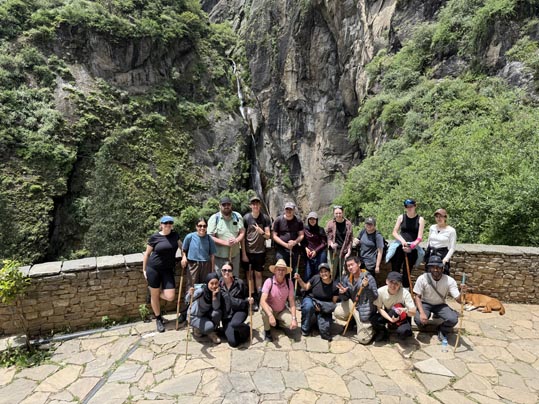
Beyond their academic and professional experiences, students travelled through Thimphu, Phobjikha, Punakha and Paro, experiencing Bhutanese culture and landscapes along the way.
The itinerary included visits to monasteries and cultural sites, engagement with local communities and hikes at high altitude, culminating in a climb to the iconic Paro Taktsang, or Tiger’s Nest monastery.
For Mr Cork, the three-hour hike became one of the most memorable experiences of the four weeks.
“Although the monastery itself was beautiful, the climb was just as rewarding as reaching the top,” he said.
“I ended up walking alongside travellers from Vietnam, the US and even other Australians, and it was that mix of company from all over the world that made the climb feel really special.”
The students received New Colombo Plan Mobility Grants valued at $7,000 to support their participation in the program and are now part of the NCP alumni community. The study tour was also supported by the University of Canberra’s Faculty of Business, Government and Law, Global Learning team and the Royal Bhutanese Embassy.


