


Georgie Burgess
9 September 2026: While they’re usually on the road, inspiring rural and regional students about the career pathways higher education can offer, the Aspire UC team from the University of Canberra spent Tuesday night in Brisbane to receive the Australian Centre for Student Equity and Success (ACSES) Award for Innovation and Excellence.
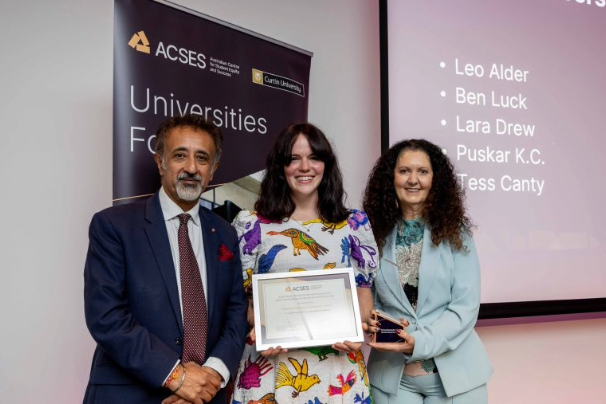
Outreach and Success Coordinator Leo Alder said the acknowledgement was an “unreal” moment for the team behind the Aspire UC Small Schools Program who have quietly been working away for the past six years.
“I'm really excited to see where this award can take us. We'd love to see the program get picked up by other universities, and this is a really great opportunity to showcase the strength of the program,” he said.
“The research shows that primary school students are already starting to formulate career identities and an understanding of what possibilities are available to them. So, I think it's really important to have consistent outreach in this space.”
Originally created in partnership with Delegate Public School Principal Brad Bannister in 2020, the program is designed to encourage young learners from Kindergarten to Year Six in rural and regional areas to imagine themselves as future university learners.
The program now reaches nine rural and regional schools through day-long, in-school sessions delivered once a term to the entire cohort of usually around 15 to 30 students.
Each session focuses on a different career theme, and includes a variety of hands-on and play-based activities to showcase different jobs. It culminates in a fully-funded on-campus experience day in Term 4, where school partners are invited to visit the University and experience a variety of faculty workshops firsthand.
“It's so rewarding to work in these schools year on year, and we've been able to have a real continuity of staffing, so we know all the students really well and they in turn know us,” Mr Alder said.
The relationship is now stretching even further, with the team becoming an integral part of these small towns as they help demystify what university is about.
“We're going to their community shows, we're meeting their parents, we're helping out with their sports days when they need an extra helping hand. It's about meaningfully engaging with these communities, which is where the success comes from,” Mr Alder said.
The evidence-based program shows that early exposure, repeated contact, and authentic university experiences significantly increase the likelihood that primary-aged students from equity backgrounds will imagine themselves as future university attendees.
The latest data show a 13 per cent increase in participants’ understanding of university, with students answering "I know what university is" jumping from 50 to 67 per cent in 2025.
Having grown up in small towns himself, Mr Alder has seen firsthand how students can slip through the cracks when it comes to getting the experiences and opportunities students in metropolitan areas receive.
“Regional students are often only intimately aware of the jobs in their community. These are often rewarding jobs like nursing, teaching or the things their parents do, like farming or trucking, but they may only have a surface-level understanding of other jobs that exist, and which they might want to pursue,” he said.
“So, what the program's really trying to do is articulate what these other jobs are in a fun, play-based way that gives them an understanding as to some of the skills required.
“By doing this, the student might realise – I actually am good at this, and it is something that I have a skill in, or that it is something that really resonates with me.”
Student Equity and Participation manager, Laurie Poretti acknowledged the team’s leadership and hard work that led to winning the award.
“This recognition is a significant achievement and reflects the University of Canberra's longstanding commitment to equity, access, and widening participation in higher education,” she said.
“We are incredibly grateful to the students, schools, and communities who have been at the heart of this work.”
You can learn more about the program and hear from students here.


