


Fleta Page
10 November 2026: Australian researchers will soon have access to one of the world's largest research funding programs and the University of Canberra’s key adviser is imploring researchers to start networking to tap into the mega-fund.
Professor Luis Salvador-Carulla was appointed the University's principal adviser on the European Union's Horizon Europe fund after Australia signed up to the framework, and says the development represents a significant expansion of funding opportunities for Australian researchers.
"Horizon has become the major international research funding scheme in the world," he said. "It is not just Europe anymore … there are 51 countries associated with the scheme now, including the United Kingdom, Canada, New Zealand, Japan, and South Korea."
Australia signed its agreement with Horizon Europe in June and, once ratified later this week the University’s researchers will be able to take part in – and even lead – research projects in Pillar 2 of the program, which has a budget of over €53.5 billion ($84.5 billion) and focuses on internationally collaborative research.
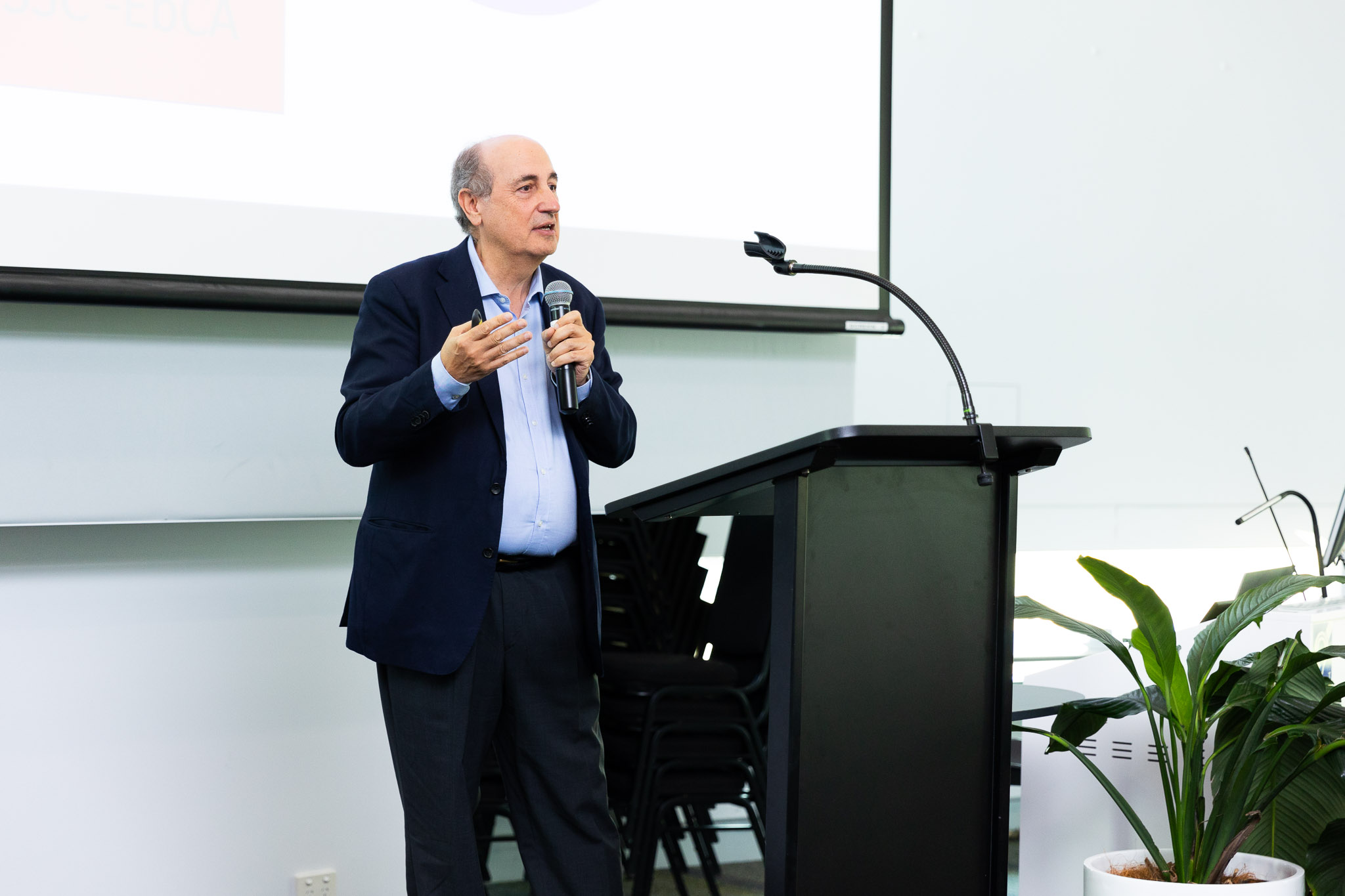
Professor Salvador-Carulla, Deputy Director of the Health Research Institute (HRI), was among a number of university representatives invited by Spain’s Ministry of Foreign Affairs to travel to Europe last month, to explore possibilities for collaboration with Spanish universities and institutions.
He was also invited to theAustralian Embassy in Brussels for a briefing on the program from a diplomatic perspective, exploring opportunities to strengthen international connections.
Building capability at the University of Canberra
To help University researchers understand the opportunities available, Professor Salvador-Carulla and the Research Office have run a series of practical workshops through the year, with more still to come.
The seminars covered topics such as navigating the Horizon system, preparing proposals, becoming a program evaluator, and hearing case studies from RMIT – which has used the Horizons fund for years through its Europe campus – on the realities of tapping into the fund.
"We wanted the seminars to be practical and focused on how researchers can actually work within the system," Professor Salvador-Carulla said.
A year to learn
While University of Canberra researchers will be able to lead Horizon projects, Professor Salvador-Carulla believes 2027 should be treated as a learning year for the University, and the most effective initial approach is to join established European-led consortia.
"It is better to join projects and proposals by invitation, and we can lead a work package, and use this year as a learning processin order to develop our own projects in the future," he said.
"This is a system that requires knowledge of how it works, and we are not going to acquire that knowledge in six months."
Professor Salvador-Carulla is encouraging researchers with strong international connections and established collaborative networks to consider participating in proposals next year, while sharing their experiences across the University.
His preferred model is a ‘cascade’ approach, where UC researchers involved in Horizon projects in 2027 could bring colleagues into collaborations and help build institutional capability over time.
Professor Salvador-Carulla's European trip has already resulted in discussions around a potential agreement with the Autonomous University of Madrid, among other universities and research centres, and he has been invited to participate in two proposals – he plans to bring other University of Canberra colleagues on board with these for a joint learning experience.
“I will keep introducing Horizon at different levels to different academics and staff, because it is clear that research funding has become a very competitive and complex area. We need to expand our possibilities of getting funding, and this is a major opportunity,” he said.
Networking key to funding
For Professor Salvador-Carulla, there was one key takeaway from his Europe trip: success in Horizon depends on relationships.
"At the end, Horizon is about networking," he said.
"It's networking with researchers in Europe, with other universities that have skills and capacities that we don't, and with public institutions and companies that can support us in engaging with the program."
Professor Salvador-Carulla said there are existing networks the University can use to tap into the mega-fund.
“The 2050 Alliance is a network we should use to improve our capacity to participate,given the fact that one of the members, the Australian Catholic University, has an office in Rome and they are already participating in projects,” he said.
“And of course, we have current agreements with other universities that are already participating in the programme, like RMIT, through RMIT Europe.”
Professor Salvador-Carulla is preparing a University-wide update before Christmas 2026 to share insights from the trip, and outline the next steps for researchers interested in becoming involved.


