


Fleta Page
1 May 2026: University of Canberra researchers will pilot a novel intervention to improve quality of life and health outcomes for chemotherapy patients, thanks to a $100,000 Cancer Council ACT grant.
The pilot will build on research by University PhD candidate Rebecca Cesnik, which looked at physical activity levels in people undergoing chemotherapy.
Ms Cesnik, an Accredited Exercise Physiologist, who was working in the ACT health system when she first embarked on her research, found only 12 per cent of chemotherapy patients in the ACT were meeting physical activity guidelines, and many weren’t being advised to be physically active.
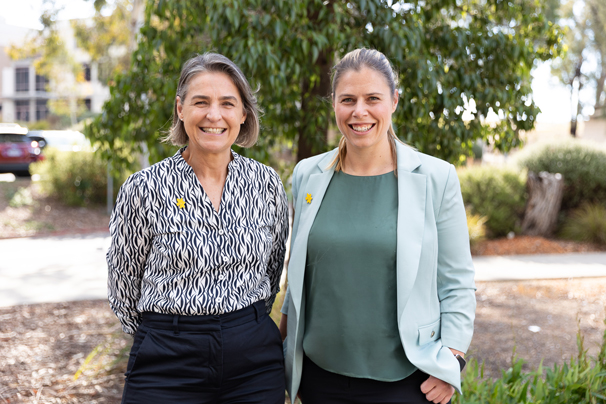
Ms Cesnik’s PhD supervisor and co-lead for the pilot, Professor Nicole Freene, said there is extensive clinical evidence that physical activity helps manage the side effects of chemotherapy – such as fatigue, anxiety and depression – improves patients’ quality of life and reduces the risk of cancer recurrence and early death.
“But there is a disconnect when it comes to putting that evidence into practice,” Professor Freene said.
The $100,000 grant from the Cancer Council ACT will enable them to test the effectiveness of a simple intervention and whether it improves activity levels.
The intervention – known as “Measure It” – consists of a five-minute check-in with a clinician every six weeks over six months. Participants self-report their physical activity, wear step trackers for an objective measure, and receive brief, individually tailored advice.
The trial will recruit 40 chemotherapy patients to participate, including a control group, across two ACT chemotherapy day units, and involve short training sessions for staff on how to have conversations about physical activity and encourage people in a meaningful way.
“Any clinician can do it, regardless of whether they're a physio or an exercise physiologist, nurse, doctor, oncologist, whatever. It doesn't matter what your clinical background is,” Professor Freene said.
The intervention has already been successfully trialled among patients with heart disease by another University of Canberra PhD researcher, Jessica Seymour, who will also be involved in this trial.
“She found that the patients really liked the regular check-in with a credible source every six weeks, and they really liked that they didn't have to do a particular exercise program. The clinicians liked that they had a structure that they could follow – and it was really easy to incorporate into their workflow because it only took five minutes,” Professor Freene said.
This trial will test whether the same intervention can work in a cancer population, where the barriers to exercise – as researched by Ms Cesnik – have some differences.
“The evidence is very clear that physical activity has massive impacts on [cancer patients’] survival outcomes, their treatment tolerance, their quality of life – but they feel awful! They don't want to do it,” Ms Cesnik said. “Cancer-related fatigue is one of the most common symptoms of people undergoing chemotherapy.”
Her research found patients lacked tailored education on physical activity, and that many cancer care clinicians were not giving advice, as they were worried it wasn’t their area of expertise.
“We know that the guidelines are the best if people can reach it – that’s 150 minutes of moderate intensity physical activity, and two to three resistance exercise sessions a week. But we also know that that's not feasible for everybody. So you need to have a ‘something is better than nothing’ kind of conversation,” Ms Cesnik said.
“One of the pieces of advice I've learnt to give is if you're feeling unwell, go for a five, 10-minute walk. If you don't feel any worse, great – keep going with that. If it makes you feel worse, then by all means go have a rest. At least you've tried.”
Professor Freene said one of the research participants had been given that advice from Cesnik while undergoing chemotherapy.
“She said it was what made her get out of the house and go and do something, because she knew it didn't have to be something huge. She said it was the only thing that actually kept her moving when she was feeling so low during chemo,” Professor Freene said.
“And that's what this is all about. It's just a really brief intervention, some advice that comes from a really credible source, such as a clinician, that can be put in place, motivate people and make a difference.”
Ms Cesnik said the feedback reinforced that just a simple bit of advice can change someone's perspective and “empower them to help themselves”.
Cancer Council ACT chief executive Verity Hawkins said they were proud to support the work through their Cancer Research Grants program.
“With the aim of helping healthcare professionals more effectively support people throughout cancer treatment and recovery, this research plays an important role in enhancing patient care and outcomes – a meaningful step towards our vision of a cancer-free future,” Ms Hawkins said.
“Congratulations to Professor Freene and the research team, and thank you to our ACT community, whose incredible support makes our continued investment in life-changing cancer research possible.”


