


29 May 2026: Since the rapid emergence of generative Artificial Intelligence (AI) tools such as ChatGPT, Claude and Gemini, teachers are grappling with the sudden and uncertain integration of this new technology into teaching, learning and assessment.
At the University of Canberra, Dr Beth Chapman, is helping to lead the conversation about this new challenge.
A lecturer and researcher in education, Dr Chapman works at the intersection of AI, teaching practice and education policy. Her research explores how schools and teachers can use AI technologies in ways that enhance learning while maintaining academic integrity, equity and student wellbeing.

Dr Chapman says AI tools have the potential to ease some of the burden on teachers, supporting with administrative work, and rapidly personalising and adapting classroom activities to ensure their time is freed up for direct student support.
“AI offers significant educational benefits when used thoughtfully,” Dr Chapman said.
“It can provide personalised, real-time feedback, help students engage more deeply with complex concepts, and support teachers to adapt learning for diverse student needs. For example, instantly generating vocabulary lists for students learning English as an additional language or adjusting document colours for those with dyslexia or colour blindness.
The first step in integrating these time-saving tools, is to better understand teachers’ readiness and attitudes towards AI – in a study published this month in Social Sciences and Humanities Open, Dr Chapman and colleagues did just that. Their findings highlighted both optimism and caution, with teachers balancing the potential educational benefits of AI against concerns relating to safety, bias, copyright, and academic integrity.
Dr Chapman’s work also comprises a practical component – having seen an unfulfilled need for teachers, she delivered a large-scale professional learning event focused on practical classroom applications of AI – instantly attracting over 120 educators from across the ACT’s public, Catholic and Independent schooling sectors.
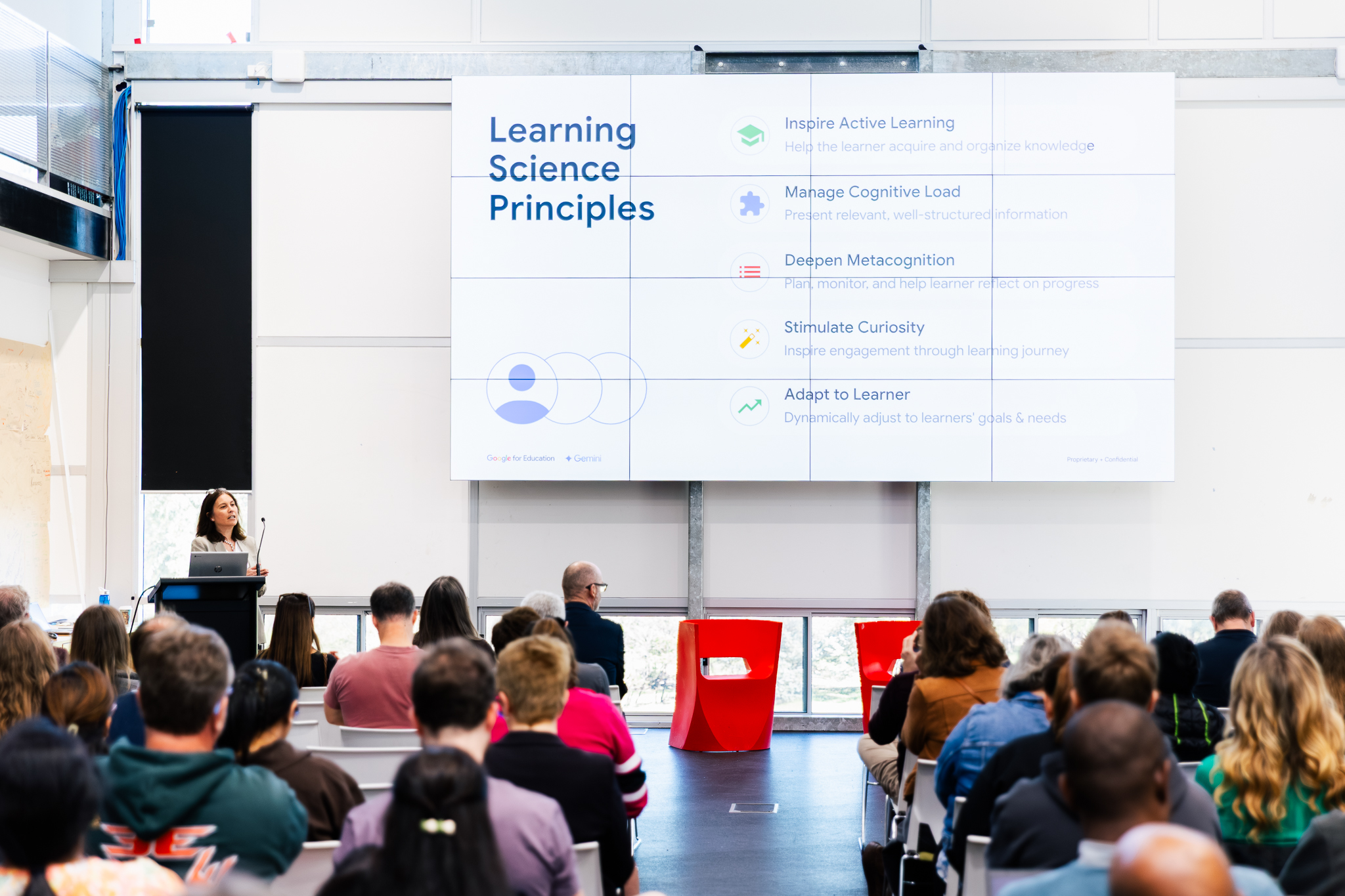
Dr Chapman says it’s important that teachers’ experiences and perspectives help shape the policies, guidance and implementation strategies being developed across education systems, and is working directly with schools and educations systems to support professional learning in AI.
Delivered in partnership with Google and the ACT Education Directorate, teachers guided through using Gemini to code interactive learning resources, write illustrated storybooks and undertake deep research using credible and citable sources.
With school districts across Australia now enabling AI tools – the ACT public school system now operates as a Google for Education environments – Dr Chapman said the foundations are in place to support thoughtful and responsible AI integration in schools.
And in AI-enabled future, students need to be armed with critical thinking, creativity and digital literacy skills to thrive – and that starts at school.
“Teachers play a crucial role in preparing the next generation for a future where AI is embedded in everyday life and work,” she said.
“Instead of focusing solely on preventing misuse, educators can teach students how to use AI ethically and effectively.
“It’s important that teachers’ experiences and perspectives help shape the policies, guidance and implementation strategies being developed across education systems.
“The focus should be on how we ensure AI technology helps teachers and students rather than simply reacting to it.”


