


UC's game plan to get kids moving for life
Amanda Jones
28 May 2014: We all know we need to exercise more, but most of us don’t. Whether its work, study or family commitments, most of us are time poor and exercise is the last thing on our mind after a busy day at work, finishing that overdue assignment or finally getting the kids to bed.
But our lack of physical activity is costing us billions. Recent research by Medibank puts the cost of physical inactivity to the Australian economy at $13.8 billion per year, as a result of healthcare costs, lost productivity and premature mortality.
Starting early is key to breaking the cycle, explains University of Canberra assistant professor in sport and exercise psychology and lead author of the ‘game plan’ report, Richard Keegan.
“The concept of physical literacy was completely new to me before I arrived in Canberra, but after writing the report I see it as vitally important to ensuring a healthy future for Australia” he says.
 |
|
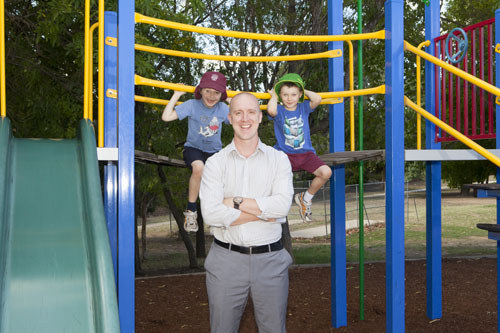
Richard Keegan is researching how to help kids enjoy being active. Photo: Michelle McAulay |
Dr Keegan and his colleagues argued that school physical education could be an ideal opportunity to make physical activity more engaging, meaning people would be better prepared to live healthier, longer lives.
And that’s where physical literacy comes in. A relatively new term, physical literacy means being ready, willing and able to move, preferably from an early age.
“Children don’t necessarily need to be good at sport, or to achieve certain levels for their age-group, they just have to learn to enjoy moving,” Dr Keegan says.
Drawing from popular physical literacy programs in the UK, USA, Canada and New Zealand, the report recommends 10 key ideas for an effective physical literacy program in Australia.
 |
|
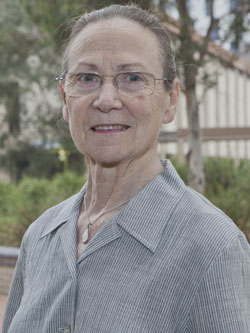
Margaret Whitehead visited campus in February. Photo: Michelle McAulay |
They include resources for allowing teachers to deliver fun physical education, encouraging all forms of physical movement activities such as dance, creative expression and everyday travel, and positioning physical literacy and quality physical education at the centre of the curriculum.
The report led Dr Keegan to the original creator of the concept of physical literacy, Margaret Whitehead, a visiting professor at the University of Bedfordshire UK, who found the report online and contacted Dr Keegan.
“I read the report with great interest, he seemed to have done a very thorough job of surveying the different programs and the different interpretations of physical literacy,” Professor Whitehead says, who visited campus in February to meet with Dr Keegan ahead of attending the International Conference for Physical Education in Higher Education (AIESEP) in Auckland.
“I am delighted that people have picked the idea up and it has stimulated a lot of rethinking. I hope it’s on the agenda when Canada, the USA, New Zealand, England and Australia look at developing their curricula.”
Dr Keegan and his team will soon begin collecting anonymous data from primary schools across the ACT and Victoria to see what and how much physical education is being taught.
“Then we can work out how best to support teachers, parents and the local community in delivering physical literacy – whether that’s online resources, training for teachers or something else.”
“This is a 10-15 year project,” he explains. “We are busy accumulating all the resources we need to make it happen, and then we’ll start applying for grants to turn it into a reality.
“I think that’s a good start bearing in mind that one year ago the idea of a physical literacy program in Australia was a bit of a dream – a nice thought but nothing more.”


