<iframe src="https://www.googletagmanager.com/ns.html?id=GTM-PRQLQP" height="0" width="0" style="display:none;visibility:hidden">
Accommodation Guarantee Other housing options Resolving disputes
About UC
Library facilities
Research equipment
UC account
Skip navigation
University of Canberra logo University of Canberra home page
Future students
Future students
Find a course
  • Find a course
  • Study at UC
  • Browse study areas
  • Online courses
  • UC College
  • International
  • Parents and carers guide
  • Life and living at UC
  • Student support
  • Entry requirements and pathways
  • Scholarships
  • Australian Indigenous students
  • Apply
  • Start at UC
  • Talk to us
  • Careers advisors and agents
Research
Research
Discover more
  • About UC research
  • Research Plan 2024 - 2028
  • Research impact
  • Life of a CBRn
  • Research centres and institutes
  • Contribute to research
  • Graduate Research School
  • Research news
  • Contact us
Give
Give
Discover more
  • Student Support Appeal 2026
  • Funds you can support
  • How to give
  • Impact of giving
  • Contact us
On campus
On campus
Discover more
  • Campus tours
  • UC Collections
  • Facilities
  • Campus Master Plan
  • Venue hire
  • Campus cafes and shops
  • Childcare
  • Health and support
  • Transport
  • Parking
  • Adobe Creative Campus
  • Sport at UC
  • Security
  • Lost and found property
  • Safe community
  • Report an incident
About UC
About UC
Discover more
  • University strategy
  • Senior management
  • Faculties
  • Campus locations
  • Educational partners
  • Graduation
  • Office of Indigenous Leadership
  • Academic integrity
  • Sustainability
  • Media and communication
  • Governance
  • Policy and legislation
  • Learning at UC
  • Learning and Teaching
  • UC Brand toolkit
  • Student Equity and Participation
  • Equity and diversity
  • Work at UC
  • Key dates
  • Contact University of Canberra
  • Safe community
  • Report an incident
  • Students
  • Staff
  • Alumni
  • Library
  • Maps
  • Safety & Support
Safety and Support
  • Students
  • Staff
  • Alumni
  • Library
  • Maps
  • Safety & Support
UC Open Day Fest - For future students, families, and the whole community. Saturday 12 September, 10am to 3pm
UC Open Day Fest - Saturday 12 September, 10am to 3pm

UC Open Day Fest

Sat 12 Sept, 10am–3pm

REGISTER NOW

News Engagement among Australian Teens (NEAT)

Youth Advisory Group

Home
/
Research
/
Research Centres, Institutes and Organisations
/
News and Media Research Centre
/
Research projects
/
News Engagement among Australian Teens (NEAT)

We are inviting 20 students in Years 7 to 10 from all over Australia to become Youth Advisors and help shape a three-year research project about how Australian teens find, understand and share news online.

Applications close: 31 December 2026

We will contact successful applicants by email by 17 January 2027.

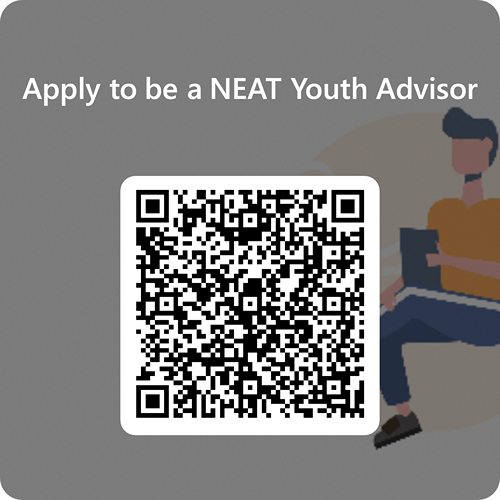
Apply using the online application form

About the NEAT project

News Engagement among Australian Teens (NEAT) is a three-year research project. It is funded by the Australian Research Council through its Discovery Projects scheme (Project ID: DP260100614) and led by the News and Media Research Centre (N&MRC) at the University of Canberra.

We want to find out how Australian teens find, understand and share news online, how news shapes their views, and how they get involved in issues they care about. We also want to understand what helps young people have a say, and what gets in the way.

The Youth Advisory Group

A Youth Advisory Group is a group of young people who guide a research project and make sure it reflects what matters to them.

For the NEAT project, we are inviting 20 students in Years 7 to 10 from all over Australia to become Youth Advisors. Together, they will form the project’s Youth Advisory Group. Because all our researchers are adults, it’s important that young people help shape the research from the start. The Youth Advisory Group makes sure young Australians’ voices are heard and taken seriously. It also makes sure that young people from many different backgrounds are included.

Your role as a Youth Advisor 

Youth Advisors act as advisors to the project for three years. They will work with the research team to help shape the project, share their views on news and how young people take part in their communities, and suggest ways to make the research relevant and engaging for young people. We welcome Youth Advisors from all kinds of backgrounds and experiences.

What to expect

Year 1 (2027): Visit to Canberra

The project begins in February 2027. Youth Advisors will come to Canberra for a two-day visit, with all expenses paid.¹ Over the two days, Youth Advisors will meet each other and take part in a half-day co-design workshop, where they will help the researchers plan how the research is done. The visit will also include a chance to explore the Museum of Australian Democracy (MoAD) or ABC Canberra, and to experience life on a university campus.

Years 2 & 3 (2028–2029): Online workshops

Youth Advisors will meet online once a year for a workshop. The researchers will share some of the project’s findings, and Youth Advisors will give their ideas and views on them. 

¹ To protect our Youth Advisors’ privacy, the exact dates and programme for the 2027 visit are included only in the invitation letter. You may have received this letter through your school or one of our partners. If you haven’t, please email us at teennews@canberra.edu.au.

Support for Youth Advisors

The NEAT project will cover the costs of travel, accommodation, and meals for Youth Advisors to attend the 2027 visit and the final symposium in Canberra.

  • The University of Canberra will cover travel costs for participants travelling to Canberra from other states or regions, including return flights (or bus fares if you are close to us).

  • The University of Canberra will organise accommodation and meals. 

  • Members of the University of Canberra project team will supervise Youth Advisors throughout the visit, including overnight.

  • Each Youth Advisor will receive an annual stipend of $100.

  • Each Youth Advisor will receive a Certificate of Participation from the News and Media Research Centre and the NEAT project partners.

Eligibility 

To become a Youth Advisor for the NEAT project, you must meet ALL of the following criteria:

  • You will be in Year 7, 8, 9 or 10 at an Australian school in 2027.

  • Your parent or legal guardian has given permission for you to apply. If you are selected, they will need to sign a consent form.

  • You can travel to Canberra for the two-day visit in February 2027. 

  • You are willing to join the online workshops in 2028 and 2029.

Apply to become a Youth Advisor

Fill in our online application form. You will answer some simple questions about yourself. 

Applications close: 31 December 2026

We will contact successful applicants by email by 17 January 2027.

The full programme, including accommodation arrangements, is in the invitation letter.

If you have any questions, please email us at teennews@canberra.edu.au or visit us on Instagram @teennews2026. 
Apply using the online application form

Research team

Our research team brings together experienced academics from the University of Canberra, Western Sydney University and Yonsei University in South Korea. They have spent many years studying news, media and digital life, from how teens use social media to how news affects our communities.

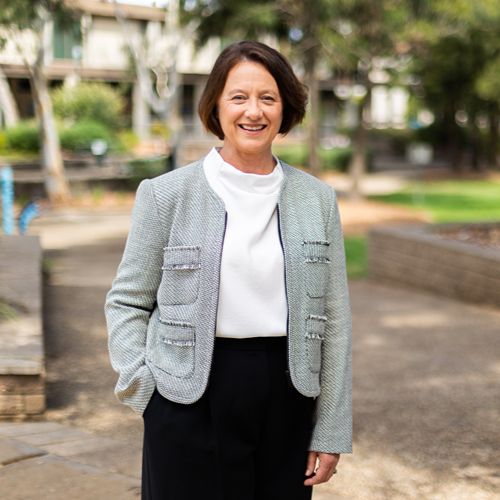
Shannon Song supports both the research team and the Youth Advisors. She is the main contact for Youth Advisors and their families.

Jee Young Lee

Jee Young Lee

Jee Young Lee

University of Canberra
Dr Jee Young Lee is Associate Professor in the Faculty of Arts and Design at the University of Canberra. Her research focuses on understanding diverse news audiences, including local communities and young people. She is currently leading the Australian Research Council Discovery project, News and Australian Teens: Enablers and Barriers to Digital Citizenship and a co-author of the Digital News Report: Australia.

Tanya Notley

Tanya Notley

Tanya Notley

Western Sydney University

Dr Tanya Notley is Professor in the School of Arts and the Institute for Culture and Society at Western Sydney University (WSU). Her research and teaching focus on media literacy and digital inclusion. Tanya leads the Advancing Media Literacy in Australia research program at WSU and she is a founding member of the Australian Media Literacy Alliance.

Yoonmo Sang

Yoonmo Sang

Yoonmo Sang

Yonsei University

Dr Yoonmo Sang is an Associate Professor in the Department of Communication at Yonsei University in Seoul, South Korea. He is also an Adjunct Associate Professor at the University of Canberra. Before joining Yonsei University, he was an Assistant Professor at Howard University. His research focuses on how socio-cultural and technological changes advantage and/or disadvantage stakeholders.

Kieran McGuinness

Kieran McGuinness

Kieran McGuinness

University of Canberra

Dr Kieran McGuinness (they/them) is a Postdoctoral Research Fellow with a generalist focus on mixed-method approaches to critical journalism studies, media industry policy research, and news audience research. Their recent research focuses on audience perceptions of political misinformation, gender and ethno-racial representation in news and news organisations, and public health communication of gambling risk and harm. They are co-author and lead data analyst for the N&MRC’s long running Digital News Report: Australia project, which reports on longitudinal news and media consumption across 47 countries.

Kerry McCallum

Kerry McCallum

Kerry McCallum

University of Canberra

Dr Kerry McCallum is an Emeritus Professor at the University of Canberra. Her research in Political Communication specialises in the relationships between changing media and Australian social policy. Kerry has a strong record of grants management, publication and research translation. She has been the recipient of five Australian Research Council and 23 government and industry grants since entering academia in 2004. Kerry is a former President of the Australian and New Zealand Communication Association (ANZCA) and Member of the Australian Institute for Aboriginal and Torres Strait Islander Studies (AIATSIS).

Simon Chambers

Simon Chambers

Simon Chambers

Western Sydney University

Dr Simon Chambers is a researcher at the MARCS Institute, Western Sydney University. A cultural sociologist with a long-standing interest in media and communications, he studies how culture is produced and engaged with – particularly in an era of digital and algorithmic mediation. He has been a member of WSU’s Advancing Media Literacy in Australia research team since 2020. Alongside his academic work, he is Director, Data Science and Social Intelligence, at social purpose research consultancy The Insight Centre.

Shannon Song

Shannon Song

Shannon Song

University of Canberra

Ms Shannon Song is a research assistant at the University of Canberra. Shannon is an experienced educator in various educational settings, including Early Childhood Education and Care, primary schools, and universities. Shannon coordinates the Youth Advisory Group and will be the main point of contact for participants and families throughout the programme.


Project partners

  • Museum of Australian Democracy (MoAD)
  • ABC Education

Frequently asked questions

Applying

Yes. If you will be in Year 7 in 2027, you can apply.

Yes. You can apply as long as you go to an Australian school.

Yes. The workshops will be run in English, and we can arrange support if you need it.

Yes, siblings are welcome to apply. We will look at each application separately, so one sibling may be selected, and another may not.

Your privacy

We collect and store your information according to University of Canberra policies and the project’s ethics approval (approval number 13738). It is kept securely on University of Canberra systems, and only the NEAT research team can see it. We will not use your name in any publications or reports without your written permission.

The Canberra visit

You will share a twin room (a room with two single beds) with another Youth Advisor of the same gender who is within 12 months of your age. If you have any questions or needs about rooms, please email us.

Yes. You can list any allergies and dietary needs on your application form. We will share them with our caterers and venues, so that suitable meals are provided throughout your visit.

A bus just for the Youth Advisory Group will take you everywhere during the visit, including to and from Canberra Airport.

Parents and guardians are welcome to travel to Canberra at their own expense. Please let us know in advance. Parents and guardians can join the social and cultural activities, but the co-design workshop is only for Youth Advisors and the research team.

Contact us

University of Canberra
Building 9, Level C, Room 10
11 Kirinari Street
Bruce, ACT 2617

teennews@canberra.edu.au


Enquire
University of Canberra logo
Facebook icon Youtube icon Instagram icon Tiktok icon Linkedin icon

Other quick links

Contact us

  • Future students
  • Current students
  • Alumni contact us
  • Donors
  • General enquiries

Faculties

  • Arts and Design
  • Business, Government and Law
  • Education
  • Health
  • Science and Technology

News and events

  • UnCover
  • Newsroom
  • Find an expert
  • Events
  • Blog

Services

  • Security
  • Library
  • Medical and Counselling
  • IT Service updates
  • Gym
  • Accommodation

Administration

  • Maps
  • Job opportunities
  • Staff directory
  • Researcher profiles
  • Freedom of information
  • Policies and procedures

Acknowledgment of Country

UC acknowledges the Ngunnawal people, traditional custodians of the lands where Bruce campus is situated. We wish to acknowledge and respect their continuing culture and the contribution they make to the life of Canberra and the region. We also acknowledge all other First Nations Peoples on whose lands we gather.

University of Canberra, Bruce ACT 2617 Australia

+61 2 6201 5111

ABN 81 633 873 422

CRICOS 00212K

TEQSA Provider ID: PRV12003 (Australian University)

Contact UC
Copyright
Disclaimer
Privacy
Accessibility
Collection notice