
AR Visual Prosthetic Offers New Hope for Australians with Advanced Macular Degeneration
Researchers at the University of Canberra have developed a world-first augmented-reality (AR) visual prosthetic that may enhance vision for people living with advanced age-related macular degeneration (AMD)—a condition that currently has no treatment capable of restoring central sight.
The new device uses a unique approach called stochastic resonance, where carefully calibrated “visual noise” is added to the scene through AR glasses to help the brain detect weak visual signals.
In early testing, people with severe macular damage experienced meaningful improvements in visual clarity, with an average gain of around 4.4 letters on an eye chart when the optimised visual noise was activated.
Current Research Projects
Our current projects include:
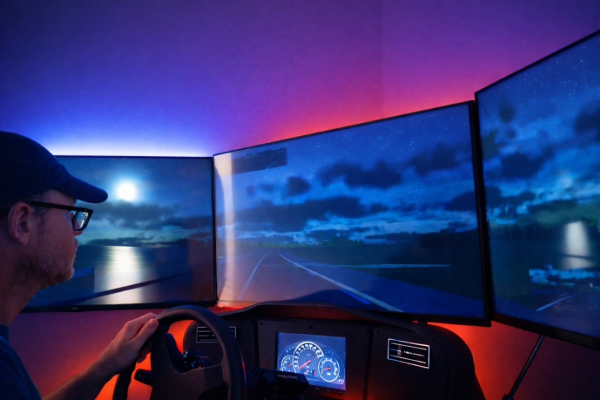
- Investigating the effects of glaucoma on driving performance (using a driving simulator)
- Examining whether new retinal imaging techniques can better predict these effects
- Studying the effects of exercise on physical and cognitive fatigue, and using driving performance measures to quantify these effects
Previous Research
Our past work has explored:
- Whether augmented reality has beneficial effects on driving measures in age-related macular degeneration
- The impact of distracted driving in the general population, and which types of distraction have the largest effect on driving performance
Why Your Support Matters
This research directly informs safer driving guidelines, better clinical assessments, and practical interventions that help people stay independent for longer. Donations enable us to expand our studies and translate research findings into real‑world benefits for individuals and communities.
Your support helps turn insight into impact—keeping drivers safer and lives moving.
Donate


