


Fleta Page
14 October 2026: For the first time, a University of Canberra academic staff member has been named the ACT Allied Health Professional of the Year, with the Faculty of Health’s Discipline Lead for Pharmacy, Associate Professor Mary Bushell, taking home the top gong.
Associate Professor Bushell’s also took home the Research Excellence award at the 2026 ACT Allied Health Excellence Awards last night.
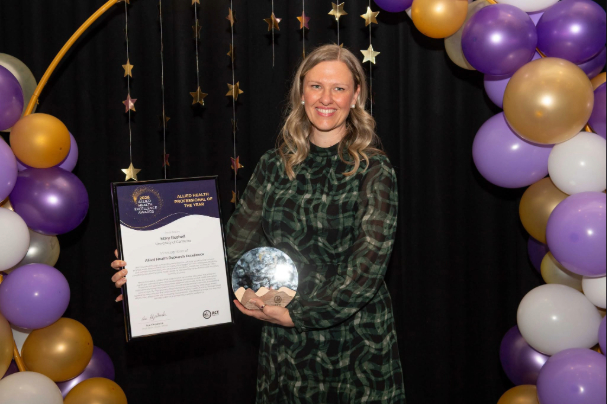
The awards came on the eve of the University’s celebration of Allied Health Professions Day, and the role of the UC Health Clinics play in educating the next generation of the allied health workforce, while providing affordable services to the Canberra community. This includes through the offering of Clinics that are unavailable or harder to access in the public health system.
Professor Bernie Bissett, Acting Executive Dean of the Faculty of Health, said the faculty is “over the moon” to have had Associate Professor Bushell recognised in a local workforce of 14,000 allied health professionals.

“Traditionally, the award has gone to a full-time clinician, which is great – clinicians are really important – but I think it's a nice nod to the fact the research we do here at UC is a really powerful element that shapes clinical practice,” she said.
“That shines through in Mary's work, because the research she’s done has immediate clinical applications. For example, her research in injury related to vaccination in the shoulder has really clear implications about how to change and improve practice.”
Associate Professor Bushell’s award came on the same day of the launch of her open access textbook on administering vaccines and medicines.
Professor Bissett said the University’s link to research was one of the strengths of the UC Health Clinics, which offers access to eight different allied health disciplines through student-led clinics.
“When patients come to this clinic, they're highly likely to have the most current evidence-informed practice compared to perhaps some other places, which can get stuck in ‘this is the way we've always done things’,” she said.

“The students here are learning directly from clinical educators with a university lens, and are able to apply the evidence-based interventions that we've taught in the classroom straight through into the real-world setting.”
John Lewis is one of the earliest patients of the clinics, having attended the Parkinson’s group physiotherapy clinic since 2012; the clinic focuses on mobility, balance and everyday activities.
The 89-year-old, who walks unaided, estimates he has worked with over 600 University of Canberra physiotherapy students during that time. The Thursday afternoon sessions have also become his weekly afternoon out, offering a little respite from caring for his wife.
At the University’s celebration, Vice-Chancellor and President Professor The Honourable Bill Shorten, addressed students, patients and clinical educators, described the Clinics as a “virtuous circle”.
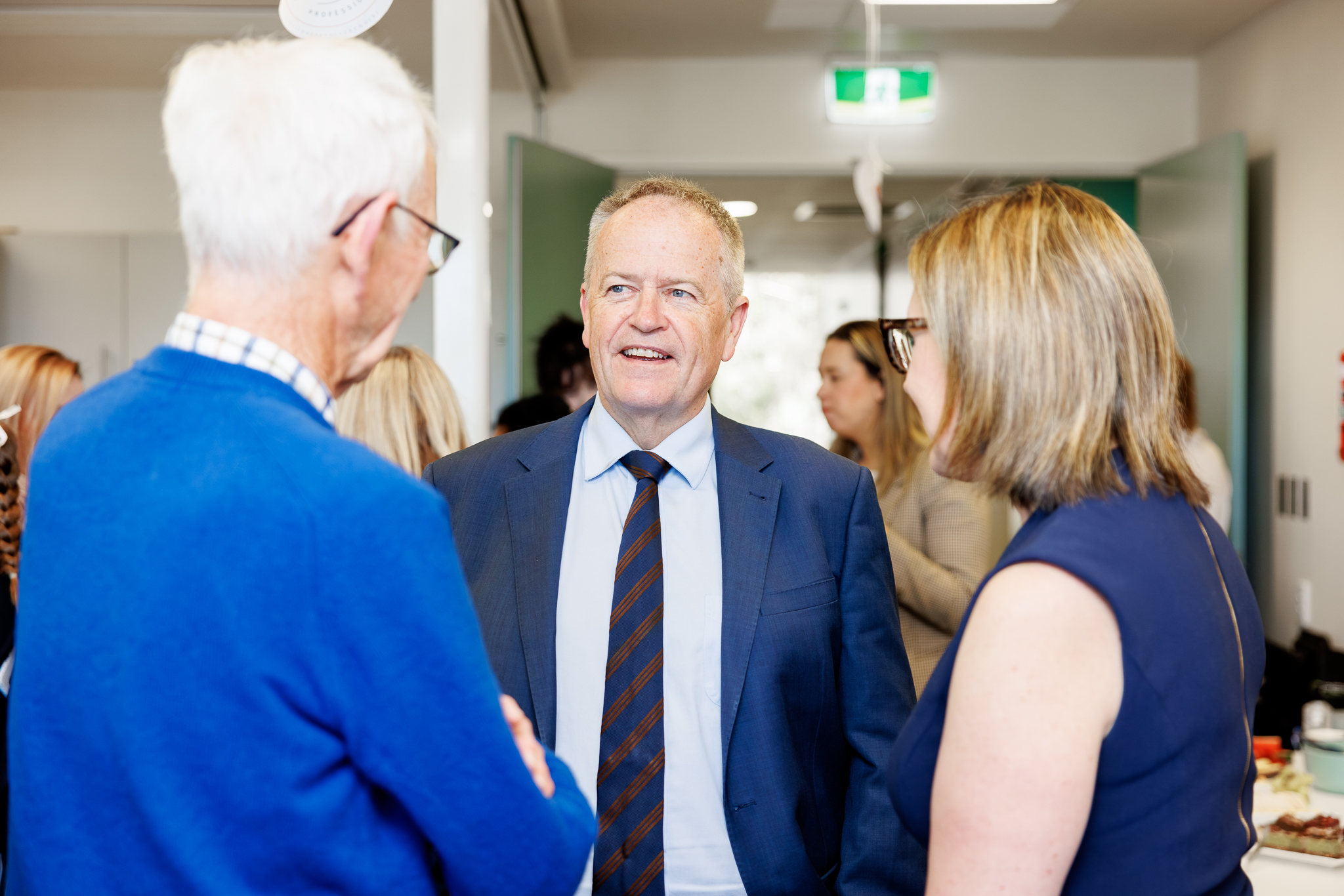
“We appreciate all the patients who come to the Clinic, because while you are getting valuable support and treatment, the truth of the matter is you are giving a lot back to our students,” he said.
“It’s one thing to learn the theory, but theory can come to a crashing halt when you’ve actually got to deal with a human being and you realise ‘this is not something I’m preparing for an assignment, this is a person and what I do matters’.”
Clare Jolly – a student in the Masters of Clinical Psychology program, which requires that students do their first two placements at the UC Health Clinics – agrees.
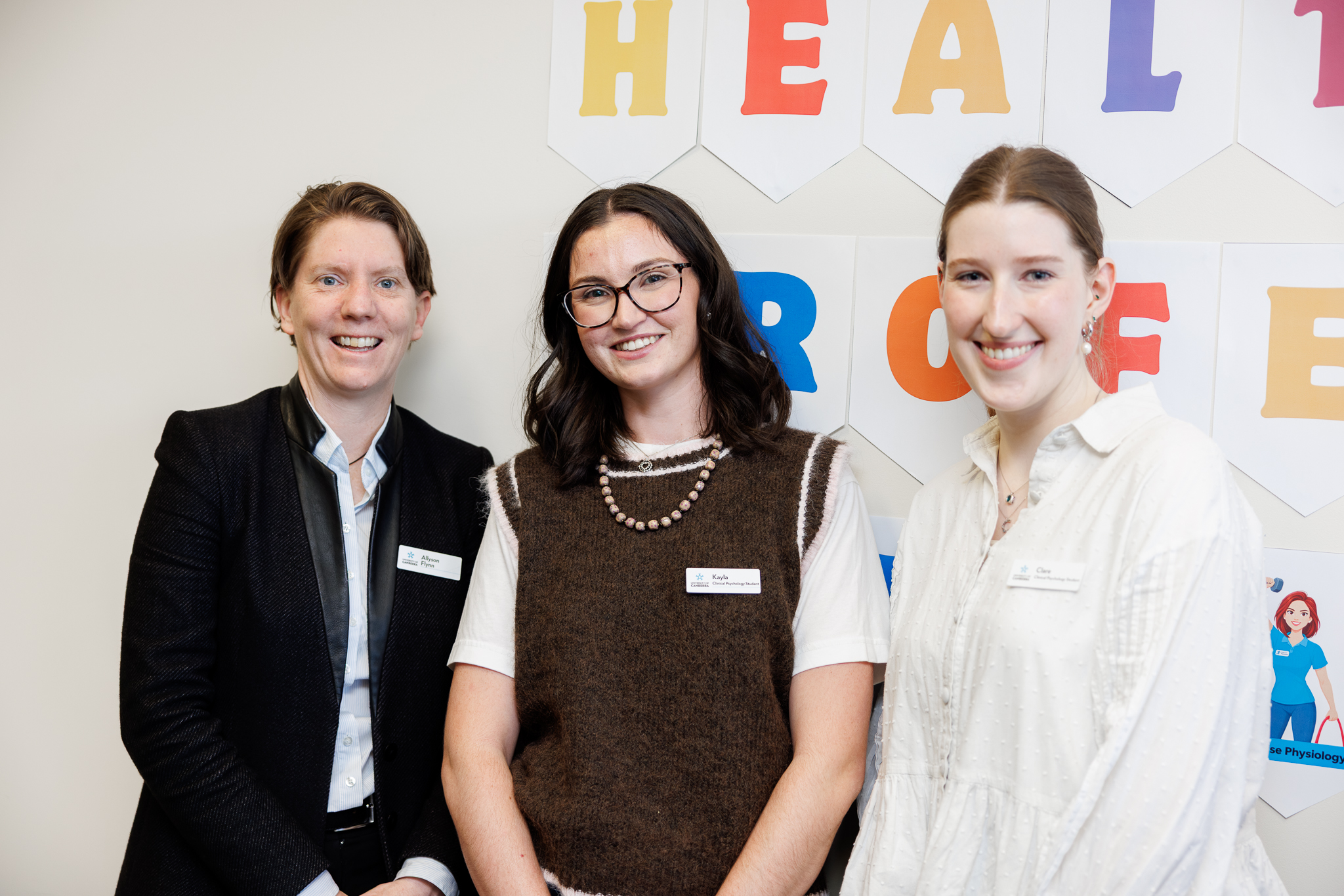
“We spend four years at least going through our undergrad and honours, learning all the theory, doing all the research, proving that we can do research in psychology, but once you get to this point, suddenly you get to apply everything you've learned,” she said.
“It feels so rewarding, and I think I've learned more in the last year than maybe my whole undergraduate degree combined when it comes to actually being a psychologist, a practitioner.”
A range of psychology services are offered out of the Clinic for ages six and up; these include cognitive assessments for learning difficulties and ADHD, and a new eating disorders clinic, which will work in collaboration with the Nutrition and Dietetics clinic.

The ACT Chief Allied Health Officer, Sue Fitzpatrick, said that learning across the professions was great preparation for the future workforce, as scope of practice moves towards being skills-based rather than profession-specific.
“[The Clinic] is also a wonderful example of partnering with Canberra Health Services [CHS] … I think it fills a gap, not only in work placements, but also in specific disease treatment that maybe isn't available in the public system,” she said.
The Clinic’s latest offering is a student-led pulmonary rehabilitation program, which is funded by the ACT Government, and expected to reduce hospital admissions.
Professor Bisset pointed to the research the University is doing, through postdoctoral researcher, Dr Juliana de Mendonca, to determine the exact value of that particular clinic to the community.
“Our pulmonary rehab clinic only opened a month ago, but she's already been interviewing some of the participants and collecting the data to demonstrate the value at multiple levels. Not just for the individuals, because we know pulmonary rehab improves lives, but also for the organisations – for CHS, for example, to appreciate the cost savings of actually doing this primary front-end loading of care, that means that people are less likely to get admitted to hospital down the track,” she said.
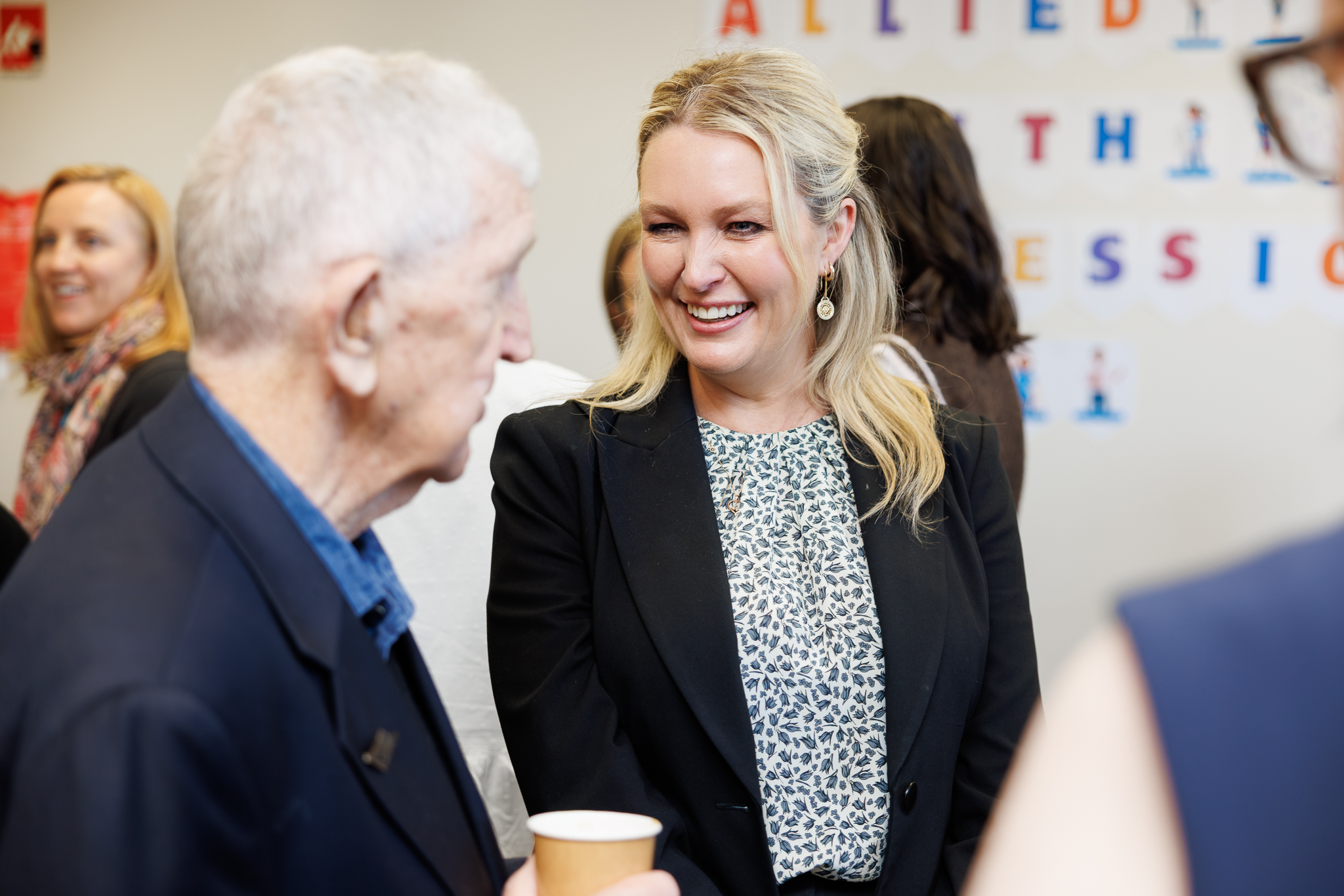
ACT Health Minister Dr Marisa Paterson said the University plays an important role within the Canberra community, and the ACT Government values the partnership with the University in delivering services.
Dr Allyson Flynn, the UC Health Clinics’ Clinical Convenor, said the Clinic has delivered more than 11,500 episodes of care so far this year, with 286 students already having gained hands-on experience through clinical placements there – by year-end that number will have jumped to over 300.


