


23 April 2026: Research can sometimes feel removed from everyday life, but its impact is often closer than we realise. Behind some of the advances in palliative care for children, cancer treatment and safer surgery, are PhD students whose work is shaping better outcomes for patients across Australia and beyond. Meet three University of Canberra PhD graduates driven by improving the lives of others.

Supporting families through their hardest times
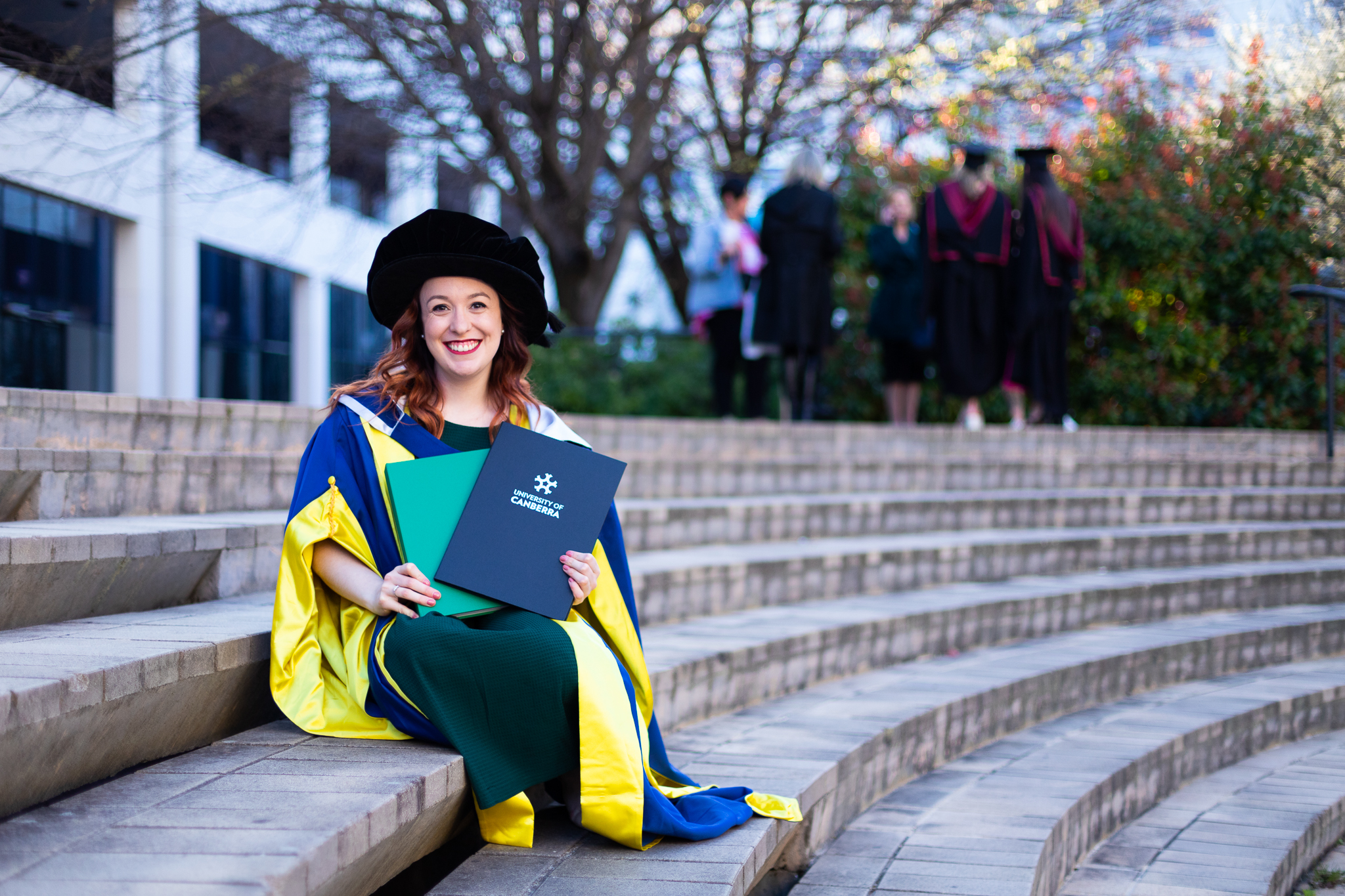
University graduate Dr Macey Barratt has many stories that will make you cry. The introduction to her PhD thesis alone often brings people to tears.
In her years working as a paediatric nurse, Macey helped families navigate their darkest times, while helping their sick children to die as comfortably as possible.
“It has very much shaped me to be somebody who recognises how precious life is, how quickly everything can change, and that you have to live every single moment and make it count,” Dr Barratt said.
She chose to undertake a PhD in 2020, and began studying the partnership between nurses, parents and children with long-term health conditions. As part of her research, Dr Barratt observed a paediatric unit renowned for nursing excellence, to document and map out what they did well. Her research, published this year, will ensure that families facing the unimaginable receive the highest level of care.
The feedback from the examiners – international ethicists and paediatric nursing experts – all noted the thesis was an exceptional piece of work, with important impacts to the industry.
Post-PhD, Dr Barratt is now leading a national project to co-design psychotropic medicine information sheets for people with intellectual disabilities, for which she received a $1.87 million Commonwealth grant – incidentally, the first grant she’d ever applied for.
Dr Barratt’s advocacy for those who may not be able to speak easily for themselves will continue to have an invaluable impact on the healthcare sector.
Relief for cancer patients
When Dr Maddy Hunter heard one of her Honours supervisors, a cancer researcher, talk about a patient’s painful chemotherapy-induced mouth ulcers, she had a lightbulb moment.
Patients receiving radiotherapy or chemotherapy are at risk of developing oral mucositis (OM), which can cause mouth sores, infection, bleeding and pain.
Dr Hunter wondered whether honey, with its antioxidant and antibacterial properties, might provide some relief.
“I thought to myself – how amazing would it be if cancer patients could use the store-bought honey in their cupboard to help manage their oral mucositis?” Dr Hunter said.
Dr Hunter’s research, published in 2022, for cancer patients with OM, investigates whether honey may help manage the bacteria in their mouth, helping with inflammation and wound healing.
With her PhD complete, Dr Hunter is now working at Food Standards Australia New Zealand (FSANZ) in the Nutrition Standards section, utilising her public health nutrition research skills and knowledge.
“I always want to work in research that can be helping someone in some way,” she said.
Tackling surgical safety through technology
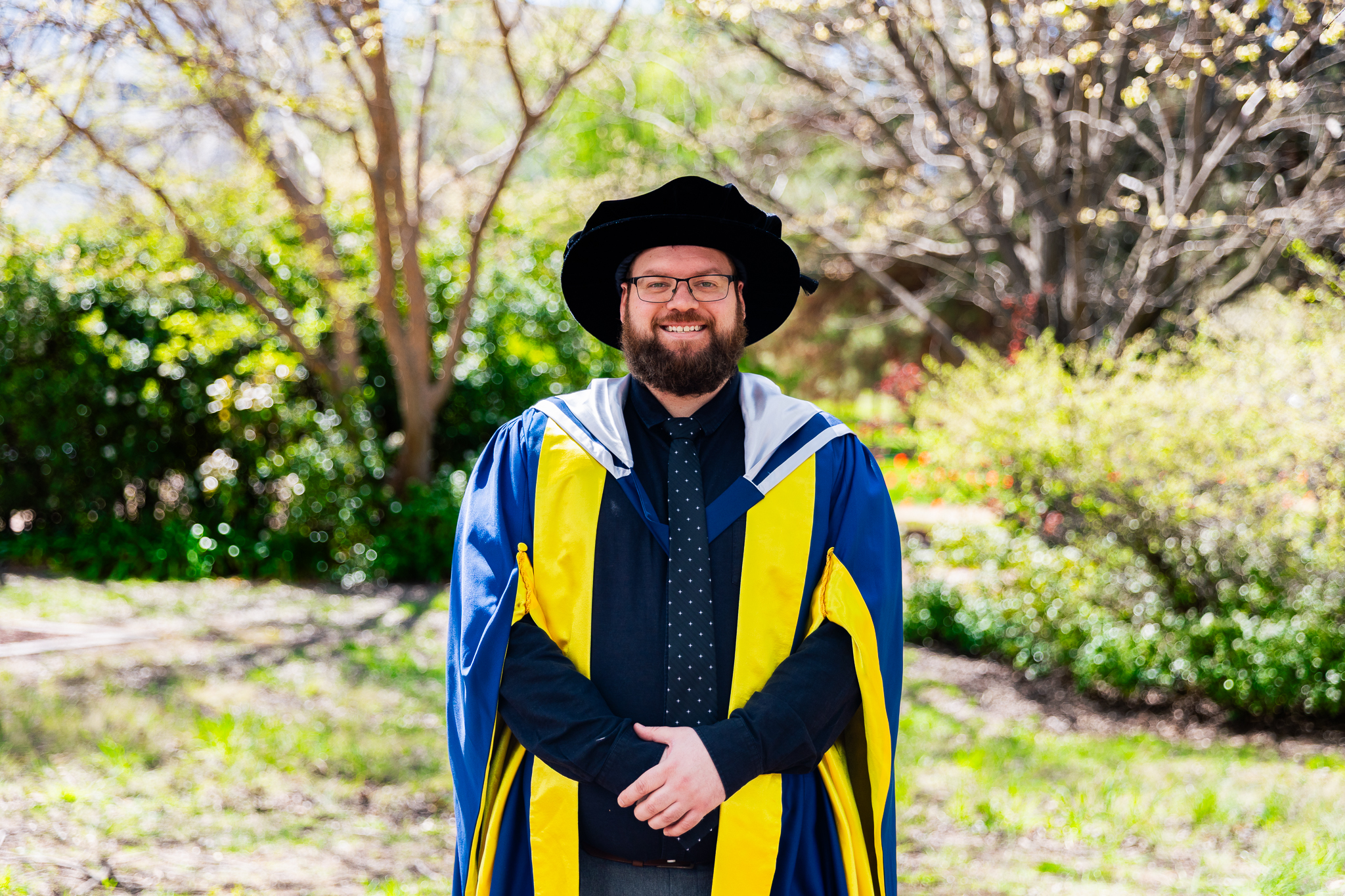
University of Canberra alumnus Dr James Ireland was looking for a PhD project, when he heard a news story about a woman who had part of a needle left in her body, post-surgery.
Retained Surgical Items (RSIs) are medical implements or materials which are unintentionally left behind in patients after surgery – they can cause pain, infection and other complications, often requiring another surgery to remove them.
To this day, there is a manual process of counting surgical instruments in the operating theatre to ensure that nothing is left behind in a patient. It’s a process vulnerable to human error, when accounting for medical worker fatigue or mistakes.
Dr Ireland felt deeply for the woman he read about, and decided he could be part of the change.
For his thesis, he devised a solution using deep learning and computer vision to count surgical instruments pre- and post-surgery, ensuring none are left behind. The next step of his research is now in the works, as his team applies for ethics approval to work with hospitals to collect surgical operational imagery for a medical professionals’ user study.
“It’s a complex issue, as we are looking to navigate privacy issues, possibly by taking very close-up photos of the instruments, so it will take time – but it is work worth doing,” Dr Ireland said.


