In response to the 2014 review, the Australian Government introduced a redesigned program with a renewed focus on achieving tobacco control outcomes. As part of this redesign the Australian Government committed $116.8 million over three years to the program with a substantial proportion ($93.4m) allocated to regional grants.
During this funding period, the TIS program’s objectives were to:
The revised program was guided by the following key principles focuse on flexibility, collaboration, and measurable outcomes:
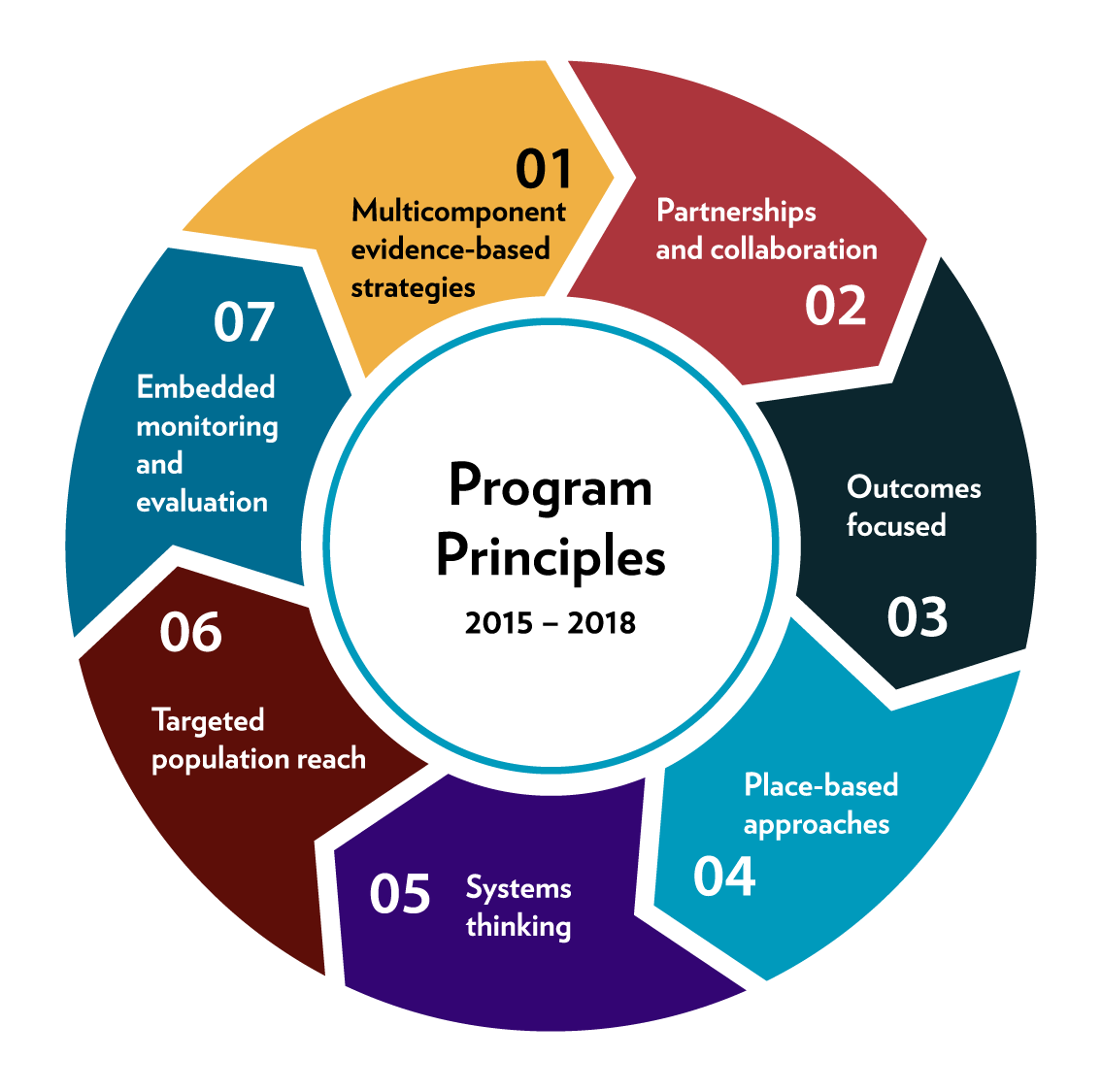
Program redesign included changes to some of the program components.
Healthy lifestyle activities were no longer funded, and direct support for smoking cessation was phased out.
Program delivery was provided primarily through 37 regional teams, funded to deliver locally tailored, evidence-based, tobacco control activities. Host organisations were mostly, but not exclusively, community-controlled health services.
Four elements were retained from the 2010–2015 program:
Three new elements, in detail below, were added in the 2015–2018 fudning period:
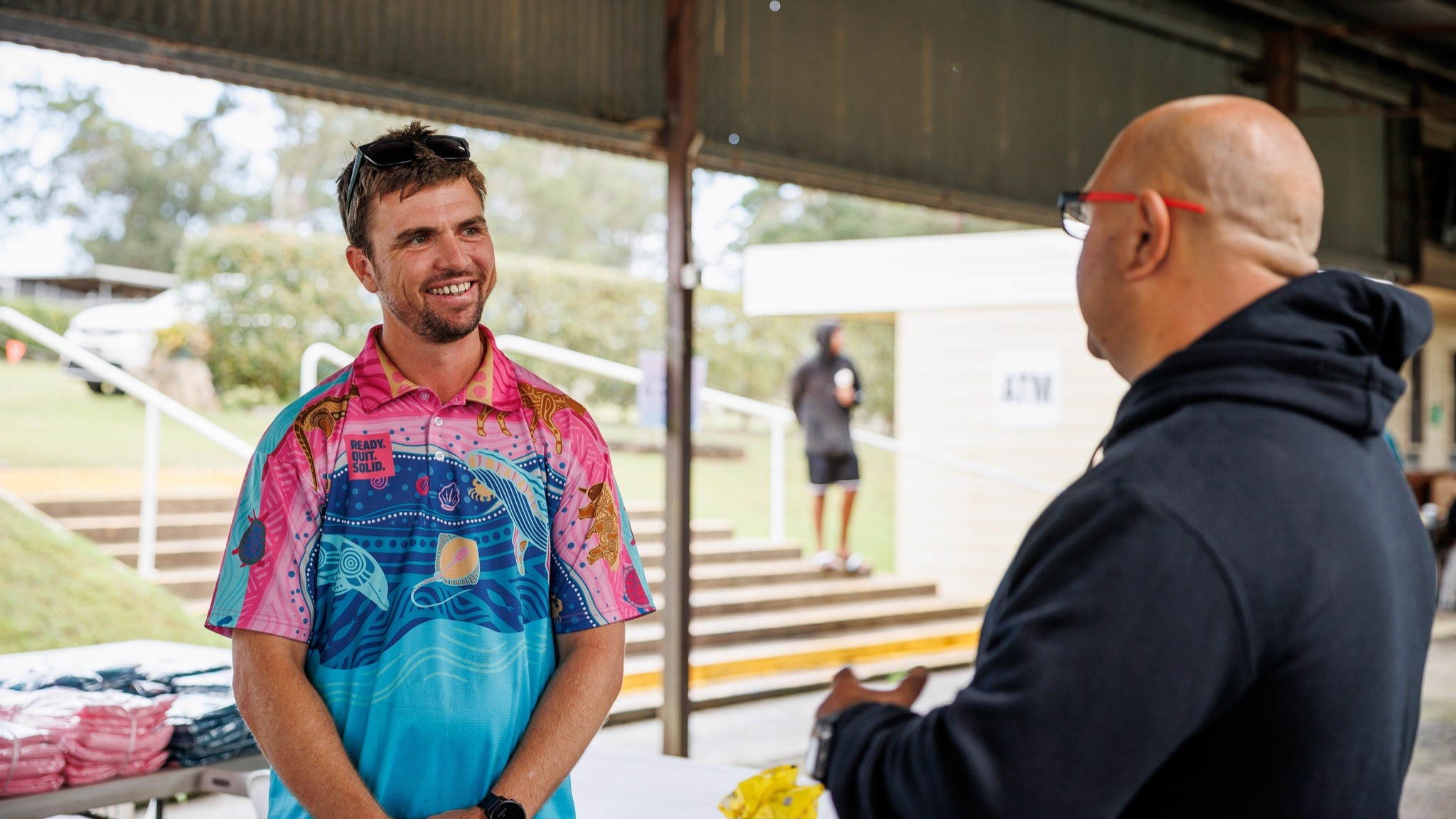


Community education was the most common TIS activity. Many teams held community events to build support, raise awareness, and share information about the harms of smoking and the benefits of being smoke-free.
Local role models and ambassadors played a key role in activities. Community members and leaders helped spread the message by leading through example and supporting health promotion efforts in their own communities.
Social marketing and mass media campaigns related to tobacco control helped shift attitudes, beliefs and social norms around tobacco use. Teams used a mix of traditional media including television, radio, cinema, billboards, newsletters, and newspaper articles alongside digital channels such as Facebook, Twitter, and YouTube.
Youth focused initiatives showed how teams prioritised young people, recognising their importance in changing social norms around smoking. Many delivered interactive school sessions using games, comedy and props to make learning fun. Others connected with youth outside of school through places like Police Citizens Youth Clubs (PCYCs) and local recreation groups.
Tailored strategies for pregnant women included working closely with midwives and maternity programs to support smoke-free pregnancies and raise awareness of the harms of second-hand smoke for families.
Tailored strategies for prison populations included education sessions and support for quitting, as well as help to stay smoke-free after returning to the community.
Support for smoke-free environments was a strong focus for community events such as sporting days, NAIDOC Week, and World No Tobacco Day. Teams ran smoke-free activities and targeted social media campaigns promoting smoke-free homes and cars.
Development and distribution of resources during this period included brochures, fact sheets, videos and posters created to support TIS activities and raise awareness. One example was “Deadly Dan at the League” (2016) a creative education tool promoting smoke-free living.
Hosted by Australian Indigenous HealthInfoNet, the TIS Portal was created as a central hub for Regional Tobacco Control Grant (RTCG) recipients. The portal provided access to resources, workforce information including job opportunities and upcoming events such as training, conferences, and workshops. The portal also linked to NBPU TIS social media channels and the TIS Yarning Place - an online community where teams from across Australia could connect, share ideas, and learn from each other.
Support to Regional Tobacco Control Grant (RTCG) funded teams included site visits, tailored training, Jurisdictional workshops, and guidance for activity planning, monitoring, evaluation and reporting.
Leadership workshops were held in each state and territory for CEOs and Board members of grant recipient organisations, as well as other Aboriginal and Torres Strait Islander organisations. These workshops encouraged critical thinking and strengthened leadership support for tackling smoking.
Aboriginal Males Shedding the Smokes (Aboriginal Health Council of South Australia) provided Aboriginal and Torres Strait Islander males living in the communities of Yalata and Coober Pedy with a Men’s Health Shed, a place for Aboriginal and Torres Strait Islander art, social and cultural activities to be practiced. The shed used these activities to promote holistic tobacco cessation tailored to individual needs.
Empowering Strong Families (Metro South Hospital and Health Service, Queensland Health) created a smoke-free story in the community of Inala, adopting a holistic culturally based approach to reduce barriers to smoking cessation and prevention of uptake during pregnancy for Aboriginal and Torres Strait Islander young people.
The Top End Smoke-Free Spaces Project (Aboriginal Resource and Development Services Aboriginal Corporation) supported householders in three Top-End Aboriginal communities - East, Central and West Arnhem Land - to establish or extend smoke-free spaces in the home.
SNAP (Smoking, Nutrition, Alcohol, and Physical Activity) was a randomised control trial implemented by the UNSW’s National Drug and Alcohol Research Centre. This aim was to establish whether the delivering the SNAP program in Northern Territory prisons (where smoking is banned) could prevent a smoking relapse upon release from prison.
The Balaang and Binjilaang Aboriginal Women Tobacco Intervention Project was run by Waminda South Coast Women’s Health & Welfare Aboriginal Corporation, who provided ongoing, positive support and engagement with teenage women who smoke and pregnant women who smoke to enable the women to replace a ‘smoke and a yarn’ with alternative social connections.
Growing the Smoke-Free Generation (NT Department of Health) was a peer-led project that sought to engage young people aged 10-18 years in two remote communities (Maningrida and Gunbalanya) with holistic smoking cessation support.
A Novel Approach to Transforming Smoking Cessation Practice for Pregnant Aboriginal Women and Girls Living in the Pilbara explored the function of smoking for Aboriginal women living in the Hedland and Western Desert communities. The project, delivered by Western Australia Rural Health West and Telethon Kids Institute found that a women-centered, trauma-informed approach to smoking cessation has much to offer this demographic.
Key performance indicators for the Regional Tobacco Control Grants (RTCG) were developed in consultation with grant recipients and the Monitoring and Evaluation Advisory Group.
Regional teams collected data and information on their TIS activities which was used to track progress through six monthly TIS performance reports submitted through the Indigenous Australians’ Health Programme (IAHP).
These reports helped show what was being achieved by grant recipients through five national TIS Performance Indicators:
In addition to analysing the routine data from six monthly performance reports, CIRCA conducted site visits and interviews with program stakeholders including RTCG funded teams, NBPU TIS, the National Coordinator TIS and the Australian Government Department of Health.
Their evaluation report, completed at the end of the funding period in 2018, confirmed the program’s relevance to Indigenous tobacco control in Australia and included recommendations for improving program implementation.
CIRCA also highlighted success stories from the program and called for continued, longer term funding for the program (at least 4 years) to sustain progress. Key recommendations for future iterations of the TIS program included:
For this period, tobacco control efforts were strongly influenced by national and state strategies that supported Aboriginal and Torres Strait Islander health and wellbeing.
Although ‘Closing the Gap’ did not include a specific target on smoking, reducing tobacco use remained essential to improving life expectancy and addressing preventable illness.
National frameworks such as the The National Drug Strategy 2017–2026 and The National Aboriginal and Torres Strait Islander Peoples’ Drug Strategy 2014–2019 guided harm-minimisation approaches focused on reducing drug and tobacco use through culturally appropriate, community-driven action.
In New South Wales, The ATRAC Framework: A Strategic Framework for Aboriginal Tobacco Resistance and Control in NSW 2015 provided a state-based strategy to strengthen planning, implementation and evaluation of Aboriginal tobacco control activities.
Together, these frameworks shaped the direction of tobacco control policy and practice during this period, ensuring efforts were aligned with broader goals to improve the health and wellbeing of Aboriginal and Torres Strait Islander peoples.
Tackling Indigenous Smoking
info@tacklingindigenoussmoking.com.au
1800 662 447 (1800 NO CIGS) – Toll free

