<iframe src="https://www.googletagmanager.com/ns.html?id=GTM-PRQLQP" height="0" width="0" style="display:none;visibility:hidden">
Accommodation Guarantee Other housing options Resolving disputes
About UC
Library facilities
Research equipment
UC account
Skip navigation
University of Canberra logo University of Canberra home page
Future students
Future students
Find a course
  • Find a course
  • Study at UC
  • Browse study areas
  • Online courses
  • UC College
  • International
  • Life and living at UC
  • Student support
  • Entry requirements and pathways
  • Scholarships
  • Australian Indigenous students
  • Apply
  • Start at UC
  • Talk to us
  • Information sessions
  • Careers advisors and agents
Research
Research
Discover more
  • About UC research
  • Research Plan 2024 - 2028
  • Research impact
  • Life of a CBRn
  • Research centres and institutes
  • Contribute to research
  • Graduate Research School
  • Research news
  • Contact us
Give
Give
Discover more
  • Funds you can support
  • How to give
  • Philanthropy at UC
  • About our Foundation
  • Impact of giving
  • Give now
  • Contact us
  • Student Empowerment Appeal
  • Our supporters
On campus
On campus
Discover more
  • Campus tours
  • UC Collections
  • Facilities
  • Campus Master Plan
  • Venue hire
  • Campus cafes and shops
  • Childcare
  • Health and support
  • Transport
  • Parking
  • Adobe Creative Campus
  • Sport at UC
  • Security
  • Lost and found property
  • Safe community
  • Report an incident
About UC
About UC
Discover more
  • University strategy
  • Senior management
  • Faculties
  • Campus locations
  • Educational partners
  • Graduation
  • Office of Indigenous Leadership
  • Academic integrity
  • Sustainability
  • Media and communication
  • Governance
  • Policy and legislation
  • Learning at UC
  • Learning and Teaching
  • Student Equity and Participation
  • Equity and diversity
  • Work at UC
  • Key dates
  • Contact University of Canberra
  • Safe community
  • Report an incident
  • Students
  • Staff
  • Alumni
  • Library
  • Maps
Accessibility and language options
  • Students
  • Staff
  • Alumni
  • Library
  • Maps
UC OPEN DAY FEST - For future students, families, and the whole community. Sat 20 Sept, 9am - 3pm
UC OPEN DAY FEST - Sat 20 Sept, 9am - 3pm

UC OPEN DAY FEST

Sat 20 Sept, 9am - 3pm

REGISTER NOW

Aboriginal and Torres Strait Islander Student Nurse Mentoring Partnerships

Home
/
Faculties
/
Health
/
Centre for Ageing Research and Translation (CARAT)
/
Clinical Placements with Older People (CPOP)
/
Nursing students
/
Aboriginal and Torres Strait Islander Student Nurse Mentoring Partnerships
  • Clinical Placements with Older People (CPOP)
    • About CPOP
    • Health and aged care providers
    • CPOP Clinical Facilitators
    • Nursing students
      • Aboriginal and Torres Strait Islander Student Nurse Mentoring Partnerships
    • Student Reflective Workbook Awards
    • Outstanding Preceptor Awards

About the program

The CPOP Aboriginal and Torres Strait Islander student nurse mentoring partnership program is designed to create a supportive partnership where an experienced person (the mentor) shares their knowledge, skills, and advice with a less experienced person (the mentee) to help them grow and develop personally or professionally.

The program is flexible and tailored to each student’s communication style and support needs, and guided by the Mentor’s cultural knowledge, professional experience, and personal judgement. The CPOP program aims to approach learning with Cultural Humility in order to create and/or improve Culturally Safe environments.

Facets of this approach are:

  • Consultation with Aboriginal and Torres Strait Islander Elders and Knowledge Holders
  • All clinical facilitators complete the Murra Mullangari Introduction to Cultural Safety course by the Congress of Aboriginal and Torres Strait Islander Nurses and Midwives (CATSINaM) before being able to work with students
  • CPOP team participation in the Leaders in Indigenous Nursing and Midwifery Education Network (LINMEN)
  • Creating awareness via each University partner Aboriginal and Torres Strait Islander student centres
  • Actively seeking partnerships with placement providers that serve Aboriginal and Torres Strait Islander people

What can mentoring include?

What can mentoring include?

What can mentoring include?

Mentoring activities may include (but are not limited to):

  • One-off or regular voice or video calls, or face to face catch ups (if geographically possible)
  • Reflective conversations and debriefs, especially around caring for older people
  • Support with the CPOP reflective workbook, or learning goals
  • Discussions about career planning, personal goals, and balancing responsibilities (e.g. self, family, relationships)
Mentors and Mentees work together to find a path that suits the Mentee, using a creative and person-centred approach to build a strong, supportive partnership.

Who can be a mentee?

Who can be a mentee?

Who can be a mentee?

Mentees are Aboriginal and/or Torres Strait Islander students studying either the Bachelor of Nursing or Graduate Entry Master of Nursing at a CPOP partner university and will be completing a placement at a CPOP location.


Who are the mentors?

Who are the mentors?

Who are the mentors?

Mentors are Aboriginal and/or Torres Strait Islander registered nurses with experience in aged care/gerontology, and who may be in leadership or education roles. They are passionate about supporting the next generation of nurses, are usually external to the universities, and are invited by the CPOP academic lead.

How to participate?

How to participate?

How to participate?

If you are an Aboriginal and/or Torres Straight Islander nursing student, and you are doing a CPOP placement (or would like to) send us an expression of interest on cpop@canberra.edu.au.

The CPOP team may become aware of students who identify as Aboriginal and or Torres Strait Islander via:

  • University programs or databases
  • From a student submitting an online Expression of Interest (EOI) form on the CPOP website
  • Students contacting the CPOP team for more information via email
Students will be contacted and offered the opportunity to participate via phone or email. Participation in the mentoring program is completely voluntary and choosing to participate (or not) does not affect academic progress.

If a student would like to participate, consent is gained to share the students’ contact details with the Mentor and once this occurs the CPOP team has no further involvement in this relationship. All conversations between Mentors and Mentees are confidential. Occasionally, feedback may be shared with the CPOP lead academic — but only with the Mentee’s consent, and only for program improvement purposes. Any shared information will be de-identified wherever possible.

The Yulang story


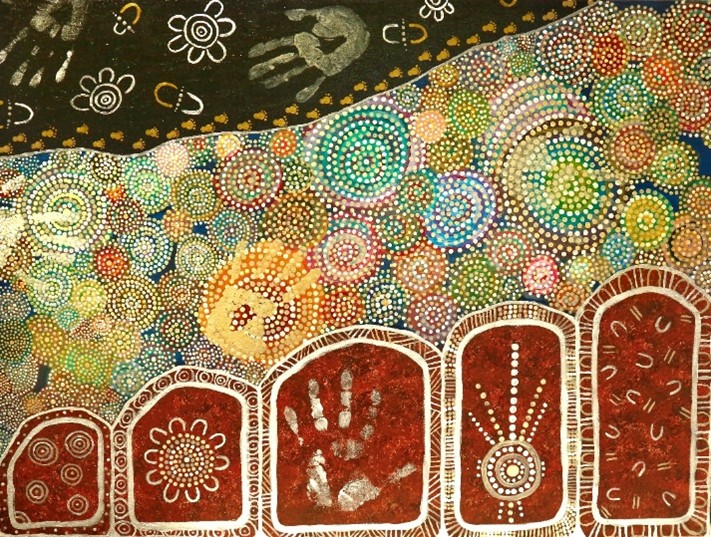
'Yulang'

by Chrystale Langford - Wiradjuri woman, artist and UC nursing alumni

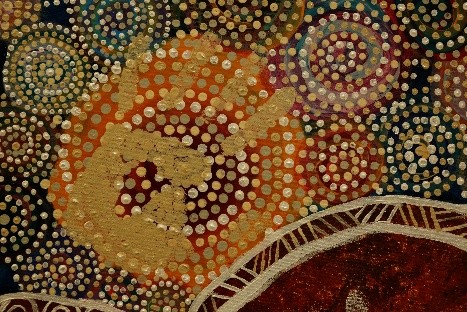
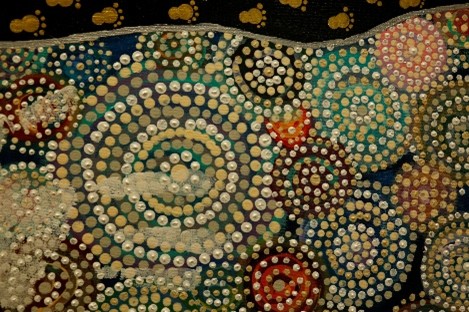
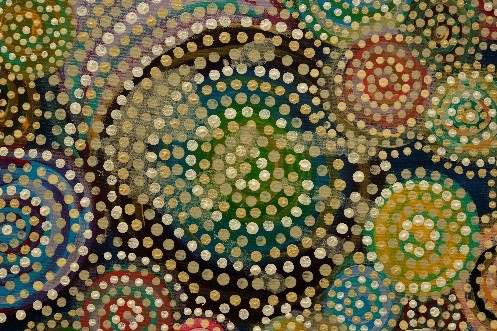
'Yulang', the Wiradjuri word for ‘ripple’

We're hoping to send out ripples that continuously create a positive effect.

With one person setting off ripples with evidenced based practice and care it can then work its way through hospitals, residential facilities and wherever gerontological care occurs.

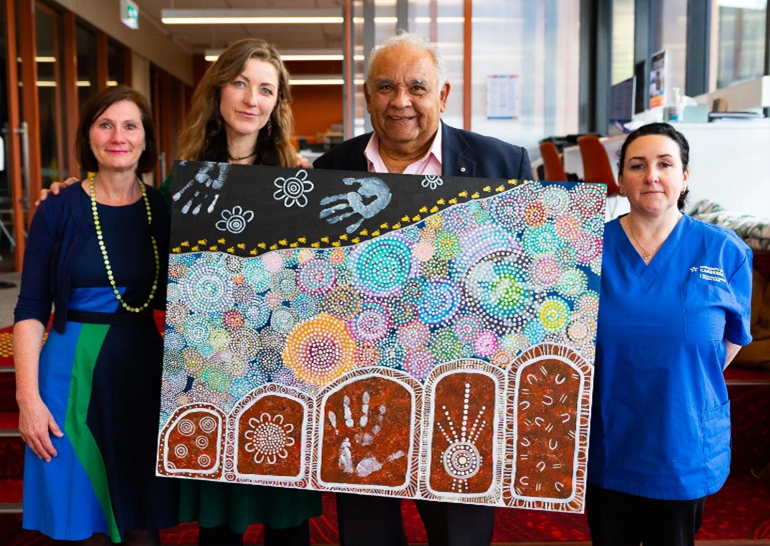
The four handprints are from Professor Tom Calma AO (Kungarakan Elder, Chairperson of the ‘Close the Gap’ Steering Committee 2006, UC Chancellor 2014 – 2023), Professor Kasia Bail (CPOP Academic lead), Professor Victoria Traynor (University of the Sunshine Coast CPOP lead, who with Prof Bail founded the Gerontological Alliance of Nurses Australia - GANA), and Chrystale Langford (Wiradjuri woman, artist, UC nursing alumni and GANA member).

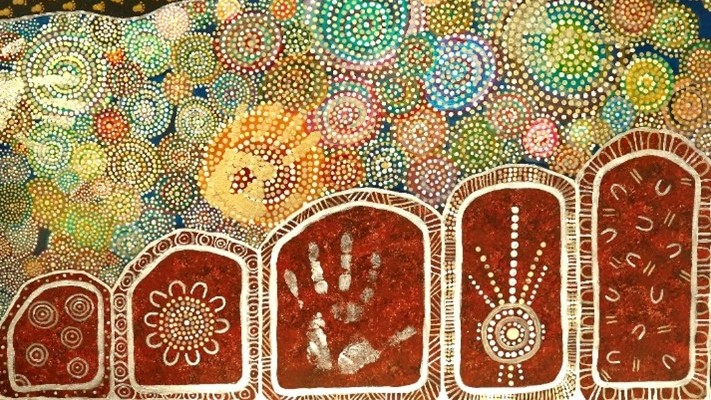
The handprints show connection and unity between nursing, and bringing together the connection behind the scenes, in front of the scenes and the future that is to become.

The bottom panels represent five different stages in our lives.

The first panel represents the time when our mothers are pregnant with us, and when we are connected to our ancestors. It is our waters of where we are within our mothers, listening to the sounds of nature and connecting to society.

The second panel is our community for after we are born, for our first beginnings of life and how we're taught. We have community and understanding and supports going through there.

Our third panel where Uncle Tom has contributed his handprint to represents the time in our lives when we decide to leave the nest and what we contribute towards our community and help move forth.

Our fourth panel is about a time of rest where we've done what we feel we needed to, and now have decided this is our time to connect and educate those that are coming through. We help others understand what has been in our life path and hopefully gain other people to join and carry on, to bring more positive outcomes to all.

The fifth panel is our ending panel where our cycle has completed. We have people that may not be around us all the time but are there and help us in our final stages for when we go back to our ancestors.

(Left to right) Professor Traynor, Professor Bail, Professor Calma and Chrystale Langford
footer

Contact us

Clinical Placements with Older People
University of Canberra
Faculty of Health
Centre for Ageing Research and Translation (CARAT)
cpop@canberra.edu.au

Email us

Other quick links

Contact us

  • Future students
  • Current students
  • Alumni
  • Donors
  • General enquiries

Faculties

  • Arts and Design
  • Business, Government and Law
  • Education
  • Health
  • Science and Technology

News and events

  • UnCover
  • Newsroom
  • Find an expert
  • Events

Services

  • Security
  • Library
  • Medical and Counselling
  • IT Service updates
  • Gym
  • Accommodation

Administration

  • Maps
  • Job opportunities
  • Staff directory
  • Researcher profiles
  • Freedom of information
  • Policies and procedures
University of Canberra logo
Facebook icon Youtube icon Instagram icon Tiktok icon Linkedin icon
University of Canberra, Bruce ACT 2617 Australia
+61 2 6201 5111
ABN 81 633 873 422
CRICOS 00212K
TEQSA Provider ID: PRV12003 (Australian University)
Contact UC
Copyright
Disclaimer
Privacy
Accessibility
Collection notice

UC acknowledges the Ngunnawal people, traditional custodians of the lands where Bruce campus is situated. We wish to acknowledge and respect their continuing culture and the contribution they make to the life of Canberra and the region. We also acknowledge all other First Nations Peoples on whose lands we gather.