Alumni Stories
GRADS 2026: Angela Kirkegaard
“It makes me emotional to think what my younger self would make of the smart and capable woman I've grown into.”
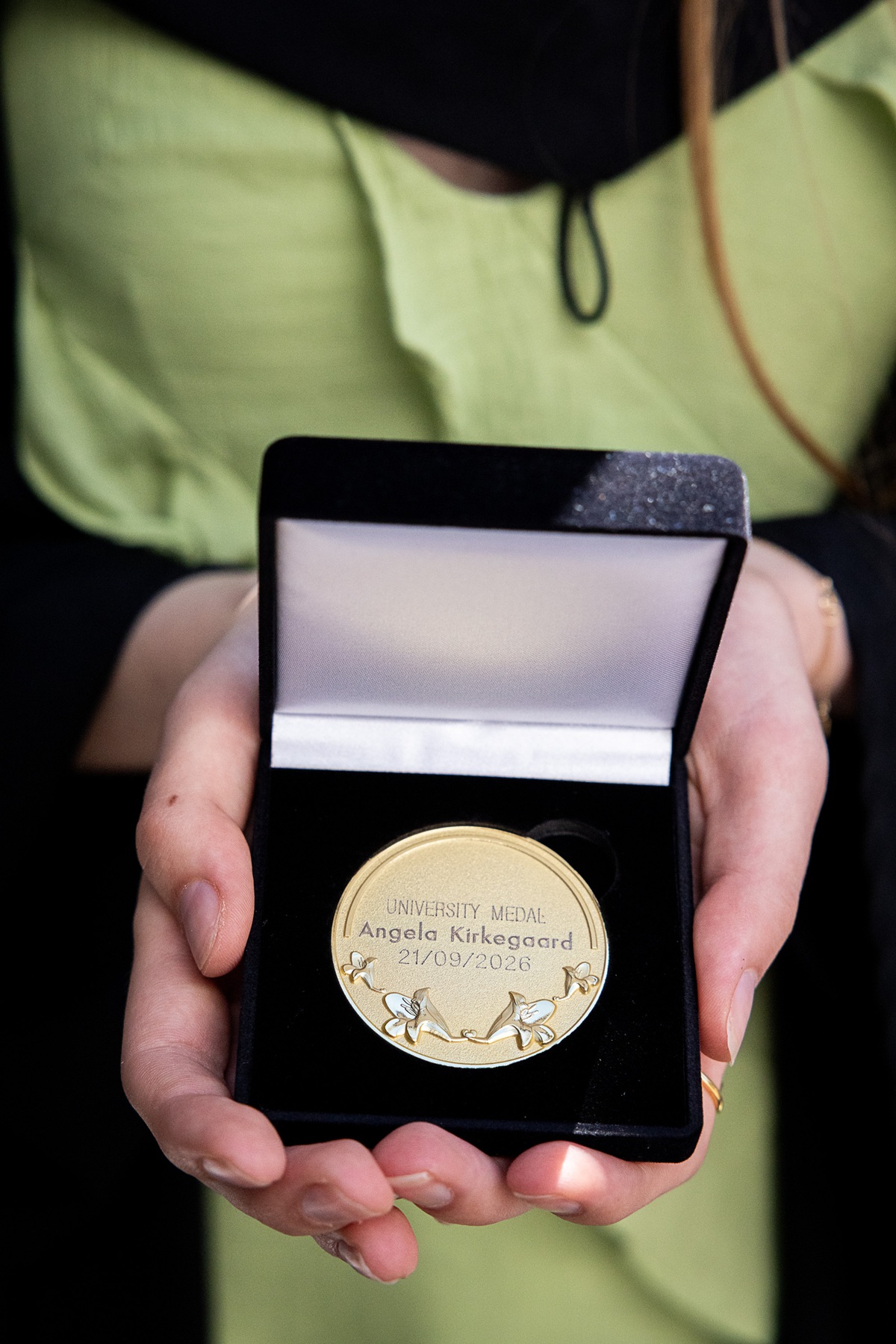
Angela Kirkegaard grew up believing that she “just wasn’t a smart kid” – on Monday, she stuck it to that negative inner voice when she crossed the stage at the University of Canberra’s September graduation round to receive the University Medal, awarded to graduates who attain First Class Honours and the highest Grade Point Average (GPA).
Receiving diagnoses of ADHD and dyslexia at age 10 helped Angela understand why she was struggling in school – but it didn’t lessen the struggle itself.
“Before the diagnosis, I just knew I was really behind everybody else, and didn’t know why. After the diagnosis, I thought ‘oh I’m always going to find this difficult’ … It felt like I was stuck in a box, and I grew up believing there was a limit to how far I could go academically,” she says.
“Receiving the University Medal feels incredibly special, because now I know the sky was always the limit.”
It’s the same sky Angela looks up at now when she’s out doing the fieldwork she loves. Just graduated with a Bachelor of Science (Honours) in Environmental Science from the Faculty of Science and Technology, the newly minted ecologist is working with Umwelt, an environmental and social professional services consultancy.
“They have a busy spring-summer season, so I’ve joined Umwelt on a casual basis for now – it’s a great opportunity to experience a range of fieldwork and work on different projects,” Angela says. “I spent the whole of last week out in the field, doing threatened flora surveys.”
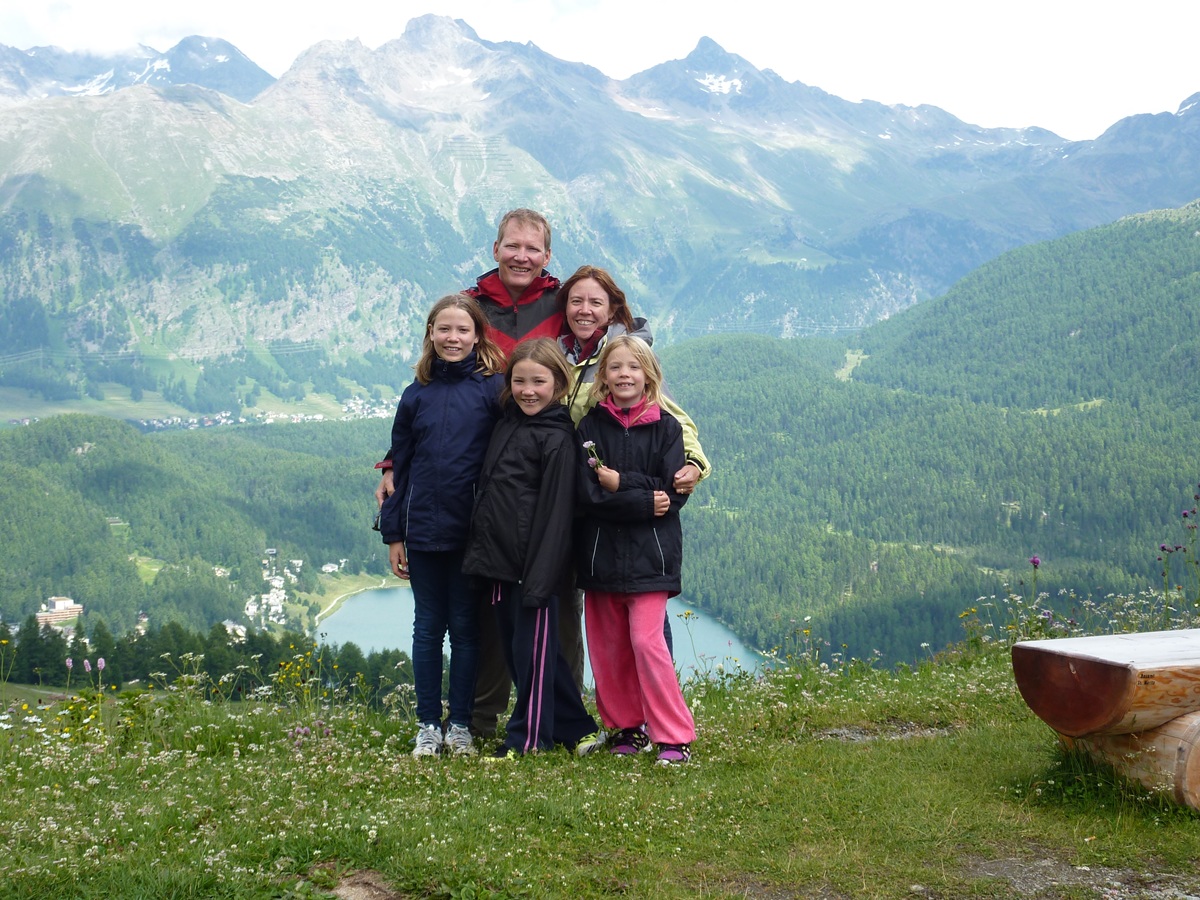
Angela grew up in Canberra, the child of two agricultural scientists who nurtured her love of nature and the outdoors.
“I love how calm Canberra is, how much nature surrounds us, while still having all the comforts of living in a city,” she says. With her family, she spent a lot of time hiking, especially in Kosciuszko National Park, and Queensland’s rainforests, where her extended family lives on the Sunshine Coast.
“I’d be stopping every couple of minutes to look at plants – I love green things – or spot a bird I heard calling. We took twice as long to get anywhere because of it. And I’m still like that now!”
While initially unsure of an academic future, Angela realised her love of science when she was in Year 9 at Radford College – and her path became a lot clearer.
“I realised how much I loved science – particularly animals. The way each has its own different way of doing things, but still ends up playing a very specific role in an ecosystem,” she says.
“Because I was so interested in it, I really applied myself and figured out that if I worked hard, I’d see the results.”
And she did.
When she decided to study science, Angela was drawn to the Bachelor of Science (Honours) in Environmental Science course because of its combination of academic learning and practical fieldwork, as well as UC’s focus on truly prepping students for employment.
“Fieldwork and field trips – being able to really apply what we learned – were definite highlights of the course,” she says. “And you build really strong friendships when you’re out in the field!”
“Ultimately, I really enjoyed getting to experience the full circle research process, from coming up with a question to planning, collecting and analysing data, and writing up reports.”
That’s what made her want to do an Honours project, which she calls the biggest highlight of her degree journey – and the biggest challenge.
“It was a big step up in terms of independence and responsibility. I had a lot of support from my supervisors, volunteers and other UC staff, but also had to manage so many things on my own,” she says. “There were many times when things didn't go to plan, and I had to learn to be comfortable with that. It was challenging, but the learning experience has been extremely valuable.”
When Professor Richard Duncan and Associate Professor Simon Clulow from the Centre for Conservation Ecology and Genomics shared the work they were doing to return the extinct green and golden bell frog to the ACT, Angela raised her hand as a volunteer.
“Instead, they pointed me towards applying for UC's summer research scholarship program, and I helped with fieldwork, lab work and caring for the frogs over the summer holidays,” she says.
Angela enjoyed the experience so much, it led to her Honours project, supervised by Richard and Simon, Postdoctoral Research Fellow Dr Jarrod Sopniewski and Senior Lecturer Dr Alejandro Trujillo-González.
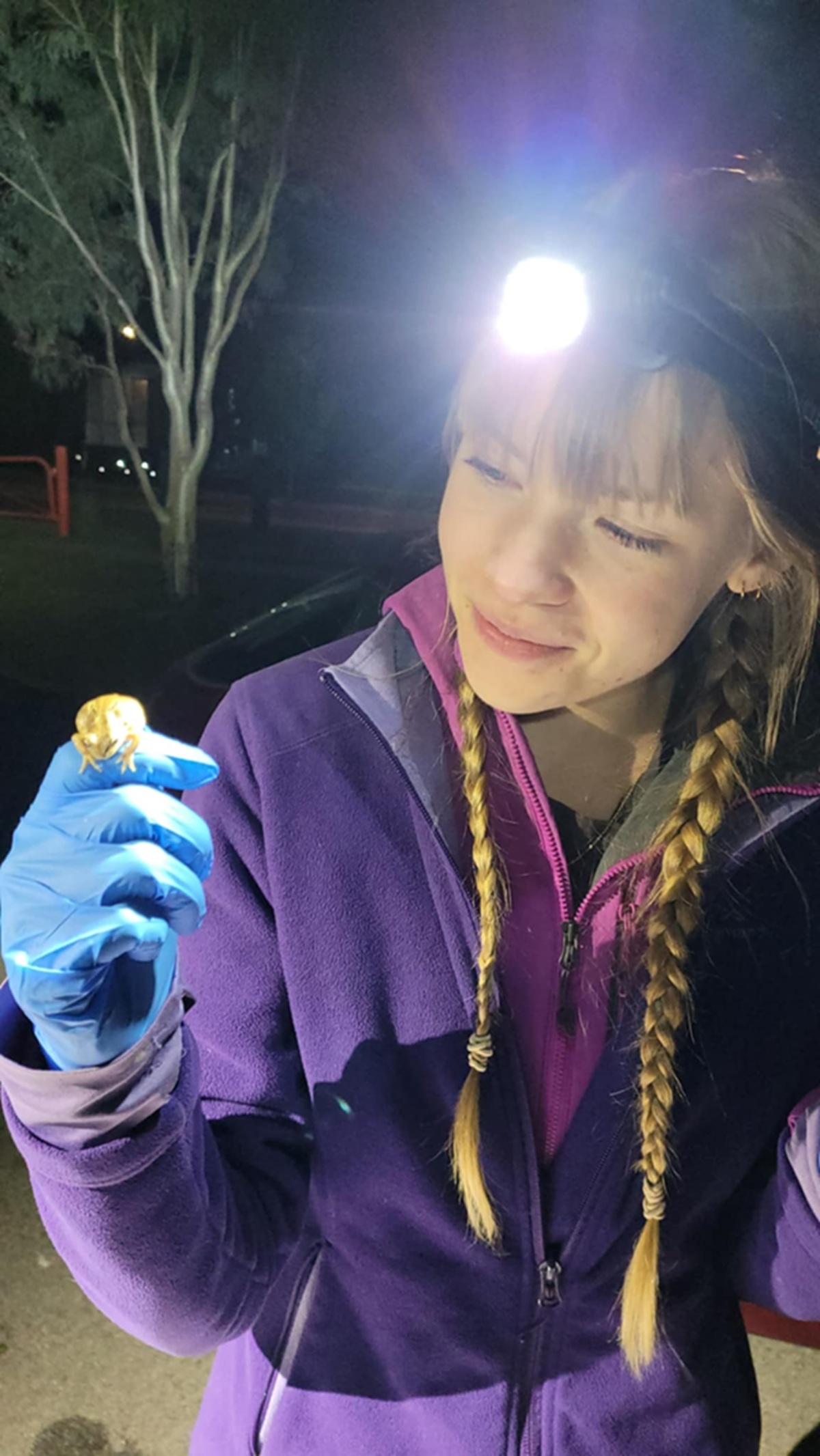
The green and golden bell frog project is focused on a solution to the deadly chytrid fungus, which has affected over 500 frog species globally, including 40 in Australia – seven frog species are believed to have gone extinct.
“One of the important questions around the chytrid fungus is how to protect frogs in the wild,” Angela says. “We know that salt affects the fungus and reduces the disease burden on frogs, and part of the project involves placing salted satellite ponds around the edges of wetlands here in Canberra.
“My fieldwork involved catching and swabbing frogs at these sites to track the disease levels. I also used environmental DNA analysis to detect the disease in the pond water and ran laboratory experiments to find the best method to detect chytrid DNA in the water.
“For the frog surveys, I had a lot of help from volunteers, and I’m especially grateful to Jarrod and to Ewen Lawler, who were with me on almost every survey and contributed a lot of data to my project.”
While studying at UC, Angela accessed support through InclusionUC.
“It was incredibly valuable – the Reasonable Adjustment Plan (RAP) they provided helped to remove some barriers to show what I'm capable of. What I’ve achieved has been because of the incredible amount of work I put in – but that support has helped me reach my full potential,” she says.
In spite of all her achievements, Angela still lives with a bit of imposter syndrome.
“I’d submit assignments and think they weren’t any good … and then it would shock me when I got them back and it turned out they were! I’ve still got that voice in my head telling me whatever I do isn’t good enough … but I have to remember that my results clearly say differently!” she says.
Going straight from high school into a bachelor’s degree and then an honours year means that Angela has spent over six years chasing academic goals.
“I’ve always enjoyed research and academia, and I think a PhD is in my future,” Angela says. “But first, I’m going to focus on getting some experience in the workforce, and see where that takes me.”
As long as there’s always fieldwork, she can be among the wild things she loves.
Words by Suzanne Lazaroo, photos by Teagan Glenane and supplied.