Alumni Stories
Grads 2026: Sofia Tsalidis
Content warning: This article discusses childhood cancer
At 13 years old, Sofia Tsalidis sat with her mum in her doctor’s office wailing. Having just received a devastating diagnosis that would turn her adolescence and her education upside down, she was petrified, convinced she was about to lose her life.
“I remember being told ‘you have cancer’ and I just said ‘I'm going to die, I'm going to die’ – I just thought it was a death sentence,” Sofia says.
A decade later, she has overcome medical, educational and mental hurdles to graduate on Monday with a Master of Occupational Therapy, determined to help improve the path of others in her situation, and keen for other terrified kids to hear a story of hope.
“Thinking back to when I was 13, sitting in a chemo waiting room, no hair, so sick, not even knowing if I'm going to make it through the week – if I read a story about me today, it would make me cry, because it would have been remarkable,” she says.
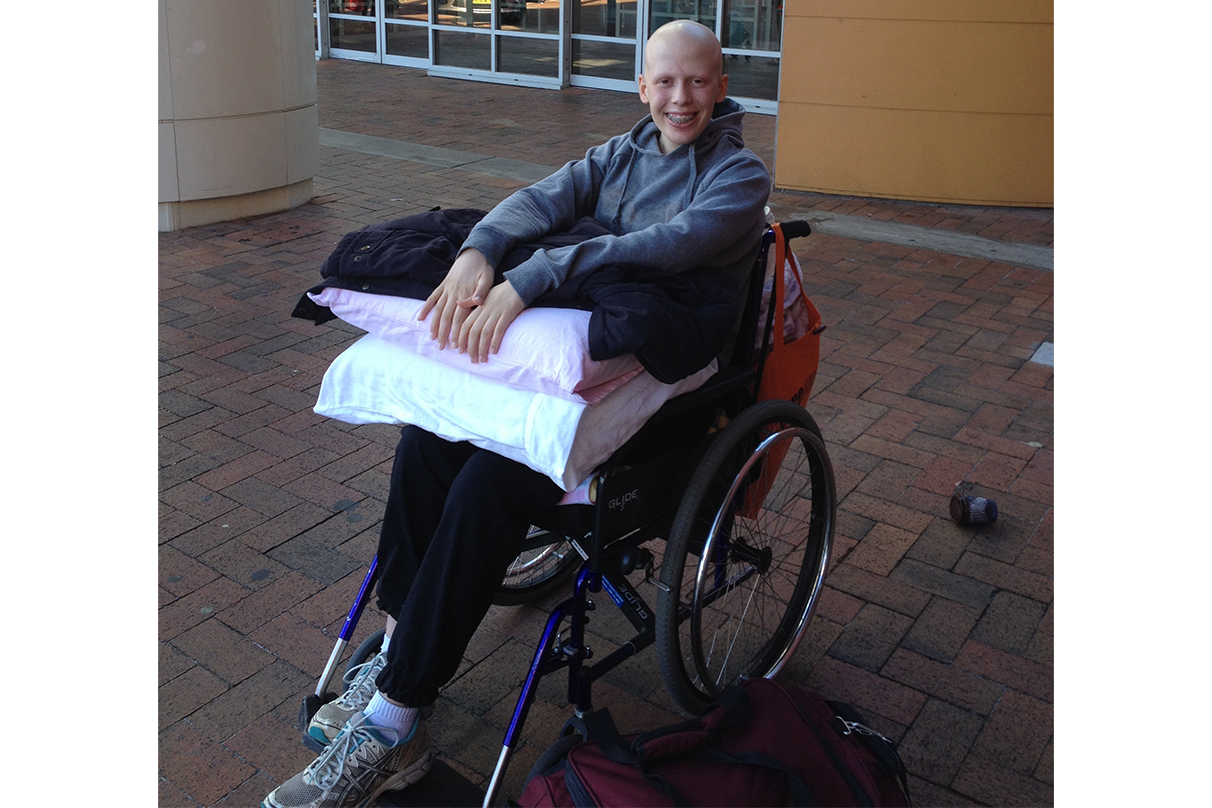
Sofia’s journey started with pain in her knee while playing social soccer in her hometown of Wollongong, NSW.
Initially diagnosed as a meniscus tear, it was eventually determined to be Ewing sarcoma – a rare and aggressive form of cancer, affecting mostly children and teens.
She was in Year 7 and already navigating the transition to a new high school, making friends, fitting in and puberty, when she found herself navigating chemotherapy and major limb-salvage surgery to fit an internal prosthesis – a Global Modular Replacement System – that runs all the way from her femur to her shin.
“The Ewing sarcoma was in my knee and femur and surrounding tissue. So you wouldn't be able to tell just looking at me, but I have a pretty hefty scar,” she says.
“I received months of chemotherapy and then the surgery, then more chemo. And I was really grateful to be put on a clinical trial of a relapse drug through which, even though my cancer was a primary localised diagnosis, they gave me the medication straight up.
“Ewing sarcoma is very aggressive and known for spreading quickly. When you look at the stats, once it has spread, the chances of survival are very, very dull. It also has a high chance of relapsing. I'm very grateful to have never relapsed and I thank that clinical trial for my life,” she says.
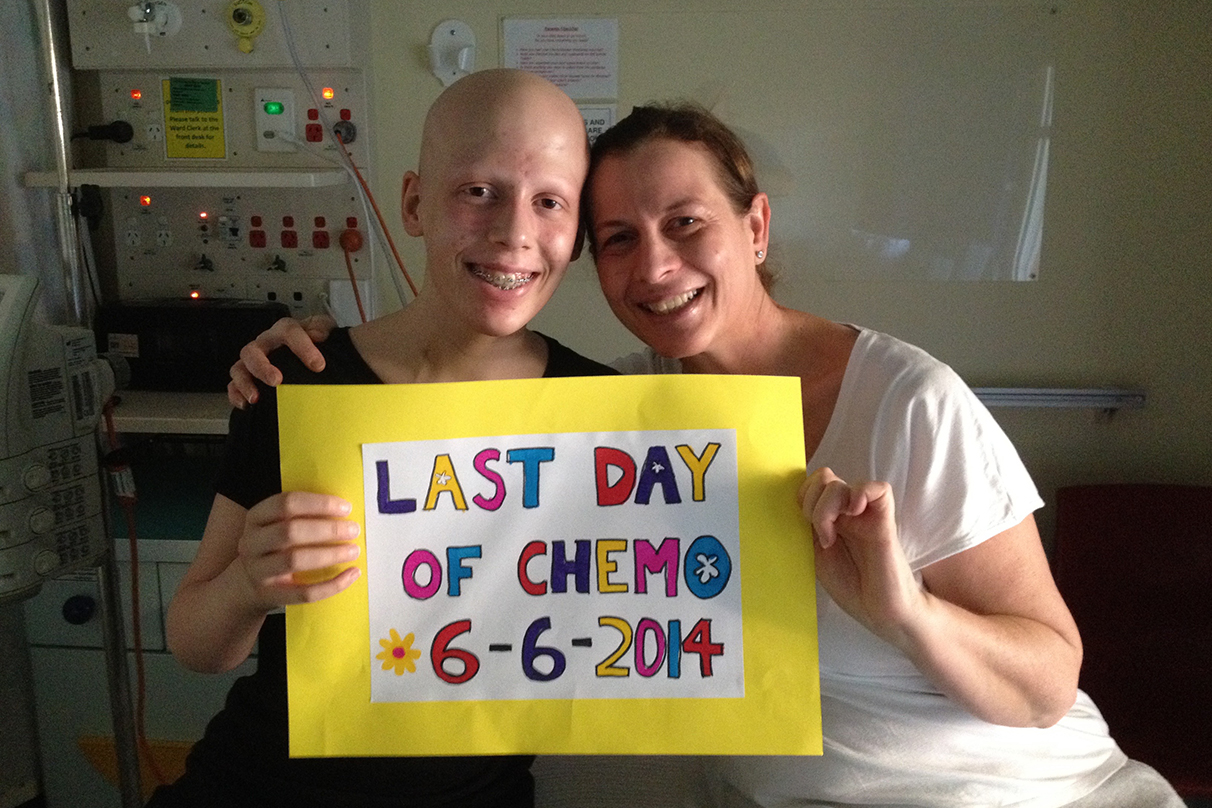
Having made it through treatment with her life and her leg still intact, Sofia was diagnosed with Post-Traumatic Stress Disorder (PTSD) and wasn’t able to complete her Higher School Certificate or get an ATAR (Australian Tertiary Admission Rank), complicating her educational journey.
“With the post-chemo effects in Years 11 and 12 and my mental health deteriorating because of that, along with fatigue and other complications, my dream of uni quickly got away from me,” she says.
“I was grieving because I love learning and I was so conscientious before cancer, so for things that were outside of my control to impact my education was just a big, big hit to me.”
Sofia found an alternative route to tertiary education through the University of Wollongong College, a pathway program through which she went on to complete a Bachelor of Medical and Health Sciences.
Pursuing a career in pathology, she realised her passion was to work with people and embarked on studying Occupational Therapy, drawn to it after her own experiences. Reluctant to leave Wollongong and wanting to stay as close as possible to her tight-knit community, Sofia chose the University of Canberra to do her postgraduate degree.
At UC, she quickly found a new community away from home and – as a registered InclusionUC student – all the support she needed.
“I made so many close friends living on campus. Community is so important to me, and I was able to foster that there. The UniLodge Residential Life program was great, I took advantage of the yoga and all the free events, and the UCX Food Pantry.
“I also joined the UCX gym on campus and found my passion for strength training and built a community of friends at the gym as well. I walked in and people just knew me and were down for a chat – so they're the things that made me happy to be on campus."
Sofia credits a doctor at the UC Medical and Counselling Centre as crucial to her success.
“As someone with a complicated medical history, I had so many health problems and I randomly stumbled across this amazing GP. She ended up being fantastic and I was seeing her probably once a fortnight. And being a broke uni student, I wouldn't have been able to have that access if it wasn't for that free service,” she says.
“She held space for my cancer survivorship and was willing to navigate everything that entailed, including all the referrals. She was so, so pivotal to my success at uni, because if I wasn't looking after myself physically, I wouldn't have been able to focus on study.
Sofia graduated with a GPA of 6.33, driven by her lived experience and desire to make a difference.
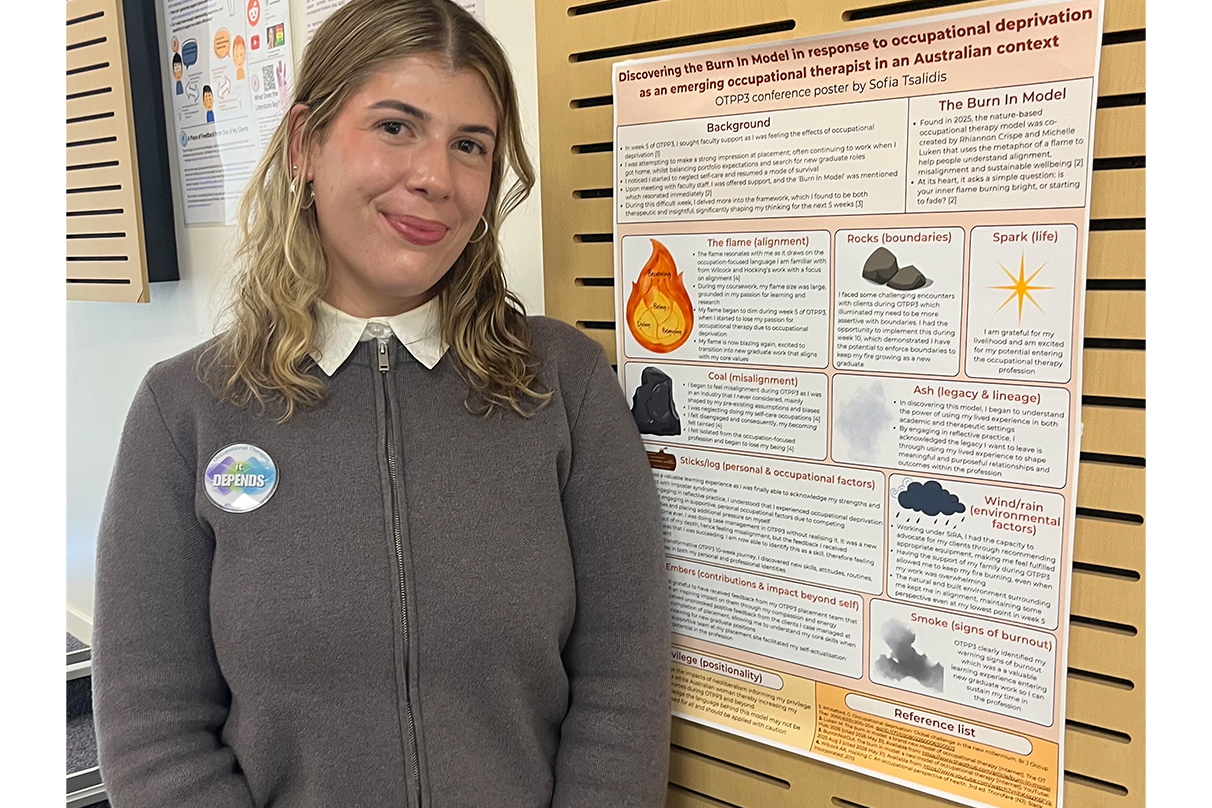
“My experience did make me very engaged in class, and naturally when the Occupational Therapy and Mental Health unit came up, I gravitated towards that, because I think this is such an undervalued area and I feel like it's really where I bring my skills of rapport building,” she says.
Sofia sees huge opportunity for Occupational Therapists (OTs) to make a difference in the mental health of patients, and in hindsight, thinks about how her own mental health could have been improved.
“I'm a big advocate for mental health and OTs in the mental health sphere, because there's so much we can do practically to help young people,” she says.
“I never talked to a psychologist during my acute care, when I was getting chemo and stuff. It was very biomedical, very, ‘Oh, ‘how's the knee going? How's the chemo?’ There wasn't much opportunity to delve deeper, because it's so life or death and there are literally kids dying every day because of childhood cancer.
"Looking back, I sometimes wonder whether more opportunities to discuss the emotional impact of cancer during treatment may have helped lessen the severity of the PTSD symptoms I experienced later."
Sofia is now back in Wollongong, surrounded by her community and working as an Occupational Therapist with NSW Health, where some patients are in a similar predicament to her. She sees them all as people first.
“The allied health professionals that stood out in my journey were the ones that weren't scared to talk to me like a person and saw beyond my diagnosis. Seeing a very sick 13-year-old in front of you, with no hair, using a wheelchair, can be daunting, but underneath all that was the same Sofia that's here today.
“So I think seeing beyond a diagnosis is really important for me and that's something I can bring to my work. I'm not scared to ask the questions that are often neglected and see beyond the medical presentation, like when intimacy is affected by disability, for example. It might not be the first thing healthcare professionals think about, but it can be incredibly important to someone's life.
“Rather than focusing solely on biomedical concerns, I want to understand what matters to you, what's important to you. When you go home, what fills you with joy? What brings meaning and purpose into your life?"
Beyond clinical practice, Sofia contributes her lived experience to cancer survivorship research and co-design initiatives, collaborating with researchers and clinicians across Australia. She has been a Consumer Adviser and Associate Investigator on research projects and grant applications focused on survivorship, fertility preservation, mental health and sexual wellbeing among young adults, adolescents and children affected by cancer.
“I understand the power of lived experience in this workforce. I am an advocate for accessible education and want other young cancer survivors to pursue their passion.”
Words by Fleta Page. Photos by Teagan Glenane and supplied.
If you are experiencing distress after reading this article, support is available through:
Beyond Blue for support with anxiety, depression, and mental health, call 1300 22 4636
Kids Helpline for free, confidential support for young people aged 5 to 25, call 1800 55 1800