Sport, Health & Wellbeing
UC’s student midwives deliver big benefits for mums – and the future workforce
In 2021, Samantha Hoppitt and partner Paul were expecting twins.
Sitting in the hospital twin clinic and facing an “overload of information” as first time parents with a high-risk pregnancy, a small sign on the wall with a QR code provided the help they wanted – and the most empowering experience of the pregnancy.
The sign was for the University of Canberra Midwifery Student Program, a continuity of care program that matches expectant mums with a student midwife, who attends ante-natal appointments, the birth, and post-natal appointments in the weeks after – always supervised by a registered midwife.
Midwifery-led continuity of care is widely regarded as the gold standard for maternity care, and the ACT has targets for the model of over 50 per cent of births by 2028 and 70 per cent by 2030. Only a small fraction of ACT women are able to access a continuity midwife through the healthcare system – in 2024 it was 23.4 per cent – due to its popularity and a shortage of continuity midwives.
UC’s student program offers the same benefits of a continuity program – allowing for a relationship and trust to build between practitioner and patient, which is shown to improve rates of vaginal births and breastfeeding, and reduce incidents of birth trauma.
Samantha was open to helping someone learn, but could also see the potential benefits for herself, so signed up there in the waiting room.
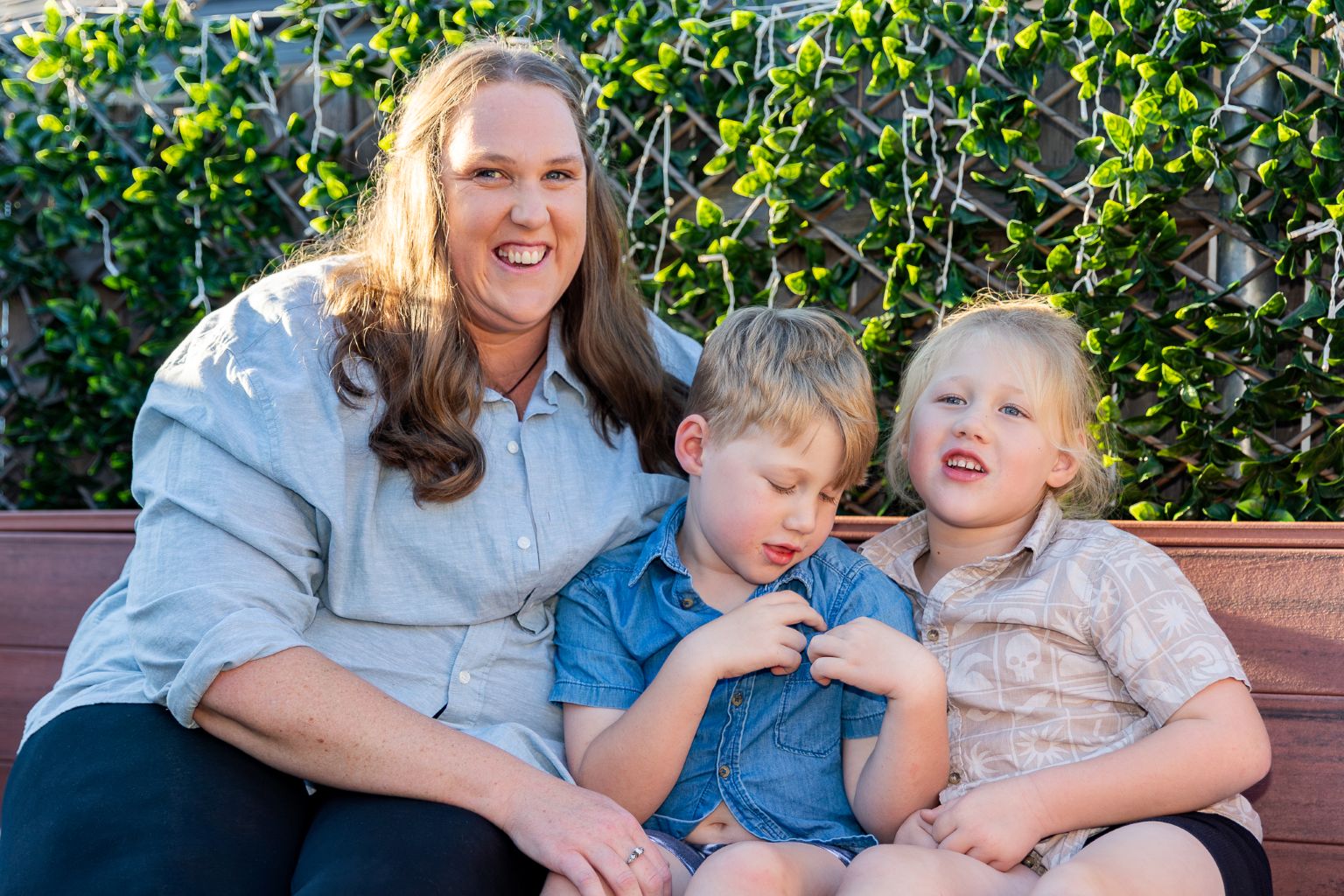
“There was so much going on. I think we just wanted somebody else there that was going to be with us throughout the whole pregnancy,” she said.
Samantha was matched with Kylie Hodges, a registered nurse who was embarking on midwifery training.
While Kylie says she was already comfortable working and communicating with doctors and other healthcare workers, she was just as new to the clinical midwifery skills as any other new student.
“I thought in the beginning I’ll have to learn all these clinical skills really quickly so that I can do all this hands-on stuff, but what I was hearing [from mums] was, 'I'm lost. I don't know how to navigate the system'.
“So very quickly I realised one of my main roles was to help them with that and to help them either find their own voice so that they could communicate well with their caregivers or to advocate on their behalf if they didn't feel comfortable doing so. The other hands-on clinical stuff I just picked up as I went along.”
Samantha credits Kylie’s support for the successful natural delivery of her healthy twin boys, Conner and Percival.
“[Kylie] was big on making sure that we were comfortable with the decisions that were being made,” she said.
“So when the doctors said they wanted to induce at 36 weeks and that there was a risk the kids would end up in the NICU [Neonatal Intensive Care Unit] – despite having no complications throughout the entire pregnancy – with Kylie's support, I was able to fight for 37 weeks.
“The twins didn't have to go to the NICU. They were healthy, they were happy. And I feel like I probably would not have had the strength to stand up and say that if Kylie hadn't been supporting me to advocate for myself.”
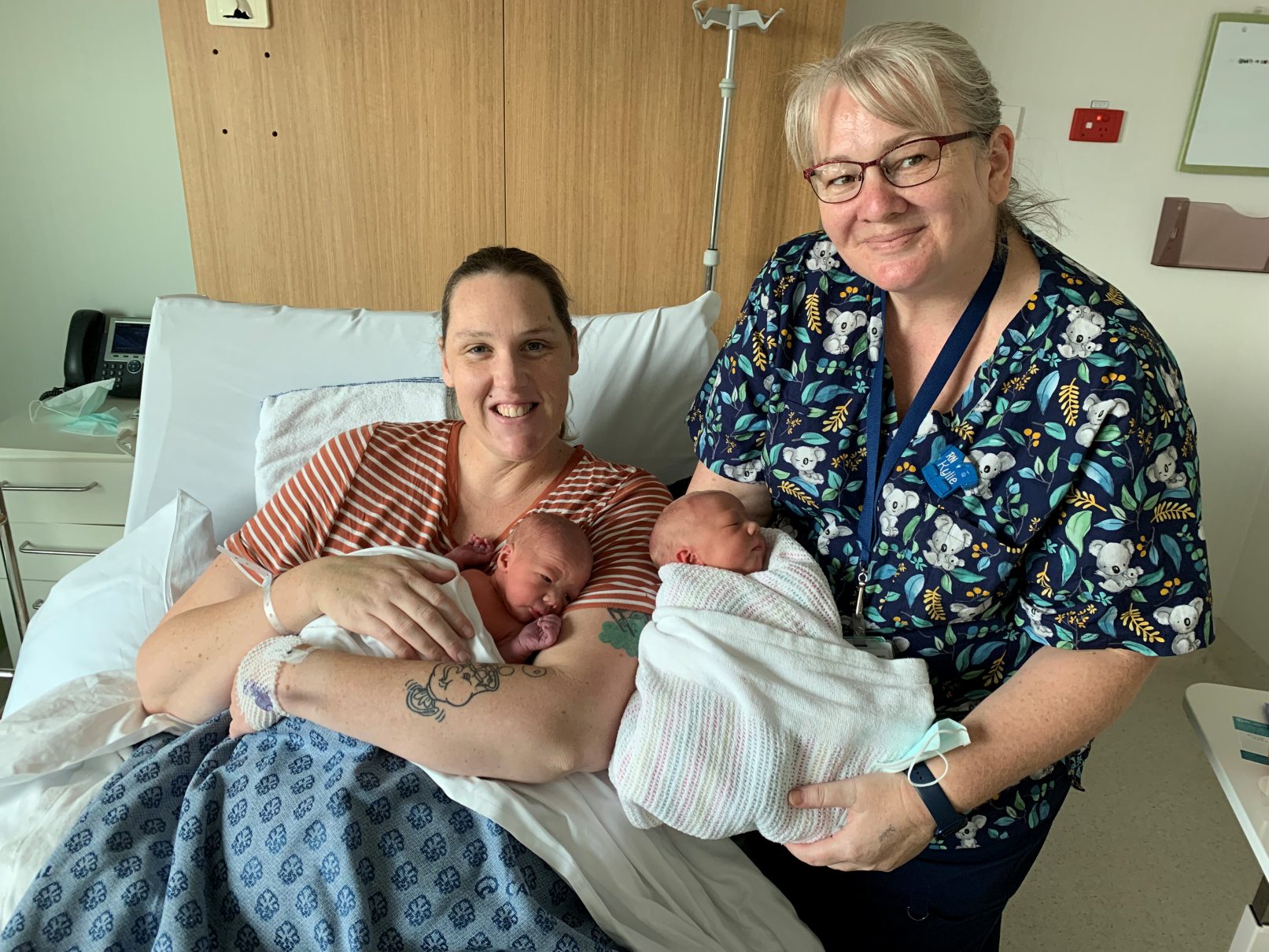
Five years later, Kylie – now a midwifery lecturer at the University – explains it was luck of the draw that matched her with Samantha, and they still keep in touch.
“One of the things that I'm most proud of about that experience is the first appointment where I met Samantha, she was talking about ‘when I have a caesarean’, ‘when I have a caesarean’. And by the time we'd got to the end of her pregnancy, she was basically saying to doctors, ‘I will have vaginal births,’ ‘it will happen at this time’.
“She said it came down to the fact that I had helped her build up that confidence in her own body and what it was capable of doing. And I had provided her with links to evidence for what she was considering, so she felt very empowered to be making decisions in her journey.”
Dr Noelyn Perriman, UC’s Discipline Lead for Midwifery, says having the same midwife – or student midwife – for the whole journey saves time on explaining the basics at every meeting and allows for a deeper relationship to build.
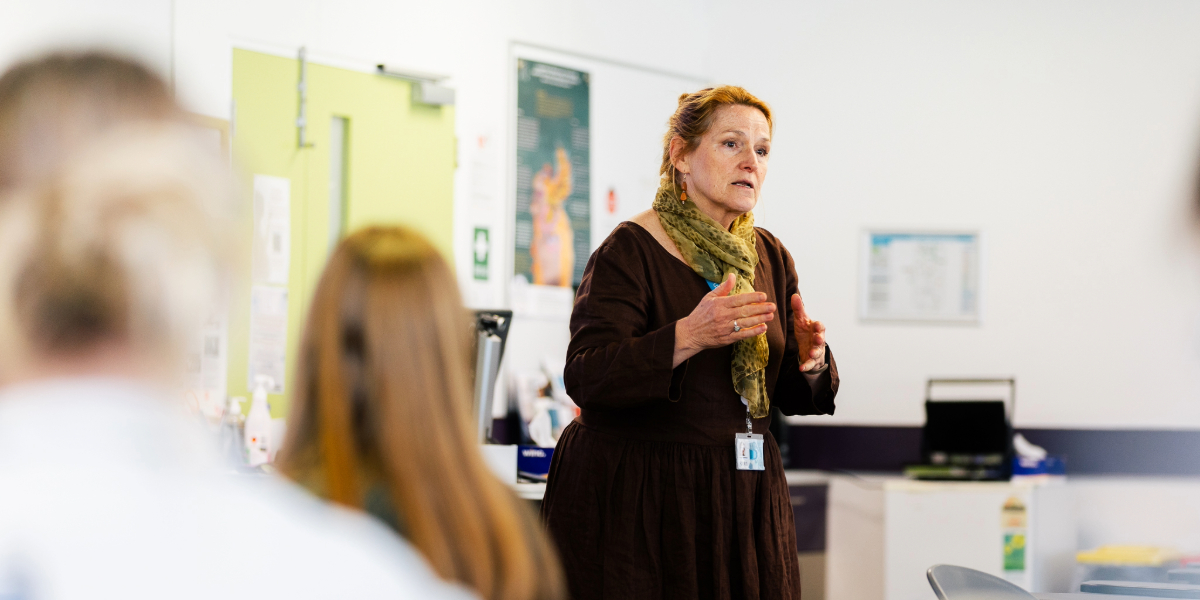
“Continuity empowers women because they don’t have to retell their story. Their midwife knows their journey from the very beginning, so as questions come up throughout their pregnancy, they feel comfortable talking to their midwife,” she said.
Having a more relaxed mother, she says, brings physical benefits by helping the flow of oxytocin – the hormone essential to childbirth and breastfeeding.
Noelyn says UC’s midwifery program has the most extensive continuity component of any university in Australia; all midwifery students follow six women through their pregnancies in the first year of an undergraduate degree, then another 16 over their second and third years of study.
“Our students having the continuity embedded in their program means that when they leave this course, they're ready and trained for the continuity model,” she said.
The problem, she says, is not enough women know the student program exists, and after the University doubled its first-year intake in 2026 to counter a chronic shortage of midwives, it currently needs 100 more women to meet the immediate training needs of the larger first-year cohort.
Megan Rueckwald was recommended to the UC program by a non-continuity midwife she saw early in her pregnancy, and gave birth to a baby girl in January.
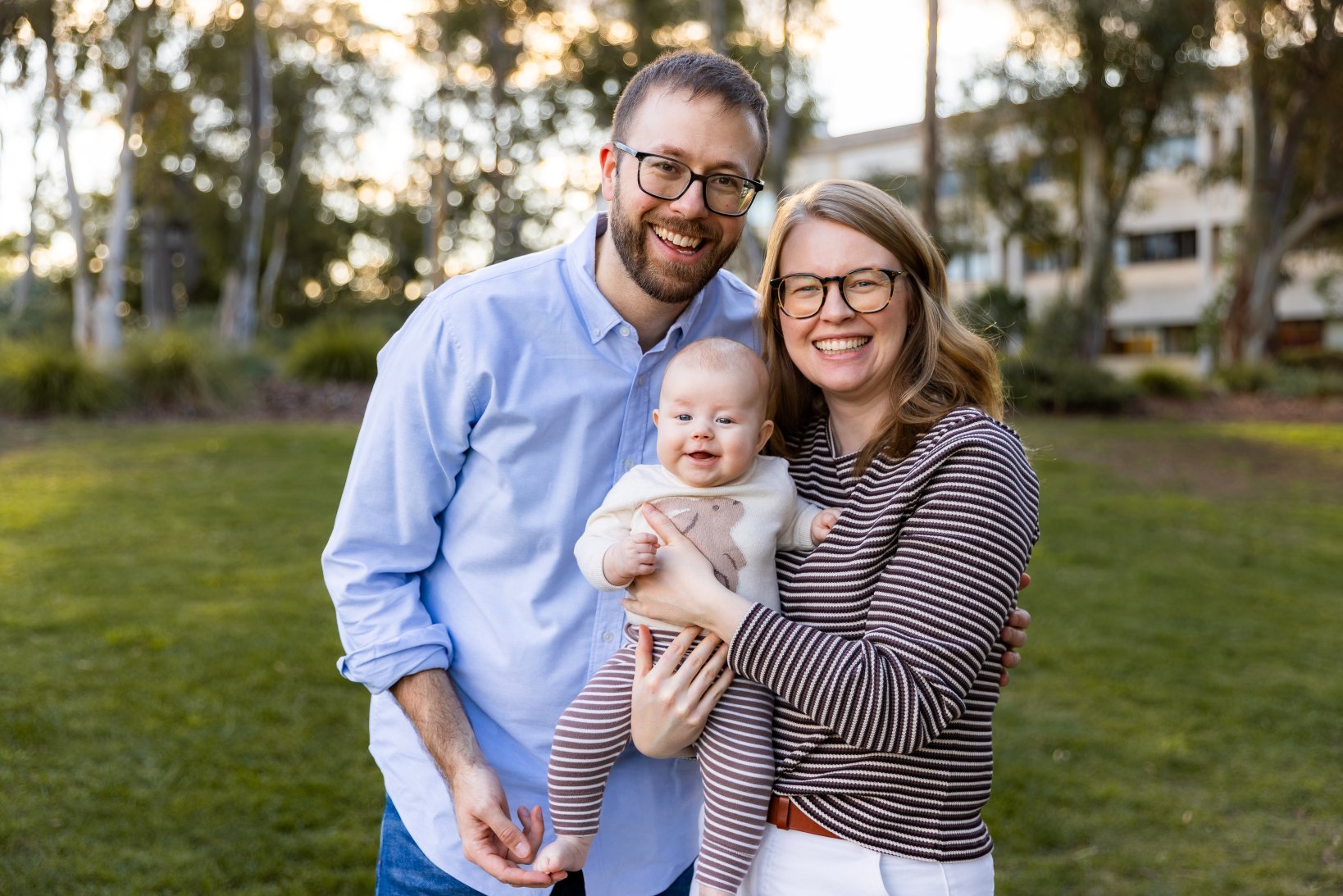
She and her partner, Chris, were matched to a second semester student and found enormous benefits to having support through all their ante-natal appointments, labour and delivery in the “mutually beneficial” arrangement.
“Being a first-time mum and not being familiar with the healthcare system, it was really helpful to have someone we felt comfortable with attend all those appointments with us,” Megan said.
She said her student midwife had already had a lot of clinical experience, even as a first-year student, and was able to be hands-on in the appointments.
“It was really nice that the midwives who we had the appointments with gave her a lot of autonomy. So she was able to lead the appointment while still relying on the other midwife who was there as well.”
But she found the biggest benefit was having her student midwife at the birth.

“All the midwives who we interacted with at the North Canberra Hospital were wonderful, but knowing someone in the delivery room, who knew our birth preferences, I felt really helped me. It made me feel a lot more comfortable and I felt like I could speak quite frankly in terms of communicating my preferences.”
Megan said she “absolutely would request another student” if she has another baby.
“I also think it's a great opportunity for the student midwives to learn,” she said.
Samantha signed up to the program again to have her third baby, Owain, three years after the twins. Her next student midwife didn’t have the nursing experience of Kylie, but she still found the experience beneficial.
“I knew that if they didn't understand something, the doctors would explain it to them and then it was like they were explaining it to me. Having the student midwife there, I felt like I was getting more information and it was a more open and discussive environment, which I think made us feel a lot better,” she said.
Noelyn said while students in the program are at different stages of their lives and training, many are mothers themselves.
“There's a small cohort of school leavers, but most of our students have either had a baby or they've had another career and then do midwifery. So we do tend to have quite a mature cohort when it comes to midwifery, as opposed to nursing.”
First-year student Nadine Partrick started her studies this year, having already had three children of her own.
She helped birth twins last month, an experience she said reinforced midwifery as the career she wants to do, and also showed her the obvious benefits of continuity.
“Even the doctor sometimes would have trouble finding the babies’ heart rates, but because I'd been with [the mum] so many times, I knew exactly where the heartbeats were, so I could say ‘twin A is on this side, twin B is on this side’,” she explained.
“The midwives appreciated that too, because some of them don't actually work that much with twins. Obviously being able to find the heartbeats straight away was really good for [the mum], but helped the midwives as well.
To find out more about the program or register your interest, click here.
Story by Fleta Page, photos by Chris Walsh.