Sport, Health & Wellbeing
From Lonely People to Connected Communities: Why Australia Needs a Social Connection Policy Agenda
Loneliness among young adults is no longer a fringe wellbeing concern – it is a fast-growing global public health issue with social and economic consequences that Australia cannot afford to ignore.
While loneliness has often been framed as an individual problem, new evidence from Canberra’s Connect Up 2617 pilot shows that a holistic approach to social connection as a public good – not loneliness as a personal failing – can start to change communities. This research points to an urgent need for a shift: from reactive, stigma-laden “loneliness interventions” toward proactive, systemic policies that build the social conditions in which young people can meaningfully connect.
Loneliness and social connection
The science on loneliness and social connection is increasingly hard to ignore. A deficit of social connection – manifested as loneliness and social isolation – carries health risks comparable to smoking fifteen cigarettes a day. Studies confirm that social isolation and loneliness are significantly associated with an increased risk of mortality. The World Health Organisation established a Commission on Social Connection in 2024 precisely because the evidence has reached a point where inaction is no longer defensible; its landmark 2025 report states that urgent action is needed to counteract the severe consequences of social disconnection which extend beyond physical and mental health to the economy and wider society. And yet the policy response globally remains nascent.
Developing a social ecosystem
Young adults aged 18-30 consistently report the highest loneliness levels, yet they remain one of the least targeted groups in Australian social policy.
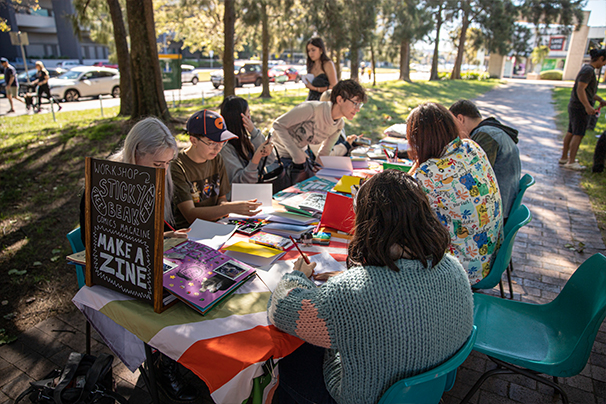
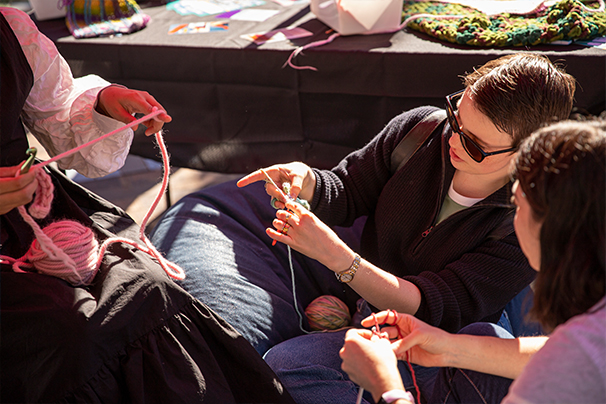
Connect Up 2617’s co-designed, peer-led social ecosystem – rather than a deficit-focused loneliness support program – demonstrates why this matters. In suburbs that looked well-resourced on paper but felt socially “hollow” according to some participants, the program created low-pressure, interest-based spaces explicitly created for fun, welcoming social connection opportunities where young adults could meet, build confidence, and reconnect with their community and each other through shared interests in sport, arts and crafts, games, outdoor adventures, markets and pub trivia.
The results were positive: large reductions in reported isolation and significant gains in belonging, friendships, and social support. These outcomes were not accidental. They were produced by deliberate design features – paid, trained peer Community Connectors who reflected the community in their diversity and acted as social catalysts and facilitators; supported volunteers; participant co-creation, and activities that met people where they were socially and emotionally. Connect Up 2617 was co-created from start to finish; over 140 local residents and stakeholders were involved in the consultation and co-design. It was continually refined with co-design and co-production by the project team in conjunction with the Community Connectors, volunteers, feedback from participants, and quarterly advice from a community Advisory Group.
Times of transition
Young people aged 18- 30 have consistently been identified as experiencing the greatest loneliness. In Australia, 43 per cent of young adults have, in surveys up to 2024, reported feeling lonely. In the ACT, this age group has experienced the highest levels of loneliness in recent years. The age of “emerging adulthood” or between 18 and 29 is defined by transition, exploration and instability: established friendships dissolve as people move cities for university or work, and new social structures are harder to build without institutional scaffolding. The long tail of COVID-19 has compounded these difficulties for a generation that experienced some of its most formative social years under lockdown. As one Connect Up participant put it: "There's an appetite for connectedness, but people don't know what to do with that."
We would argue that the multi-layered nature of adult friendship – requiring a bit of luck, patience, confidence, and repeated purposeful connection over shared interests in an inclusive supportive environment – may be underestimated by those designing programs to address loneliness, although the calls for a socioecological approach to social connection for younger people have been made for some time.
Connect Up 2617
Over one year (October 2024-October 2025), 645 participants attended at least one activity; 166 attended between two and four; and 89 became regulars, attending five or more. Participants described going from social anxiety to a willingness to take social risks; to extending their networks and making friends locally. They talked about Belconnen feeling "like home" – a place with "heart and soul" rather than just a postcode. Community Connectors gained professional confidence. Migrants who had previously socialised only within their own national communities built meaningful connections with local Australians.

Among the 86 participants who completed the final survey, the program produced statistically significant reductions in feelings of lacking companionship (down 32%), feeling isolated (down 36%), and feeling left out (down 32%). More than 70% reported having more friends they connected with monthly and nearly 90% reported an improved sense of belonging. Almost half had more people they could rely on in a crisis. The program has since been adopted by Capital Region Community Services (CRCS) as an ongoing initiative.
Implications for policy
The policy implications are profound. First, social connection must become a whole-of-government responsibility, not an add-on within health or community services. Urban planning, housing, transport, education, digital policy, and youth services all shape whether people can build and maintain relationships. Second, 18-30 year olds must be explicitly recognised as a priority population, with programs that reflect the realities of transient work, study, rental housing and rapid life transitions. Third, governments should invest in the “social infrastructure” of connection, both physical (affordable gathering places, accessible community venues) and relational (trained peer facilitators, community connectors, youth leaders). These are not “nice to have” extras; they are important public health interventions. Finally, future policy must normalise social connection as a civic value, shifting public messaging away from the stigma of loneliness and toward collective responsibility for the social health of communities.
Loneliness is not an individual problem with an individual solution. It is a feature of urban environments and social conditions that can be changed through deliberate policies that put social connection at their core.
Connect Up 2617 offers a template for what is possible when the approach moves from treating loneliness to cultivating connection. Its success shows that when young people are given ownership, supportive environments, and social scaffolding, meaningful change follows. The question for Australian policymakers is no longer whether loneliness matters – but whether we are prepared to design cities, services, and systems that allow social connection to flourish.
Connect Up 2617 was funded through the Medical Research Futures Fund (MRFF) and run by the Health Research Institute (HRI) at University of Canberra. The report on the Connect Up 2617 pilot can be found in full here.
Read the media release here.
Words by Rachel Davey and Barbara Walsh, photos supplied.