Ideas, Progress & the Future
‘University needs to be inclusive’: Meet UC’s first Professor of Disability
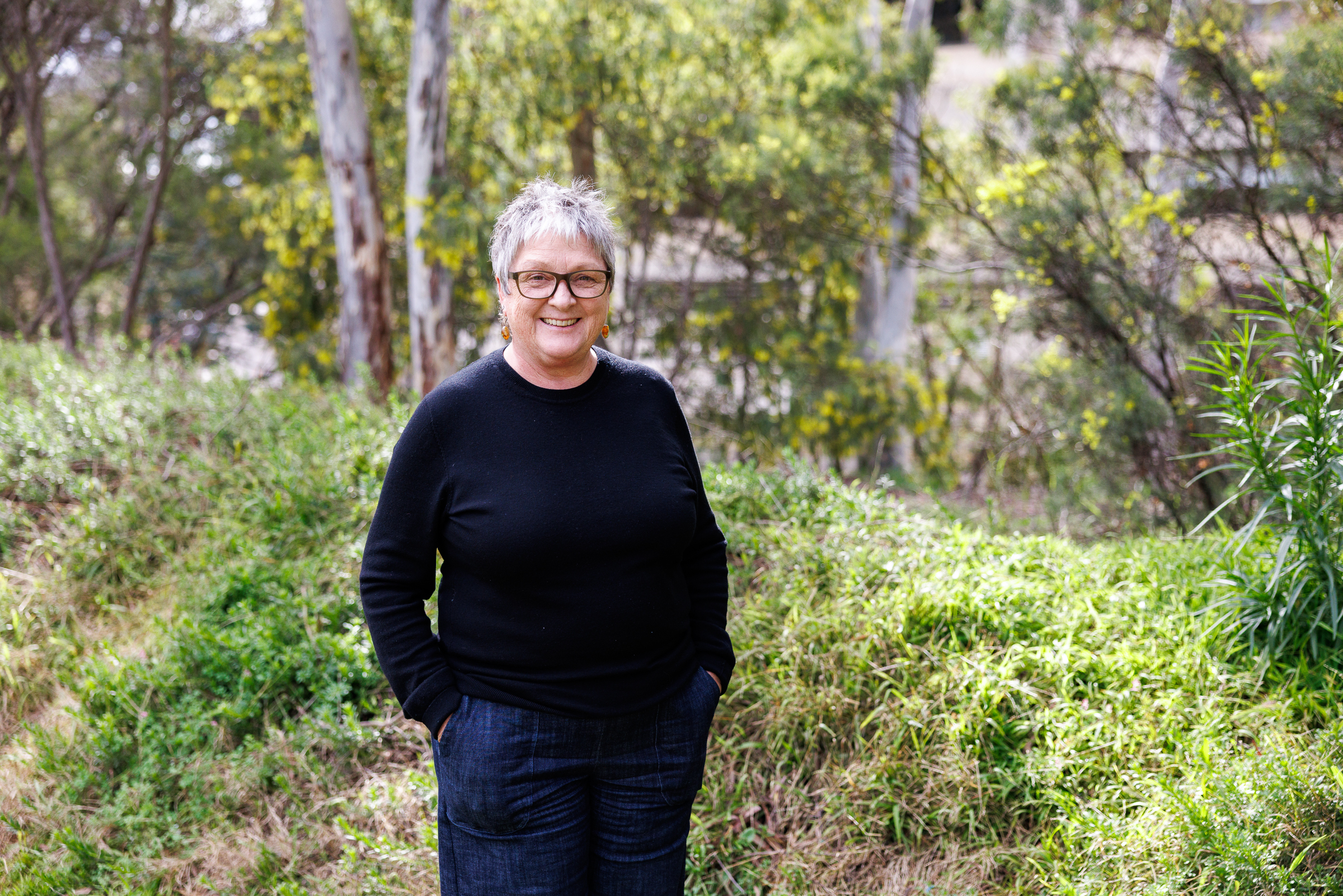
After 40 years working in the disability sector, Patsie Frawley was "thinking about going home to Victoria and growing vegetables" when the University of Canberra advertised a position she knew represented a unique opportunity.
The role – as the University’s first Professor of Disability and Community Health – was to establish two new Graduate Certificates in Disability, and it came up at a time of significant reform in national disability policy.
Also notable: UC is now led by one of the architects of the National Disability Insurance Scheme (NDIS), Professor The Honourable Bill Shorten.
"There’s a lot of reasons why I came to UC, and the fact that Bill Shorten is Vice-Chancellor was a really important thing for me to consider," she says.
"I think that often what we need is the right people in high places – because there's only so much one can do alone."
With someone as passionate about disability advocacy and reform as Bill at the helm, Patsie saw huge potential in becoming UC’s first Professor of Disability, well beyond the initial two courses.
Decades of work in the sector
Patsie joined UC in June, coming from UNSW in Sydney, where she had been co-designing a knowledge hub in intellectual disability and health. But her work with people with disabilities started in the 1980s, as an educator with adults with intellectual disability.
She knew then that working in disability was about more than teaching and supporting individuals – it was also about understanding the socio-political context framing disability policy, services and supports.
Her work has spanned the breadth of the sector. Working in government in Victoria, she was involved in implementing new and innovative rights-based disability legislation, before moving into developing adult learning in disability services and disability services staff training.
Patsie later worked in research and policy at the Office of the Public Advocate in Victoria after completing her PhD at LaTrobe University.
"What’s been most important has been the connections I have made with people with disabilities, doing inclusive research with them on the history of the self-advocacy movement, sexuality, and women’s health and violence prevention," she says, noting she is committed to ensuring people with disabilities are at the centre of all her work.
Patsie has developed postgraduate courses in disability – first at Deakin University and then at the University of Waikato in Aotearoa New Zealand, where she successfully recruited an academic with a disability to replace her in the teaching role in the Faculty of Education.
"Employing people with lived experience of disability in teaching and research is really important in disability courses, so that’s something I will work towards here at UC too," she says.
Disability at UC
It’s no coincidence the University of Canberra recruited a Professor of Disability not long after Bill became Vice-Chancellor. He recognised an educational gap where UC can make a meaningful contribution.
"I'm very impressed by what our Faculty of Health does, but I thought an area that we could strengthen was disability studies, disability in the community," he says.
"I also know from my previous experience as a minister for the NDIS that there's a paucity of post-TAFE higher education, NDIS-related professional qualifications, learning, and indeed research."
While operating within the Faculty of Health, Patsie is developing the content for two Graduate Certificates – in Disability Leadership and Strategy, and Disability Policy and Advocacy, both nested within the Faculty of Business, Government and Law (BGL).
The two offerings, both standalone graduate certificates, will also offer pathways to other courses at the Master’s level.
"One of the things I really like about the courses and their structure is that they're nested within courses in BGL," she says. "I think that's brilliant. That's business, government and law thinking about disability and how we work together – I'm really, really excited about that."
Changing society and educating the future NDIS leaders
Patsie would love to see disability education embedded throughout UC – doing so, she says, could help make changes needed for the NDIS to work as intended.
While recognising the "groundbreaking" scheme as "once in a generation change", she understands why it’s become "a behemoth".
"How challenging it is to bring forth a really huge shift in public policy around disability, when society itself is not ready for it," she says.
She has seen many big advances in the decades she’s worked in the disability sector; deinstitutionalisation, the positioning of people with disabilities as the experts by experience – a paradigm shift from a medical model of disability, which focuses on deficit, to the social model and viewing people as disabled by societal barriers and environmental obstacles – as well as the focus on rights, coming from the United Nations Convention on the Rights of Persons with Disabilities (CRPD).
"In all these years, what hasn't been achieved is as an inclusive society: health, education, employment, people's rights to relationships, people being seen as real people, their personhood – all of these things within our society have not shifted enough," she says. "The Disability Royal Commission made this clear."
The NDIS was developed to work alongside inclusive education, health and employment and, as Bill explains, was designed to allocate financial agency and support to people with disability.
"The aim when I was helping found the NDIS was seeing the whole person and saying ‘you've got a right to an ordinary life’, so it was viewed as assistance to live your best life, or at least live an ordinary life," he says.
But with significant societal barriers – physical and attitudinal – still existing in all aspects of society, and people with disabilities, and their families and carers, still having to find ways to adapt to a society that is not inclusive, Patsie says reforms to the scheme need to work in tandem with rights-based social change and inclusive social policies, programs and practices.
The Vice-Chancellor, with a deep understanding of these issues, knows the role UC can play both in being more accessible, and in influencing societal change through education.
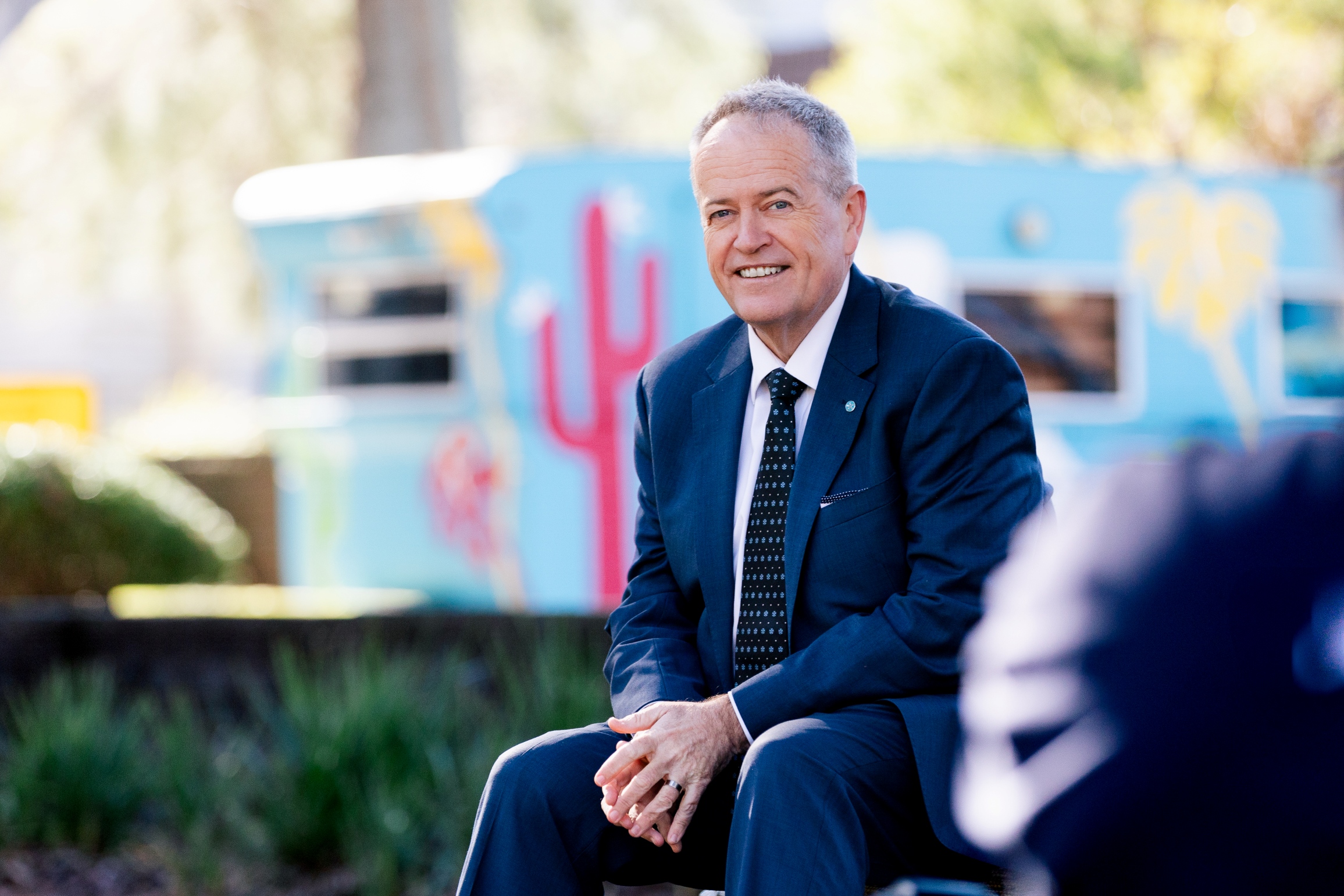
"I'm very proud of UC, but I think we can do better, and I think higher education can do a lot better – from some of the low-hanging fruit of physical access and support, through to our curriculum," he says.
"My vision is that people with disabilities see themselves as fully participating in all the benefits of higher education, and our curriculum has got to reflect that too."
Embedding disability
The two new disability courses were conceptualised as NDIS-related qualifications, with a focus on disability services and advocacy leadership.
Patsie says this is even more relevant now the NDIS reform agenda is in place and will work with the sector, including with people with disabilities, families, carers and allies to shape the courses to be contemporary, innovative and practical.
"I hope we attract people from organisations that are implementing social policy in health and education and violence prevention – because if we get change in those areas, we start to move towards that place where the NDIS can really work," she says.
"This is about society. These courses have to be equally about social policy and social change, as well as improvement of disability supports and services within disability funded agencies and organisations."
Patsie hopes the Graduate Certificates, which were launched this week, are seen as relevant postgraduate pathways, as well as offering new education pathways for people from the disability sector.
She would like UC’s future direction to be about "building courses and approaches that are with, for and by people with disabilities, and that strengthen opportunities for full participation in higher education".
"University needs to be inclusive and see disability and inclusion as core areas of curriculum across faculties," she says.
"Ideally, every single course in every area – health, architecture, law, education – they would all have, not just a unit or two, but a framing of understanding disability, where it becomes part of the curriculum without it being something special.
"We want students to come through knowing that if they're studying optometry, if they're studying architecture or law, they need to hear and know about disability within the context of disability inclusion and disability rights in particular."
Patsie acknowledges embedding disability into the framework of every course would come with significant challenges, but she has support from the VC.
"I do think it’s achievable," Bill says. "Maybe not in the short term, but I agree that disability is a fact of life. It can happen to any of us or anyone we love, from birth to the blink of an eye, to your own particular DNA lottery."
Bill notes UC has over 1,700 students self-reporting with a disability – from physical impairment to neurodivergence, or particular learning needs.
He wants UC to be an equity leader as an education institution and an employer – including for people with caring responsibilities.
"I think in our research, across all of our disciplines, we can adopt a disability lens – disability is universal, and therefore we should have a universal disability lens on everything we do. Disability is not the add-on at the end – it should just be embedded into the way we view the world," Bill says.
"I think we should have best practice teaching ... I think our physical environment should be seamless.
"There's a lot we can do – and we intend to do it."
Words by Fleta Page. Photos by Chris Walsh and Tyler Cherry.